Invisible Labor Burnout in Mothers: The Complete Recovery Guide
Many mothers experience invisible labor burnout without realizing it. Invisible labor refers to the mental load, emotional labor, planning, remembering, and caregiving responsibilities that often go unseen. Over time, this hidden workload can contribute to emotional exhaustion, chronic stress, nervous system overload, and burnout in overwhelmed moms.
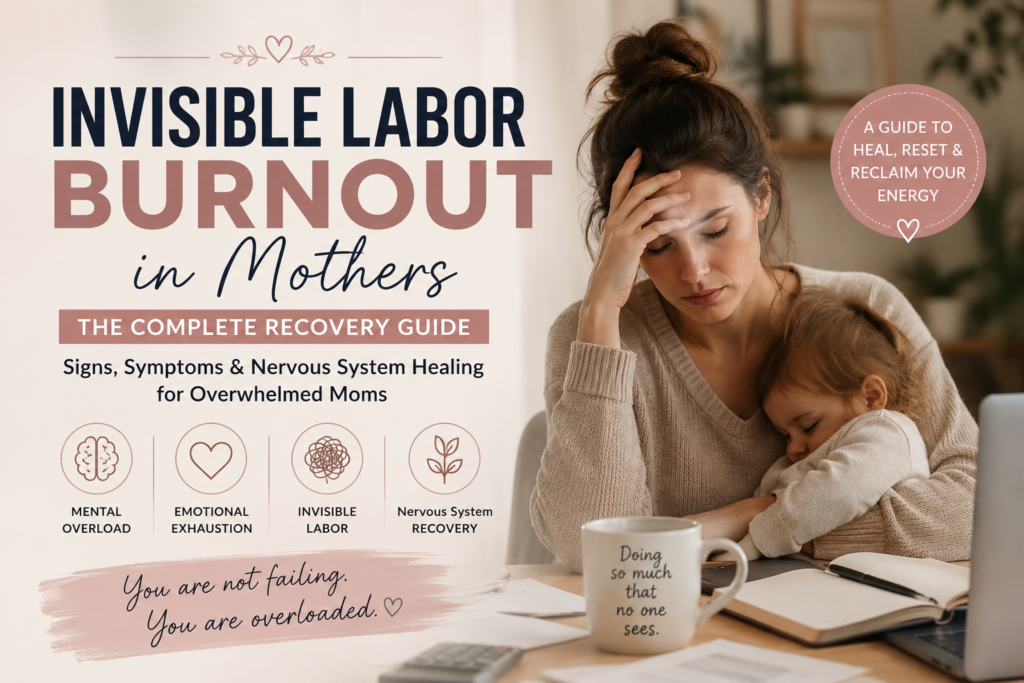
Invisible Labor Burnout in Mothers: The Complete Recovery Guide
If you feel exhausted before the day even begins, struggle to switch off mentally at night, or carry a constant sense of responsibility for everyone around you, you are not alone. Many overwhelmed mothers are experiencing a form of burnout that often goes unrecognized: invisible labor burnout.
Invisible labor refers to the mental load, emotional labor, planning, remembering, organizing, anticipating needs, and managing responsibilities that keep families functioning every day. While much of this work goes unseen, its impact on a mother’s emotional well-being, stress levels, and nervous system can be significant.
Over time, carrying invisible labor without adequate support can lead to emotional exhaustion, chronic stress, mental overload, decision fatigue, and symptoms commonly associated with mom burnout. Many mothers begin to feel overwhelmed, overstimulated, and emotionally drained without fully understanding why.
The good news is that burnout recovery is possible. Understanding how invisible labor affects the mind and nervous system is the first step toward healing. In this guide, you’ll learn what invisible labor is, the hidden signs of invisible labor burnout in mothers, how chronic mental load impacts the nervous system, and practical recovery strategies that help overwhelmed moms feel calmer, lighter, and more supported.
This article is designed to help you move from survival mode toward sustainable emotional recovery—one small step at a time.
What Is Invisible Labor?
Invisible labor is the unseen work that keeps a household, family, and daily life running smoothly. Unlike physical tasks that people can easily observe, invisible labor happens largely behind the scenes. It includes the constant planning, remembering, organizing, anticipating needs, managing schedules, and carrying the emotional responsibility for everyone else’s well-being.
For many mothers, invisible labor becomes such a normal part of daily life that it is rarely recognized as work at all. Yet over time, this hidden workload can contribute significantly to stress, emotional exhaustion, mental overload, and burnout. Understanding invisible labor is often the first step toward understanding why so many overwhelmed mothers feel exhausted even when they never seem to stop doing things for everyone around them.
The Work Nobody Sees
When people think about work, they often picture visible tasks such as cooking dinner, cleaning the house, doing laundry, driving children to activities, or helping with homework. While these responsibilities certainly require time and energy, they represent only part of the workload many mothers carry.
Invisible labor includes the mental effort behind those tasks.
Examples of invisible labor include:
- Remembering medical appointments
- Tracking school schedules and deadlines
- Planning meals for the week
- Monitoring household supplies
- Managing family calendars
- Anticipating children’s emotional needs
- Remembering birthdays and special events
- Coordinating childcare arrangements
- Keeping track of unfinished responsibilities
This constant mental tracking often continues even during moments that appear to be rest. A mother may be sitting quietly on the couch while simultaneously running through tomorrow’s schedule, worrying about upcoming obligations, or mentally organizing household responsibilities.
Because invisible labor happens internally, it is frequently overlooked by others. Yet the cognitive and emotional effort involved can be just as demanding as physical work.
Mental Load vs Physical Tasks
One of the most important distinctions to understand is the difference between the mental load and physical tasks.
Physical tasks involve doing something visible:
- Washing dishes
- Folding laundry
- Preparing meals
- Driving children to school
- Cleaning rooms
The mental load involves everything required to make those tasks happen:
- Remembering what needs to be done
- Deciding when it should happen
- Anticipating future needs
- Monitoring unfinished responsibilities
- Managing competing priorities
Many mothers are not only completing physical tasks but also carrying responsibility for planning and coordinating them.
This ongoing mental load can create a state of constant cognitive activity. The brain remains alert, scanning for potential problems, unfinished tasks, and future demands. Over time, this can contribute to decision fatigue, overwhelm, and chronic stress.
Why Mothers Carry More Invisible Labor
Although every family is different, research and lived experience consistently show that mothers often carry a disproportionate share of invisible labor.
Many mothers become the default managers of household life. They remember appointments, anticipate needs, coordinate schedules, track responsibilities, and maintain emotional awareness for multiple family members at once.
This role can develop gradually over time. Small responsibilities accumulate until one person becomes responsible for remembering nearly everything.
As invisible labor increases, the nervous system may begin operating in a prolonged state of vigilance. Instead of experiencing regular periods of recovery, the brain remains focused on monitoring responsibilities and preparing for the next demand.
This is where invisible labor becomes more than a productivity issue—it becomes a nervous system issue.
When the mind is constantly tracking, anticipating, remembering, and managing, true rest becomes difficult. The nervous system receives fewer signals of safety and recovery, increasing the risk of emotional exhaustion, mental overload, caregiver burnout, and chronic stress.
Understanding invisible labor is not about assigning blame. It is about recognizing a hidden burden that many overwhelmed mothers carry every day. Once that burden becomes visible, recovery becomes far more possible.
The Hidden Signs of Invisible Labor Burnout
Invisible labor burnout does not always look the way people expect. Many articles focus on physical exhaustion, but burnout in mothers often begins emotionally and mentally long before it becomes physically visible.
A mother can continue caring for her family, meeting responsibilities, and functioning day-to-day while quietly experiencing emotional exhaustion, chronic mental overload, and nervous system strain. Because these symptoms develop gradually, they are often dismissed as normal stress or simply part of motherhood.
Recognizing the hidden signs of invisible labor burnout is an important step toward recovery.
Emotional Exhaustion
One of the most common burnout symptoms in mothers is emotional exhaustion.
Unlike ordinary tiredness, emotional exhaustion feels deeper. It can feel as though your emotional reserves are constantly running low, regardless of how much effort you put into resting.
Common signs include:
- Feeling emotionally drained before the day begins
- Having less patience than usual
- Becoming easily overwhelmed by everyday demands
- Feeling emotionally “used up”
- Struggling to feel excited about things you once enjoyed
Many overwhelmed mothers describe feeling as though they are constantly giving emotional energy to others while having very little left for themselves.
Constant Mental Tracking
Invisible labor requires ongoing mental monitoring.
Many mothers find themselves constantly tracking:
- appointments
- schedules
- meals
- household tasks
- school responsibilities
- family needs
- future obligations
Even during quiet moments, the brain may continue reviewing unfinished responsibilities.
This constant mental tracking creates a form of cognitive burnout that is rarely discussed. The mind rarely receives permission to fully disengage.
Over time, this mental load can contribute to:
- chronic stress
- mental fatigue
- decision fatigue
- difficulty concentrating
- feeling mentally overwhelmed
The result is a nervous system that remains alert even when there is no immediate emergency.
Feeling Guilty While Resting
Many mothers experiencing invisible labor burnout struggle to rest without guilt.
Instead of feeling restorative, downtime may trigger thoughts such as:
- “I should be doing something productive.”
- “There is too much left to do.”
- “I haven’t earned this break.”
- “Everyone else still needs something.”
This is one of the most overlooked signs of mom burnout.
When the nervous system becomes conditioned to constant responsibility, rest can feel uncomfortable rather than safe. Even brief moments of relaxation may be interrupted by guilt, anxiety, or mental task lists.
Recovery becomes more difficult when rest itself feels stressful.
Overwhelm From Small Decisions
Another hidden symptom of burnout is becoming overwhelmed by decisions that once felt manageable.
Questions such as:
- What should we eat tonight?
- Which task should I do first?
- What needs attention next?
can suddenly feel surprisingly difficult.
This happens because prolonged mental load consumes cognitive resources. The brain becomes fatigued from continuously processing information, making decisions, and managing responsibilities.
As burnout progresses, even simple choices may feel exhausting.
This is not laziness or lack of capability. It is often a sign that the nervous system has been carrying too much for too long.
Emotional Numbness
Many people assume burnout always looks emotional.
In reality, some mothers experience the opposite.
Instead of feeling overwhelmed by emotions, they begin feeling disconnected from them.
Emotional numbness can include:
- feeling detached
- struggling to experience joy
- losing interest in activities
- feeling emotionally flat
- going through daily routines on autopilot
This can be the nervous system’s attempt to conserve energy after extended periods of stress and overload.
While emotional numbness may feel concerning, it is often a signal that emotional recovery is needed—not evidence of failure.
Invisible labor burnout affects far more than physical energy levels. It impacts emotional well-being, cognitive functioning, stress regulation, and nervous system health. By recognizing these hidden symptoms early, overwhelmed mothers can begin addressing the root causes of burnout before exhaustion becomes even more severe.
Soft Support Reminder
If these signs feel familiar, remember that you are not failing.
Many mothers experiencing invisible labor burnout are carrying an invisible workload that others cannot fully see. Understanding the connection between mental load, emotional exhaustion, and nervous system overload is often the first step toward meaningful recovery.
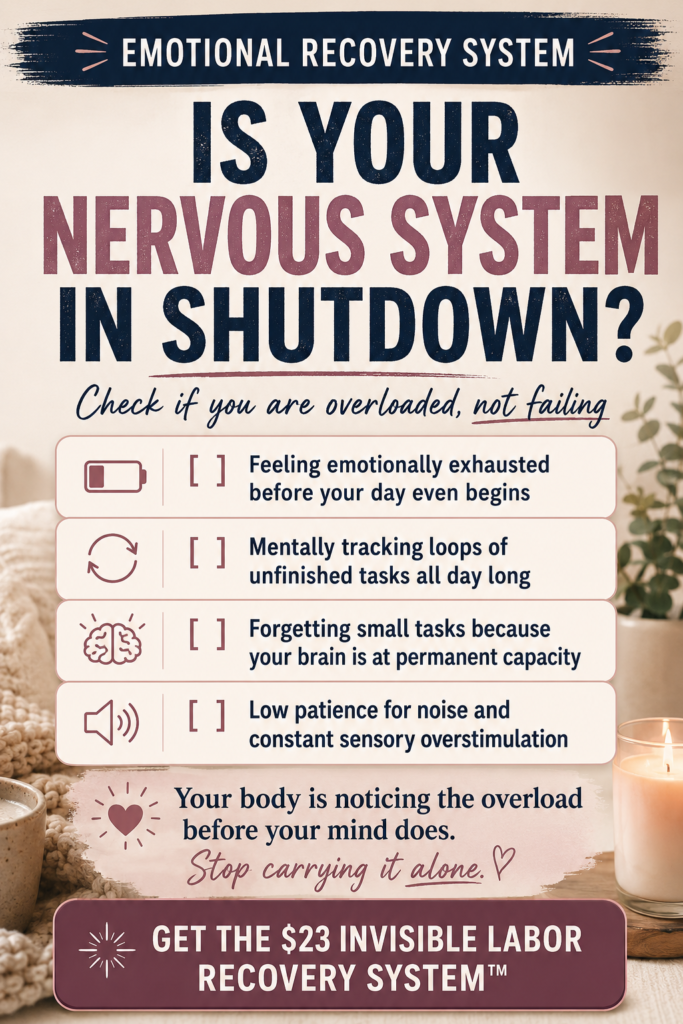
Looking for a gentle recovery framework?
The Invisible Labor Recovery System™ was created specifically for overwhelmed moms carrying invisible mental and emotional labor.
Why Overwhelmed Moms Feel Tired Even After Sleeping
Many mothers assume that if they could just get more sleep, they would finally feel rested. Yet one of the most frustrating experiences for an overwhelmed mom is waking up exhausted even after a full night’s sleep.
If you’ve ever wondered, “Why am I tired all the time?” you’re not alone.
The answer is often more complex than simply needing more hours in bed. For many mothers, the real issue is mental fatigue, chronic stress, and a nervous system that rarely gets the opportunity to fully relax.
When invisible labor, emotional responsibility, and constant mental load become a daily reality, sleep alone may not be enough to restore energy.
Mental Fatigue vs Physical Fatigue
Physical fatigue occurs when the body needs rest after physical exertion. Mental fatigue, however, develops when the brain has been processing information, making decisions, managing responsibilities, and staying alert for extended periods.
Many exhausted moms are not just physically tired.
They are mentally exhausted.
Signs of mental fatigue can include:
- difficulty concentrating
- forgetfulness
- decision fatigue
- feeling overwhelmed by simple tasks
- struggling to stay motivated
- feeling emotionally drained
Because invisible labor requires constant planning and mental tracking, many mothers spend their days carrying an invisible cognitive workload that never fully shuts off.
Nervous System Hypervigilance
Another reason many overwhelmed mothers feel tired after sleeping is nervous system hypervigilance.
Hypervigilance occurs when the brain remains on alert, constantly scanning for responsibilities, problems, or potential demands.
For example, many mothers find themselves:
- listening for children during the night
- mentally reviewing tomorrow’s schedule
- worrying about unfinished tasks
- anticipating family needs
- planning solutions to future problems
Even during rest, the nervous system may remain partially activated.
This state of chronic alertness can prevent the body and mind from experiencing the deeper sense of recovery needed to feel truly refreshed.
Over time, this can contribute to nervous system overload, emotional exhaustion, and persistent fatigue.
Why Rest Does Not Always Feel Restful
Many mothers are surprised to discover that rest and recovery are not always the same thing.
A person can be resting physically while still carrying a heavy mental load.
For example:
- sitting on the couch while mentally planning tomorrow
- lying in bed while worrying about responsibilities
- taking a break while feeling guilty about unfinished tasks
In these situations, the body may be resting, but the mind remains active.
True recovery requires moments when both the body and nervous system feel safe enough to let go of constant responsibility.
This is why many overwhelmed moms continue feeling tired even after sleeping. The issue is often not a lack of effort or motivation. Instead, it may be a sign that the mind and nervous system have been carrying too much for too long.
Understanding the difference between sleep and genuine recovery is an important step toward overcoming emotional exhaustion, reducing mental fatigue, and supporting long-term burnout recovery.
What Invisible Labor Does to the Nervous System
Most discussions about mom burnout focus on stress, exhaustion, or self-care. While those topics are important, they often miss a critical piece of the puzzle:
the nervous system.
Invisible labor is not simply a productivity problem. It is a nervous system burden.
When the brain spends months or years tracking responsibilities, anticipating needs, solving problems, and managing emotional demands, the nervous system can begin operating as if there is a constant emergency. Over time, this ongoing state of vigilance can contribute to nervous system overload, emotional exhaustion, and burnout.
Understanding this connection helps explain why many overwhelmed mothers feel exhausted, overstimulated, and unable to fully relax—even when there is no immediate crisis.
The Stress Response Loop
The nervous system is designed to help us respond to challenges and keep us safe. When a stressful situation arises, the body activates its stress response, increasing alertness and preparing us to take action.
In short bursts, this system works exactly as intended.
The problem arises when stress becomes chronic.
For many mothers, invisible labor creates a never-ending cycle of responsibilities:
remembering appointments
anticipating family needs
managing schedules
solving daily problems
carrying emotional responsibilities
As one task is completed, another quickly takes its place.
The brain rarely receives a signal that the workload is truly finished.
As a result, the nervous system can remain activated for extended periods, creating a continuous stress response loop. Instead of moving between stress and recovery, many overwhelmed moms remain stuck in a pattern of constant readiness.
Chronic Overload and Survival Mode
When stress continues without enough recovery, the nervous system may gradually shift into what many people describe as survival mode.
Survival mode is not a medical diagnosis. It is a common way of describing a state where the brain becomes focused on getting through the day rather than feeling calm, connected, or fully present.
Common signs include:
feeling constantly rushed
difficulty relaxing
emotional irritability
chronic fatigue
feeling mentally “on” all the time
difficulty enjoying downtime
Many mothers experiencing invisible labor burnout spend so much time managing responsibilities that their nervous system rarely experiences true safety.
Over time, this chronic overload can contribute to nervous system dysregulation, making it harder to recover from everyday stressors.
Instead of responding flexibly to challenges, the brain begins operating from a place of constant pressure and vigilance.
Overstimulation and Emotional Shutdown
One of the most overlooked effects of nervous system overload is overstimulation.
An overstimulated mom may feel overwhelmed by:
noise
interruptions
clutter
decision-making
competing demands
constant requests for attention
When the nervous system becomes overloaded, even ordinary levels of stimulation can start feeling exhausting.
In some cases, the brain responds by moving toward emotional shutdown.
This can look like:
emotional numbness
withdrawal
low patience
feeling disconnected
losing interest in activities that once felt enjoyable
Many mothers mistakenly believe this means they are becoming lazy or uncaring.
In reality, emotional shutdown is often the nervous system’s attempt to conserve energy after carrying too much for too long.
Why Small Tasks Start Feeling Huge
One of the most confusing symptoms of burnout is when simple tasks suddenly feel overwhelming.
A short email.
A small decision.
A basic household chore.
Something that once felt manageable may now feel disproportionately difficult.
This happens because nervous system overload reduces available mental and emotional resources.
When the brain is already carrying an excessive mental load, even minor demands can feel like the final straw.
The issue is not the task itself.
The issue is the accumulated weight of everything that came before it.
This is why many mothers experiencing burnout feel frustrated with themselves. They assume they should be able to handle simple responsibilities more easily.
But burnout is not a sign of weakness.
It is often a sign that the nervous system has been operating under chronic pressure without enough opportunities for recovery.
Understanding burnout through a nervous system lens changes the conversation entirely. Instead of asking, “Why can’t I keep up?” a more helpful question becomes:
“How much invisible labor has my nervous system been carrying without support?”
That shift in perspective often marks the beginning of meaningful recovery.
Emotional Exhaustion vs Depression: Understanding the Difference
When mothers experience chronic stress, burnout, and emotional exhaustion, it is common to wonder whether what they are feeling is burnout, depression, or a combination of both.
While emotional exhaustion and depression can share some similarities, they are not the same thing. Understanding the difference can help overwhelmed mothers seek the most appropriate support and avoid blaming themselves for symptoms that may be related to burnout, chronic stress, or mental health concerns.
It is also important to remember that only a qualified healthcare professional can diagnose depression. This section is intended for educational purposes and should not replace professional medical advice.
Similarities
Both emotional exhaustion and depression can affect a person’s energy, motivation, mood, and overall well-being.
Common experiences may include:
persistent fatigue
difficulty concentrating
feeling overwhelmed
reduced motivation
irritability
changes in sleep patterns
difficulty enjoying activities
Because the symptoms can overlap, many mothers find it difficult to determine whether they are experiencing mom burnout, emotional exhaustion, depression, or a combination of factors.
This confusion is one reason burnout often goes unrecognized.
Key Differences
Emotional exhaustion is often closely connected to prolonged stress, invisible labor, mental load, and ongoing caregiving responsibilities.
Many mothers experiencing burnout can identify specific sources of pressure, such as:
managing household responsibilities
caregiving demands
chronic mental overload
emotional labor
lack of recovery time
With emotional exhaustion, symptoms may improve when stressors are reduced and opportunities for recovery increase.
Depression, however, often extends beyond situational stress and may affect multiple areas of life regardless of workload or responsibilities.
Some people experiencing depression may notice:
persistent feelings of sadness or hopelessness
loss of interest in most activities
feelings of worthlessness
significant changes in appetite or sleep
difficulty functioning in daily life
While burnout and emotional exhaustion are often linked to chronic overload, depression is a complex mental health condition that may require professional assessment and treatment.
When Professional Help May Be Needed
If feelings of emotional exhaustion become severe, persistent, or begin interfering significantly with daily life, it may be helpful to seek support from a qualified healthcare professional.
Consider reaching out for professional help if you experience:
persistent sadness or hopelessness
thoughts of self-harm
extreme difficulty functioning day-to-day
ongoing emotional distress that does not improve
significant changes in sleep or appetite
withdrawal from relationships and activities
There is no shame in seeking support.
Many overwhelmed mothers spend years carrying invisible labor, emotional responsibility, and chronic stress without adequate help. Whether the challenge is emotional exhaustion, mom burnout, depression, or a combination of factors, support is a sign of strength—not failure.
Understanding the difference between emotional exhaustion and depression can help mothers approach recovery with greater clarity, self-compassion, and confidence while ensuring they receive the support they need.
10 Signs You Are Carrying Too Much Invisible Labor
Invisible labor often accumulates gradually.
Most mothers do not wake up one day suddenly feeling burned out. Instead, the mental load builds over months or years until exhaustion begins to feel normal.
Because invisible labor is largely unseen, many women dismiss the warning signs or assume they simply need to “try harder.”
This invisible labor checklist can help you recognize whether chronic mental load may be contributing to emotional exhaustion, burnout, and nervous system overload.
Sign #1: You Cannot Switch Off Mentally
Even when your body is resting, your mind is still working.
You constantly think about:
tomorrow’s responsibilities
unfinished tasks
family schedules
future problems
Relaxation feels difficult because your brain remains in planning mode.
Sign #2: You Remember Everything for Everyone
You are the person who remembers:
appointments
birthdays
school events
household supplies
family obligations
When something is forgotten, you often feel responsible—even when it should not be your responsibility alone.
Sign #3: Rest Feels Uncomfortable
Many overwhelmed mothers struggle to enjoy downtime.
Instead of feeling relaxed, rest triggers thoughts like:
“I should be doing something.”
“There’s too much left to do.”
“I haven’t earned this break.”
Guilt frequently interrupts recovery.
Sign #4: You Feel Responsible for Everything
You often believe that if you stop managing things, everything will fall apart.
You carry responsibility for:
family logistics
emotional support
household functioning
problem-solving
The weight of this responsibility can become exhausting.
Sign #5: Small Decisions Feel Overwhelming
Choosing dinner.
Responding to an email.
Planning the week.
Tasks that once felt simple now feel surprisingly difficult.
This can be a sign of mental fatigue and decision overload.
Sign #6: You Feel Tired Even After Sleeping
Many mothers carrying excessive mental load wake up feeling exhausted despite getting rest.
The issue is often not a lack of sleep.
It is the constant cognitive and emotional effort required to manage invisible labor every day.
Sign #7: You Rarely Ask for Help
You have become so accustomed to carrying responsibilities that asking for help feels uncomfortable.
You may believe:
it is easier to do it yourself
nobody else will do it correctly
you should be able to handle everything
Over time, this increases burnout risk.
Sign #8: You Feel Overstimulated Easily
Noise.
Interruptions.
Clutter.
Multiple people needing something at once.
When the nervous system is overloaded, even normal levels of stimulation can feel overwhelming.
This is a common experience among overstimulated moms experiencing burnout.
Sign #9: Your Own Needs Always Come Last
You consistently prioritize:
children
partners
family responsibilities
household demands
while postponing your own recovery, rest, and emotional well-being.
Eventually, the nervous system begins operating from a place of depletion.
Sign #10: You Feel Emotionally Exhausted Most Days
Perhaps the clearest sign of all is emotional exhaustion.
You may feel:
drained
overwhelmed
emotionally numb
disconnected from yourself
without fully understanding why.
This is often the result of carrying too much invisible labor for too long without adequate recovery.
Quick Mental Load Checklist
If several of these signs feel familiar, it may be worth asking yourself:
✓ Do I struggle to switch off mentally?
✓ Do I carry most of the family planning and remembering?
✓ Does rest feel difficult or uncomfortable?
✓ Do I feel responsible for everything?
✓ Am I emotionally exhausted more often than not?
If you answered “yes” to several of these questions, you may be carrying a significant invisible mental load.
The important thing to remember is this:
You are not failing.
You may simply be carrying more invisible labor than your nervous system was ever meant to handle alone.
Ready for a More Structured Recovery Plan?
The Invisible Labor Recovery System™ is a 25-page digital recovery guide designed for overwhelmed moms and caregivers experiencing:
✓ emotional exhaustion
✓ mental overload
✓ invisible labor burnout
✓ nervous system overwhelm
✓ chronic stress
Learn more here → The Invisible Labor Recovery System – Nervous System Reset for Overwhelmed Moms & Caregivers
Why Traditional Self-Care Often Fails Overwhelmed Mothers
When mothers begin experiencing burnout, the advice they often receive sounds familiar:
Take a bubble bath.
Schedule a spa day.
Practice more self-care.
Get away for the weekend.
Take some time for yourself.
While these suggestions are often well-intentioned, many overwhelmed mothers discover that the relief is temporary. They may feel better for a few hours or even a few days, only to find themselves returning to the same cycle of stress, mental overload, and emotional exhaustion.
The problem is not that self-care is ineffective.
The problem is that many self-care recommendations focus on short-term comfort rather than addressing the underlying causes of burnout.
Self-Care Without Relief
Many forms of traditional self-care provide temporary relaxation but do little to reduce the invisible labor that created the exhaustion in the first place.
For example, a mother may enjoy:
a quiet evening,
a massage,
a weekend break,
a relaxing bath.
Yet throughout the experience, she may still be mentally tracking:
household responsibilities,
family schedules,
upcoming appointments,
unfinished tasks,
emotional responsibilities.
As a result, she returns from the experience feeling briefly refreshed but still carrying the same mental load.
This is one reason many moms feel frustrated by conventional self-care advice. The recovery never seems to last.
The Missing Piece: Nervous System Safety
One of the most overlooked aspects of burnout recovery is nervous system safety.
The nervous system recovers best when it receives consistent signals that the constant pressure has decreased.
This may include:
reducing unnecessary responsibilities,
lowering unrealistic expectations,
creating moments of emotional safety,
sharing mental load with others,
allowing unfinished tasks to exist temporarily.
For many overwhelmed mothers, recovery begins not when they add more self-care activities, but when they reduce the pressure their nervous system is carrying every day.
This perspective shifts burnout recovery from “doing more” to creating enough safety for the mind and body to finally exhale.
Why Recovery Must Feel Sustainable
One reason traditional self-care often fails is that it can be difficult to maintain consistently.
A recovery strategy that requires large amounts of time, money, energy, or planning may become another item on an already overwhelming to-do list.
Sustainable recovery looks different.
It focuses on small, repeatable actions that support emotional well-being without creating additional pressure.
Examples include:
reducing mental tracking,
asking for support,
protecting emotional energy,
lowering perfectionistic standards,
creating brief moments of calm throughout the day.
For long-term burnout recovery, consistency matters more than intensity.
The goal is not to create the perfect self-care routine.
The goal is to create a nervous-system-friendly way of living that feels safe, realistic, and sustainable for overwhelmed mothers carrying invisible labor every day.
A Nervous-System-Friendly Recovery Plan for Overwhelmed Moms
Recovering from burnout is not about becoming more productive, more organized, or more efficient.
For many overwhelmed mothers, burnout recovery begins with reducing the invisible pressure that the nervous system has been carrying for months—or even years.
This is where many traditional approaches fall short. They focus on adding more habits, more routines, and more expectations.
A nervous-system-friendly recovery plan takes a different approach.
Instead of asking, “How can I do more?”
It asks:
“How can I carry less?”
The following strategies can help support emotional recovery, nervous system healing, and sustainable burnout recovery for moms.
Reduce Mental Tracking
One of the biggest contributors to invisible labor burnout is the constant need to remember everything.
Appointments.
School events.
Household tasks.
Shopping lists.
Family schedules.
Emotional responsibilities.
The brain was never designed to function as permanent storage.
Instead of carrying everything mentally, create systems that move information out of your head and onto paper or digital tools.
Simple examples include:
maintaining a running task list
using a shared family calendar
writing down reminders immediately
creating simple household systems
Every responsibility removed from mental storage creates more space for recovery.
Lower Unnecessary Standards
Many mothers unknowingly increase their stress by holding themselves to impossible standards.
The expectation that everything should be:
organized
completed
clean
productive
perfectly managed
creates constant pressure.
Recovery often requires distinguishing between what truly matters and what can temporarily become “good enough.”
Ask yourself:
What can wait?
What can be simplified?
What does not need to be perfect right now?
Lowering unnecessary standards is not giving up.
It is creating space for healing.
Create Recovery Moments
Many overwhelmed mothers believe recovery requires large blocks of uninterrupted time.
In reality, small moments of nervous system support can have a meaningful impact when practiced consistently.
Examples include:
sitting quietly for two minutes
stepping outside briefly
drinking water without multitasking
taking a slow breath before reacting
reducing stimulation for a few moments
These recovery moments send important signals of safety to the nervous system.
Over time, small moments repeated consistently can become powerful tools for emotional recovery.
Ready for a More Structured Recovery Plan?
If you’re carrying invisible labor, emotional exhaustion, mental overload, or nervous system overwhelm, The Invisible Labor Recovery System™ was created specifically for overwhelmed moms and caregivers.
This gentle 25-page recovery guide helps you:
✔ Reduce emotional overwhelm
✔ Calm an overstimulated nervous system
✔ Create emotional safety
✔ Lower mental load
✔ Build sustainable recovery habits
The Invisible Labor Recovery System™
A Nervous-System-Friendly Reset for Overwhelmed Moms & Caregivers
Protect Emotional Energy
Burnout is not caused only by physical tasks.
It is also influenced by emotional demands.
Many mothers spend significant amounts of emotional energy:
managing other people’s feelings
overexplaining themselves
responding immediately to every request
feeling responsible for everyone else’s well-being
Protecting emotional energy is an important part of nervous system healing.
This may involve:
setting boundaries
delaying non-urgent responses
saying “not right now”
reducing emotional overcommitment
allowing yourself to prioritize recovery
Emotional energy is a finite resource.
Protecting it is not selfish.
It is necessary.
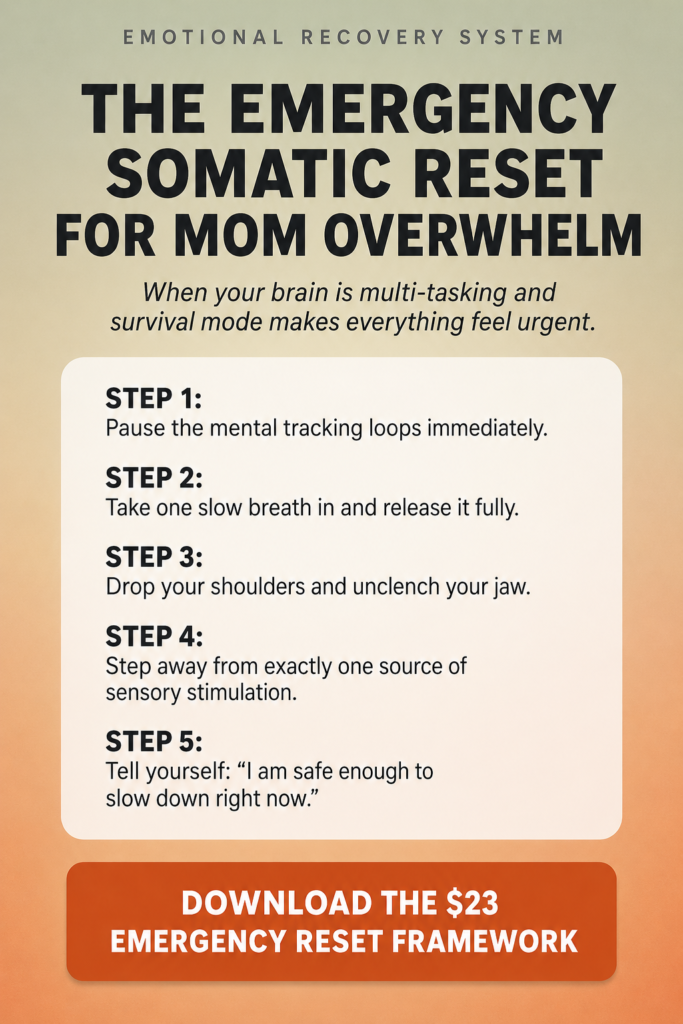
Practice Small Daily Resets
Many people approach recovery as a major project.
The nervous system often responds better to small, consistent actions.
Daily resets help interrupt the cycle of chronic stress before it becomes overwhelming.
Simple examples include:
pausing before moving to the next task
relaxing your shoulders and jaw
taking a slow breath
reducing one source of stimulation
choosing one priority instead of ten
The goal is not perfection.
The goal is consistency.
Burnout recovery for moms rarely happens through one dramatic change.
Instead, it happens through repeated moments of safety, support, and self-compassion.
The nervous system heals gradually.
Small resets practiced every day often create more lasting change than occasional extreme efforts.
That is why the most effective emotional recovery plans focus on sustainability rather than intensity.
Recovery does not require doing everything differently.
Sometimes it begins with carrying a little less and giving your nervous system permission to rest.
Frequently Asked Questions About Invisible Labor Burnout
Invisible labor burnout is gaining more attention, but many mothers still have questions about what it is, why it happens, and how recovery works. The answers below address some of the most common questions people ask when trying to understand the connection between invisible labor, mental load, emotional exhaustion, and burnout.
Is Invisible Labor Real?
Yes.
Invisible labor is a well-recognized concept that refers to the mental, emotional, and organizational work required to keep a household and family functioning. Unlike visible tasks such as cooking, cleaning, or running errands, invisible labor often happens behind the scenes.
Examples include:
remembering appointments
planning schedules
anticipating needs
managing family logistics
carrying emotional responsibilities
Because this work is largely unseen, it is often underestimated. However, over time, invisible labor can contribute significantly to stress, mental overload, emotional exhaustion, and burnout.
Why Do Mothers Experience More Mental Load?
Every family is different, but many mothers naturally become the default managers of household life.
They often carry responsibility for:
planning ahead
remembering important dates
organizing schedules
coordinating childcare
monitoring household needs
managing emotional well-being within the family
As responsibilities accumulate, the mental load grows.
Many overwhelmed mothers are not only completing physical tasks but also carrying the cognitive burden of ensuring everything gets done. This ongoing mental tracking can place significant pressure on the nervous system and contribute to burnout.
Can Burnout Affect Emotional Health?
Absolutely.
Burnout affects far more than physical energy levels.
Many mothers experiencing burnout report:
emotional exhaustion
irritability
anxiety
emotional numbness
low patience
feeling disconnected from themselves
When the nervous system remains under chronic stress, emotional well-being often suffers. This is one reason burnout recovery must address both emotional health and nervous system regulation rather than focusing only on physical rest.
How Long Does Recovery Take?
Recovery is highly individual.
Factors such as stress levels, support systems, mental load, caregiving responsibilities, and overall well-being can all influence recovery time.
For many mothers, recovery is not a single event but an ongoing process of creating greater emotional safety, reducing unnecessary pressure, and supporting nervous system healing.
The most important thing to remember is that recovery does not need to happen perfectly or all at once.
Small, consistent changes often create the most sustainable results.
The goal is not to become a different person.
The goal is to help your mind and nervous system feel safe enough to stop carrying more than they were ever meant to carry alone.
The First Step Toward Recovery
If there is one message to take away from this guide, let it be this:
You are not failing.
You are overloaded.
Many overwhelmed mothers spend years believing that their exhaustion is a personal weakness. They assume they need more discipline, better time management, or greater resilience. In reality, many are carrying an invisible workload that would challenge anyone’s emotional and mental capacity.
Invisible labor burnout is not a sign that you are incapable.
It is often a sign that your mind and nervous system have been carrying too much for too long without enough support, recovery, or emotional safety.
Recovery begins when you stop viewing yourself as the problem.
Instead of asking:
“What’s wrong with me?”
consider asking:
“What have I been carrying that no one else can see?”
That shift in perspective can be incredibly powerful.
For many mothers, the first step toward emotional recovery is giving themselves permission to slow down. Not because they have earned it. Not because everything is finished. But because their nervous system deserves opportunities to recover before burnout becomes even more severe.
Emotional safety is an essential part of healing.
The nervous system recovers best when it experiences less pressure, fewer unrealistic expectations, and more moments of support, compassion, and rest.
Recovery does not require perfection.
You do not need to fix everything this week.
You do not need to become a different person.
You do not need to carry every responsibility alone.
You simply need to begin creating small moments where your mind and body feel safe enough to stop surviving and start recovering.
The path forward is not about doing more.
It is about carrying less.
And that process can begin today, one small step at a time.
The Invisible Labor Recovery System™
If this article felt familiar, you are not alone.
The Invisible Labor Recovery System™ was created specifically for overwhelmed moms and caregivers experiencing emotional exhaustion, mental overload, invisible labor burnout, and nervous system overwhelm.
Inside you’ll discover a gentle, nervous-system-friendly approach to:
✔ Reducing emotional overload
✔ Calming an overstimulated nervous system
✔ Creating emotional safety
✔ Lowering mental load
✔ Supporting sustainable recovery
Explore The Invisible Labor Recovery System™ and begin your recovery journey today.
Need Relief From Overthinking Right Now?
If your mind feels stuck in constant mental loops, racing thoughts, or overwhelming stress, a quick reset can help.
Stop Feeling Overwhelmed—Fast (The 5-Minute Cognitive Reset System)
A practical, easy-to-follow system designed to interrupt overthinking, reduce mental overload, and help you regain clarity in just a few minutes.
Sometimes recovery begins with a single calm moment.