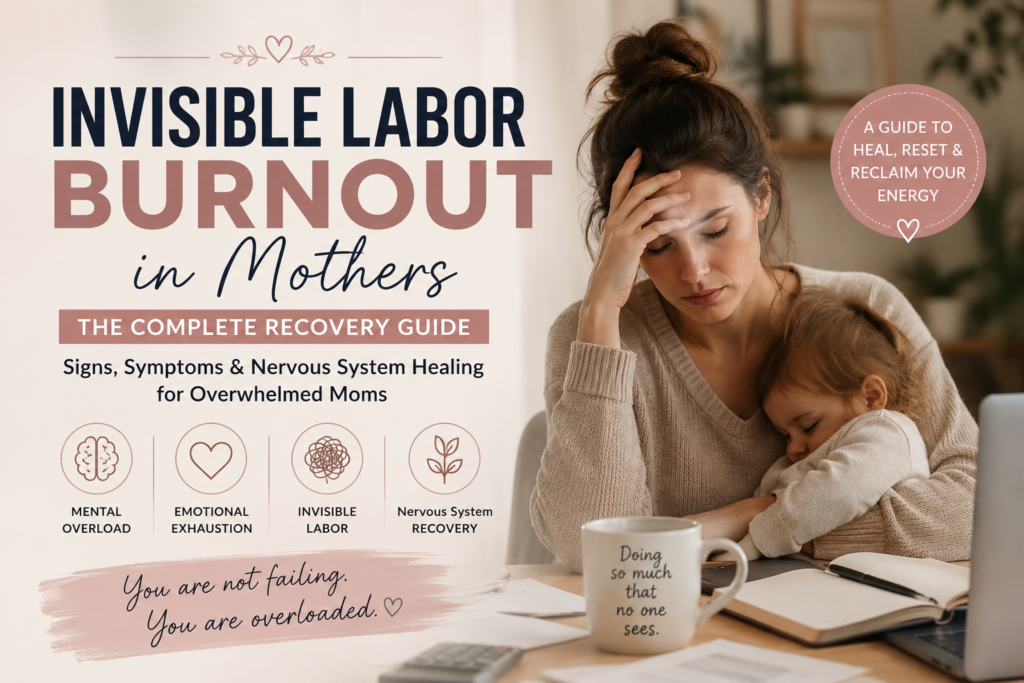
Invisible Labor Burnout in Mothers: Signs, Symptoms & Recovery Guide
Invisible Labor Burnout in Mothers: The Complete Recovery Guide Many mothers experience invisible labor burnout without realizing it. Invisible labor refers to the mental load, emotional labor, planning, remembering, and caregiving responsibilities that often go unseen. Over time, this hidden workload can contribute to emotional exhaustion, chronic stress, nervous system overload, and burnout in overwhelmed moms. Invisible Labor Burnout in Mothers: The Complete Recovery Guide If you feel exhausted before the day even begins, struggle to switch off mentally at night, or carry a constant sense of responsibility for everyone around you, you are not alone. Many overwhelmed mothers are experiencing a form of burnout that often goes unrecognized: invisible labor burnout. Invisible labor refers to the mental load, emotional labor, planning, remembering, organizing, anticipating needs, and managing responsibilities that keep families functioning every day. While much of this work goes unseen, its impact on a mother’s emotional well-being, stress levels, and nervous system can be significant. Over time, carrying invisible labor without adequate support can lead to emotional exhaustion, chronic stress, mental overload, decision fatigue, and symptoms commonly associated with mom burnout. Many mothers begin to feel overwhelmed, overstimulated, and emotionally drained without fully understanding why. The good news is that burnout recovery is possible. Understanding how invisible labor affects the mind and nervous system is the first step toward healing. In this guide, you’ll learn what invisible labor is, the hidden signs of invisible labor burnout in mothers, how chronic mental load impacts the nervous system, and practical recovery strategies that help overwhelmed moms feel calmer, lighter, and more supported. This article is designed to help you move from survival mode toward sustainable emotional recovery—one small step at a time. What Is Invisible Labor? Invisible labor is the unseen work that keeps a household, family, and daily life running smoothly. Unlike physical tasks that people can easily observe, invisible labor happens largely behind the scenes. It includes the constant planning, remembering, organizing, anticipating needs, managing schedules, and carrying the emotional responsibility for everyone else’s well-being. For many mothers, invisible labor becomes such a normal part of daily life that it is rarely recognized as work at all. Yet over time, this hidden workload can contribute significantly to stress, emotional exhaustion, mental overload, and burnout. Understanding invisible labor is often the first step toward understanding why so many overwhelmed mothers feel exhausted even when they never seem to stop doing things for everyone around them. The Work Nobody Sees When people think about work, they often picture visible tasks such as cooking dinner, cleaning the house, doing laundry, driving children to activities, or helping with homework. While these responsibilities certainly require time and energy, they represent only part of the workload many mothers carry. Invisible labor includes the mental effort behind those tasks. Examples of invisible labor include: Remembering medical appointments Tracking school schedules and deadlines Planning meals for the week Monitoring household supplies Managing family calendars Anticipating children’s emotional needs Remembering birthdays and special events Coordinating childcare arrangements Keeping track of unfinished responsibilities This constant mental tracking often continues even during moments that appear to be rest. A mother may be sitting quietly on the couch while simultaneously running through tomorrow’s schedule, worrying about upcoming obligations, or mentally organizing household responsibilities. Because invisible labor happens internally, it is frequently overlooked by others. Yet the cognitive and emotional effort involved can be just as demanding as physical work. Mental Load vs Physical Tasks One of the most important distinctions to understand is the difference between the mental load and physical tasks. Physical tasks involve doing something visible: Washing dishes Folding laundry Preparing meals Driving children to school Cleaning rooms The mental load involves everything required to make those tasks happen: Remembering what needs to be done Deciding when it should happen Anticipating future needs Monitoring unfinished responsibilities Managing competing priorities Many mothers are not only completing physical tasks but also carrying responsibility for planning and coordinating them. This ongoing mental load can create a state of constant cognitive activity. The brain remains alert, scanning for potential problems, unfinished tasks, and future demands. Over time, this can contribute to decision fatigue, overwhelm, and chronic stress. Why Mothers Carry More Invisible Labor Although every family is different, research and lived experience consistently show that mothers often carry a disproportionate share of invisible labor. Many mothers become the default managers of household life. They remember appointments, anticipate needs, coordinate schedules, track responsibilities, and maintain emotional awareness for multiple family members at once. This role can develop gradually over time. Small responsibilities accumulate until one person becomes responsible for remembering nearly everything. As invisible labor increases, the nervous system may begin operating in a prolonged state of vigilance. Instead of experiencing regular periods of recovery, the brain remains focused on monitoring responsibilities and preparing for the next demand. This is where invisible labor becomes more than a productivity issue—it becomes a nervous system issue. When the mind is constantly tracking, anticipating, remembering, and managing, true rest becomes difficult. The nervous system receives fewer signals of safety and recovery, increasing the risk of emotional exhaustion, mental overload, caregiver burnout, and chronic stress. Understanding invisible labor is not about assigning blame. It is about recognizing a hidden burden that many overwhelmed mothers carry every day. Once that burden becomes visible, recovery becomes far more possible. The Hidden Signs of Invisible Labor Burnout Invisible labor burnout does not always look the way people expect. Many articles focus on physical exhaustion, but burnout in mothers often begins emotionally and mentally long before it becomes physically visible. A mother can continue caring for her family, meeting responsibilities, and functioning day-to-day while quietly experiencing emotional exhaustion, chronic mental overload, and nervous system strain. Because these symptoms develop gradually, they are often dismissed as normal stress or simply part of motherhood. Recognizing the hidden signs of invisible labor burnout is an important step toward recovery. Emotional Exhaustion One of the most common burnout symptoms in mothers is emotional exhaustion.
Invisible Labor Burnout in Mothers: Signs, Symptoms & Recovery Guide Read Post »