Introduction
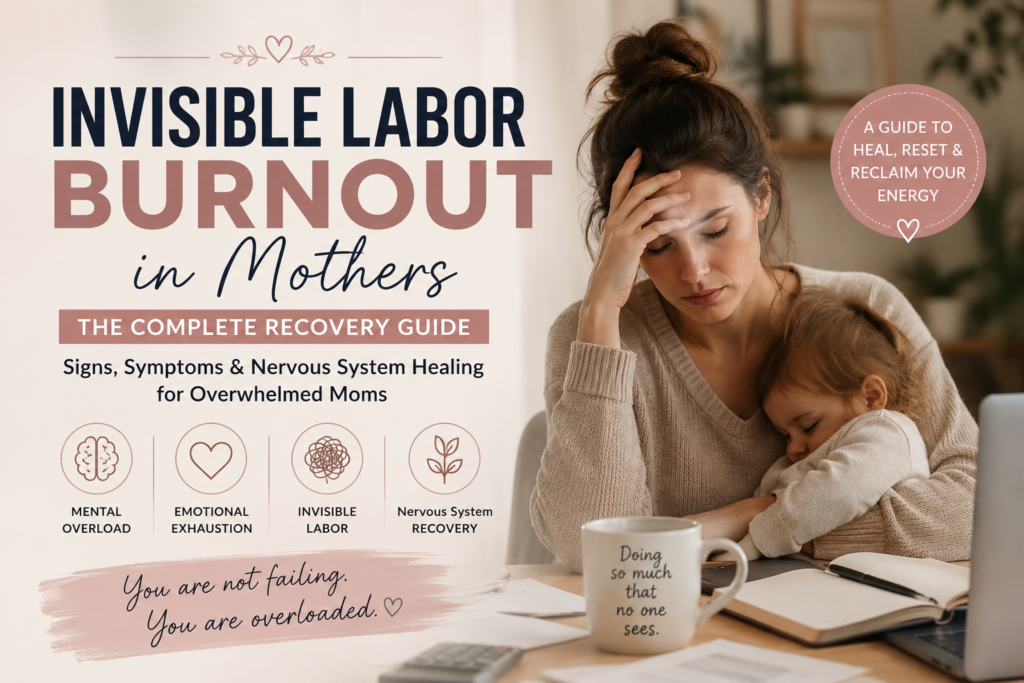
Emotional exhaustion in mothers is more than feeling tired after a long day. It is the deep, lingering feeling of having nothing left to give, even after doing everything for everyone else. You wake up exhausted, move through the day on autopilot, and go to bed wondering why you still feel drained.
Many mothers spend their days caring for children, managing schedules, solving problems, and meeting the needs of everyone around them. However, while they continue giving their time, energy, and attention, their own emotional reserves slowly run dry. Over time, this constant output can leave you feeling empty, disconnected, and overwhelmed.
Unlike physical fatigue, emotional exhaustion does not always improve with a good night’s sleep. In fact, many mothers find themselves waking up tired, irritable, and emotionally depleted despite getting enough rest. Consequently, they may begin to struggle with patience, motivation, focus, and even enjoyment in everyday life.
The good news is that emotional exhaustion is not a personal failure. Instead, it is often a sign that your mind, body, and nervous system have been carrying too much for too long. Throughout this guide, you’ll learn the common signs of emotional exhaustion in mothers, the hidden factors that contribute to it, and practical strategies that support emotional recovery and long-term healing.
Feeling Mentally Overloaded Right Now?
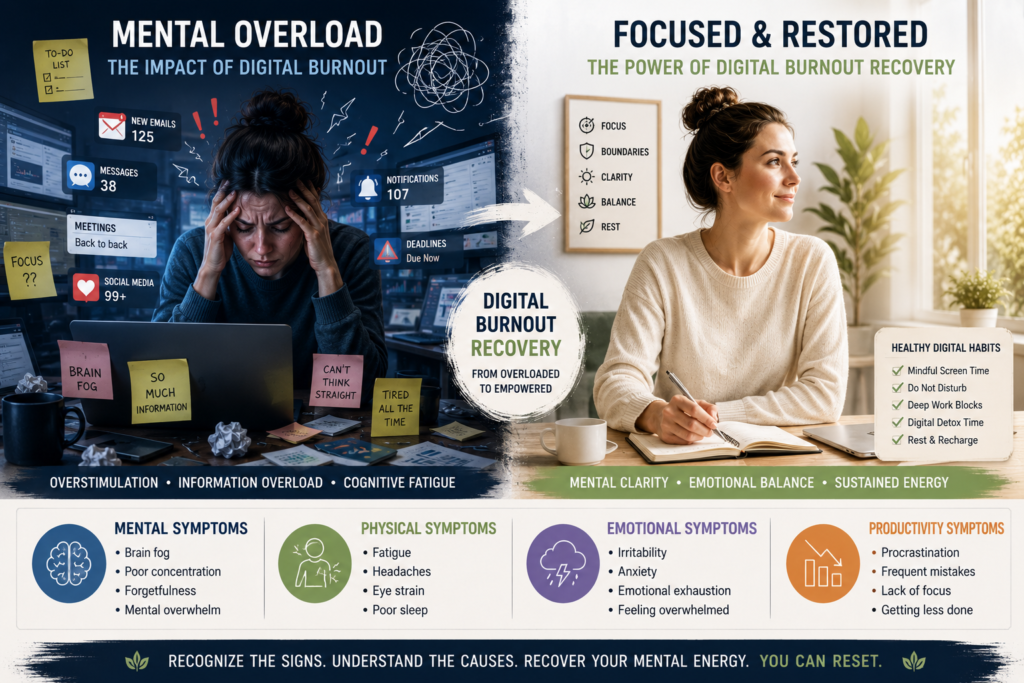
If the symptoms in this article sound familiar, you don’t need to overhaul your entire life today. In many cases, the first step in digital burnout recovery is simply becoming aware of what’s draining your mental energy.
That’s why I created the Anti-Brain Fry Checklist (5-Minute Reset Audit).
This simple audit is designed to help you quickly identify common sources of cognitive overload, information fatigue, and digital stress. In just a few minutes, you’ll gain a clearer picture of the habits, inputs, and patterns that may be contributing to mental exhaustion.
It’s especially helpful if you:
Feel mentally “on” all day
Struggle to switch off after work
Experience brain fog or poor concentration
Feel overwhelmed by constant information
Want a fast and practical starting point
Furthermore, the checklist focuses on awareness rather than perfection. Small adjustments often create meaningful improvements over time.
If you’re looking for an immediate reset before building a larger recovery plan, the Anti-Brain Fry Checklist can help you take the first step toward greater clarity, focus, and mental breathing room.
👉 Get the Anti-Brain Fry Checklist (5-Minute Reset Audit)
Sometimes the fastest way to feel better is to identify what’s draining your energy in the first place.
What Is Emotional Exhaustion in Mothers?
Many people assume emotional exhaustion is simply another form of tiredness. However, emotional exhaustion in mothers goes much deeper. It is the feeling of being mentally, emotionally, and psychologically drained after carrying responsibilities for an extended period of time.
Unlike normal fatigue, emotional exhaustion does not disappear after a good night’s sleep or a quiet weekend. Instead, it lingers in the background and affects how you think, feel, and respond to everyday situations. As a result, even simple tasks can begin to feel overwhelming.
Signs of Emotional Exhaustion in Mothers
The signs of emotional exhaustion in mothers often appear gradually. Because the change happens slowly, many women do not recognize the warning signs until they feel completely overwhelmed.
Common signs include:
-
Feeling emotionally drained every day
-
Losing patience more quickly than usual
-
Feeling detached or disconnected from loved ones
-
Struggling to focus or make decisions
-
Constant irritability or frustration
-
Feeling numb instead of joyful
-
Crying more often or feeling emotionally fragile
-
Losing motivation for activities you once enjoyed
Although these symptoms may seem small at first, they often become more intense when emotional exhaustion remains unaddressed.
Why Emotional Exhaustion Is More Than Feeling Tired
Physical tiredness usually has a clear solution. You rest, sleep, and gradually regain your energy. Emotional exhaustion works differently.
When your emotional reserves become depleted, rest alone may not solve the problem. In fact, many mothers wake up feeling just as drained as they did the night before. This happens because emotional exhaustion affects your thoughts, emotions, stress levels, and nervous system. Consequently, the body remains in a state of ongoing strain even when you are technically resting.
Why Emotional Exhaustion in Mothers Often Goes Unnoticed
Emotional exhaustion in mothers often hides behind daily responsibilities. Many mothers continue caring for their families, managing household tasks, and meeting work obligations despite feeling depleted.
Because they keep functioning, others may not notice the struggle. Unfortunately, mothers themselves often dismiss the signs as “just part of motherhood.” Over time, this mindset can lead to deeper burnout, emotional overwhelm, and prolonged recovery.
Recognizing emotional exhaustion early is important. The sooner you identify the signs, the easier it becomes to protect your emotional well-being and begin the recovery process.
What Causes Emotional Exhaustion in Mothers?
Emotional exhaustion rarely appears overnight. Instead, it develops gradually as daily responsibilities, emotional demands, and constant caregiving begin to consume more energy than a mother can restore. While every mother’s experience is different, several common factors contribute to emotional exhaustion in mothers.
Many women spend years caring for children, supporting partners, managing households, coordinating schedules, and handling countless invisible responsibilities. Over time, this continuous pressure can leave them feeling mentally drained, emotionally depleted, and disconnected from themselves.
Understanding the root causes is important because recovery becomes much easier when you address the source of the problem rather than simply treating the symptoms.
How Invisible Labor Contributes to Emotional Exhaustion in Mothers
One of the biggest yet least recognized causes of emotional exhaustion in mothers is invisible labor.
Invisible labor includes all the mental and emotional work required to keep family life running smoothly. It involves remembering appointments, planning meals, buying gifts, scheduling activities, monitoring children’s needs, organizing school events, and anticipating problems before they happen.
Unlike household chores, invisible labor often goes unnoticed because nobody sees it happening. However, the brain remains constantly engaged in planning, organizing, and problem-solving.
As a result, many mothers feel like they are always “on duty.” Even during moments of rest, their minds continue managing responsibilities. Consequently, true mental recovery becomes difficult, which increases the risk of emotional exhaustion and burnout.
Internal Link Opportunity:
Link the phrase “invisible labor burnout” to your article:
Invisible Labor Burnout in Mothers: Signs, Symptoms & Recovery Guide.
Mental Load and Emotional Exhaustion in Mothers
Closely connected to invisible labor is the concept of the mental load.
The mental load refers to the ongoing responsibility of remembering, tracking, and coordinating everything that needs attention. From school deadlines and grocery lists to medical appointments and family schedules, mothers often carry an overwhelming amount of information every day.
Although these tasks may seem small individually, they create significant stress when combined.
Over time, the mental load keeps the brain in a constant state of alertness. Instead of experiencing periods of recovery, many mothers move directly from one responsibility to the next. Therefore, emotional energy becomes depleted faster than it can be replenished.
Many mothers describe this experience as having “too many tabs open” in their minds all day long. Eventually, that constant mental activity contributes directly to emotional exhaustion.
Internal Link Opportunity:
Link the phrase “mental load and exhaustion” to:
Why Overwhelmed Moms Feel Tired Even After Sleeping.
Why Constant Caregiving Drains Emotional Energy
Caregiving requires far more than physical effort. It also demands emotional energy.
Mothers often serve as comfort providers, problem solvers, teachers, mediators, organizers, and emotional support systems for their families. While these roles can be deeply rewarding, they also require continuous emotional investment.
Children naturally depend on their mothers for guidance, reassurance, and support. Consequently, mothers frequently place their own emotional needs at the bottom of their priority list.
Over months and years, this pattern can create a significant emotional imbalance. When a person consistently gives emotional support without receiving enough recovery time, emotional reserves begin to shrink.
Eventually, even small challenges may feel overwhelming because there is little emotional energy left to draw from.
When Emotional Burnout Builds Slowly Over Time
Many mothers expect burnout to arrive suddenly. In reality, emotional burnout usually develops in stages.
At first, you may simply feel tired more often. Then you begin losing patience, feeling irritable, or struggling to enjoy activities that once made you happy. As responsibilities continue to grow, emotional recovery becomes increasingly difficult.
Unfortunately, many mothers dismiss these warning signs as a normal part of motherhood. They continue pushing through exhaustion because they believe everyone else is coping better.
However, emotional exhaustion in mothers often worsens when ignored. Over time, chronic stress, invisible labor, mental load, and constant caregiving can push the nervous system into a prolonged state of overload.
The result is a cycle of emotional depletion that becomes harder to break without intentional recovery strategies. Recognizing these causes early can help prevent deeper burnout and support long-term emotional well-being.
10 Signs of Emotional Exhaustion in Mothers
Emotional exhaustion rarely announces itself with a single dramatic moment. Instead, it often appears through subtle changes in your emotions, thoughts, and daily behavior. Because these signs develop gradually, many mothers overlook them until they feel completely overwhelmed.
If the following signs sound familiar, your mind and body may be asking for recovery, support, and rest.
Sign #1: You Feel Emotionally Drained Every Day
One of the most common signs of emotional exhaustion in mothers is feeling emotionally depleted from the moment you wake up.
Even after sleeping, you may feel like you have no emotional energy left. Everyday responsibilities feel heavier than they once did, and simply getting through the day requires significant effort.
Instead of feeling refreshed, you start each morning already running low on emotional reserves.
Sign #2: Small Problems Feel Bigger Than They Should
When emotional resources become depleted, your ability to handle stress often decreases.
A missed appointment, a spilled drink, or a minor disagreement may suddenly feel overwhelming. Situations that once felt manageable now trigger frustration, anxiety, or emotional distress.
This happens because emotional exhaustion reduces your capacity to cope with additional stress.
Sign #3: You Have Less Patience Than Before
Many mothers notice changes in their patience levels long before they recognize emotional burnout.
You may find yourself becoming irritated more quickly, reacting strongly to small frustrations, or feeling overwhelmed by normal childhood behaviors.
Although you still love your family deeply, maintaining patience requires much more effort than it once did.
Sign #4: Emotional Exhaustion in Mothers Can Feel Like Numbness
Not everyone responds to emotional exhaustion with tears or visible stress.
Sometimes emotional exhaustion in mothers creates emotional numbness instead. You may feel detached from situations that would normally bring happiness, excitement, or concern.
Rather than feeling too much, you may feel very little at all.
This emotional shutdown often develops when the nervous system has been under pressure for an extended period.
Sign #5: You Cry More Easily or Not at All
Emotional exhaustion affects everyone differently.
Some mothers become highly emotional and find themselves crying more often than usual. Others experience the opposite response and struggle to access their emotions at all.
Both reactions can signal emotional overload.
When emotional resources become depleted, emotional regulation becomes more difficult, making feelings harder to manage.
Sign #6: You Feel Disconnected From Yourself
Many mothers describe feeling as though they have lost touch with who they are outside of their caregiving role.
You may remember hobbies, goals, interests, or passions that once brought joy but struggle to connect with them now.
Over time, constant caregiving and emotional demands can create a sense of disconnection from your own needs, identity, and personal well-being.
Sign #7: Emotional Exhaustion in Mothers Can Cause Brain Fog
Brain fog is another common symptom of emotional exhaustion in mothers.
You may forget simple tasks, lose track of conversations, misplace items, or struggle to focus.
Although this can feel frustrating, it is often a response to chronic stress and mental overload.
When the brain spends long periods managing invisible labor, mental load, and caregiving demands, concentration and memory often suffer.
Sign #8: You Struggle to Enjoy Things You Once Loved
Activities that once brought happiness may start feeling like obligations.
You might stop reading, exercising, socializing, or engaging in hobbies because everything feels exhausting.
This does not mean you no longer care about these activities. Instead, emotional burnout can reduce your ability to experience enjoyment and motivation.
As emotional exhaustion grows, pleasure often takes a back seat to survival mode.
Sign #9: You Feel Guilty for Needing a Break
Many mothers feel guilty whenever they prioritize themselves.
Even when exhausted, they continue pushing forward because they believe everyone else’s needs should come first.
However, constantly ignoring your own needs can accelerate emotional burnout.
Healthy recovery requires rest, support, and boundaries. Needing a break does not make you selfish. It makes you human.
Sign #10: You Constantly Feel Like You’re Running on Empty
Perhaps the clearest sign of emotional exhaustion in mothers is the feeling that you have nothing left to give.
You continue showing up for your family, completing responsibilities, and managing daily life. However, underneath it all, you feel emotionally depleted.
No matter how much you accomplish, the exhaustion remains.
When this feeling persists for weeks or months, it often signals deeper emotional burnout rather than temporary stress.
Recognizing these signs is an important first step. The sooner you identify emotional exhaustion, the sooner you can begin supporting your emotional well-being, reducing overload, and creating space for meaningful recovery.
How Emotional Exhaustion in Mothers Affects the Nervous System
Emotional exhaustion affects more than your mood. It also impacts how your nervous system functions every day.
When stress becomes chronic, the brain begins treating everyday responsibilities as ongoing threats. Instead of moving smoothly between periods of activity and recovery, the body remains stuck in a state of heightened alertness. Over time, this pattern can contribute to nervous system overload, making it increasingly difficult to feel calm, focused, and emotionally balanced.
As a result, many mothers find themselves feeling constantly tense, overwhelmed, and unable to fully relax, even during quiet moments.
Why Emotional Exhaustion in Mothers Triggers Survival Mode
The nervous system is designed to protect you from danger. During stressful situations, it activates a survival response that prepares the body to react quickly.
However, emotional exhaustion in mothers often develops when stress never truly ends.
Managing children’s needs, handling invisible labor, carrying the mental load, and responding to constant demands can keep the nervous system activated for long periods. Eventually, the brain begins treating everyday responsibilities as emergencies.
Consequently, many mothers remain in a low-level state of survival mode throughout the day. They may feel restless, anxious, irritable, or constantly on edge, even when there is no immediate crisis.
This ongoing activation consumes valuable emotional energy and makes recovery much harder.
Nervous System Overload and Emotional Burnout
As emotional stress continues, nervous system overload becomes more likely.
In this state, the body spends more time preparing for problems than recovering from them. Stress hormones remain elevated, mental fatigue increases, and emotional resilience begins to decline.
This is one reason emotional burnout can feel so overwhelming.
You may struggle to concentrate, feel emotionally reactive, experience brain fog, or become exhausted by tasks that once felt manageable. Furthermore, the body may remain tense even during periods of rest.
Internal Link Opportunity:
Link the phrase “overstimulated mom” to:
How to Calm an Overstimulated Nervous System as a Mom.
When nervous system overload and emotional burnout occur together, many mothers feel trapped in a cycle of stress and exhaustion that seems impossible to escape.
Why Recovery Becomes More Difficult Over Time
Recovery becomes more challenging when emotional exhaustion remains unaddressed for months or years.
The longer the nervous system operates in survival mode, the more difficult it becomes to switch into a state of restoration. Therefore, many mothers discover that sleep alone no longer restores their energy.
Instead, recovery often requires reducing chronic stress, addressing emotional overload, creating supportive boundaries, and allowing the nervous system opportunities to feel safe again.
The encouraging news is that the nervous system can recover. With consistent support and intentional recovery habits, emotional exhaustion in mothers can improve. The first step is recognizing that your exhaustion is not a personal weakness. It is often a sign that your mind and body have been carrying too much for too long.
Daily Habits That Prevent Emotional Exhaustion in Mothers
Preventing emotional exhaustion in mothers does not require major lifestyle changes. In many cases, small daily habits make the biggest difference. Consistent routines help protect emotional energy, reduce stress, and support long-term well-being.
While no mother can eliminate every challenge, healthy habits can make emotional overload less likely and recovery easier when stressful periods occur.
Morning Habits That Protect Emotional Energy
The way you start your day often influences how you feel for the rest of it.
Instead of immediately responding to emails, messages, or family demands, create a few minutes of calm before the day becomes busy. This might include stretching, deep breathing, journaling, prayer, mindfulness, or simply enjoying a quiet cup of coffee.
Even five minutes of intentional self-care can help you feel more grounded and emotionally prepared.
Small morning routines also create a sense of control, which can reduce stress throughout the day.
Boundaries That Reduce Emotional Burnout
Healthy boundaries are essential for preventing emotional burnout.
Many mothers automatically place everyone else’s needs ahead of their own. However, constantly saying yes to every request often leads to emotional depletion.
Setting boundaries may involve asking for help, sharing responsibilities, protecting personal time, or declining commitments that create unnecessary stress.
Boundaries are not barriers. Instead, they help preserve the emotional energy needed to care for yourself and your family in a sustainable way.
Why Small Recovery Moments Matter
Many mothers wait for large blocks of free time before focusing on recovery. Unfortunately, those opportunities do not always appear.
That is why small recovery moments matter.
A short walk, a few minutes outside, deep breathing, listening to music, or taking a brief break can help reset your mind and body. These simple habits may seem small, but they create valuable opportunities for restoration.
For many women, burnout recovery for moms begins with these small daily moments. Over time, they help reduce stress, support emotional well-being, and lower the risk of emotional exhaustion in mothers returning in the future.
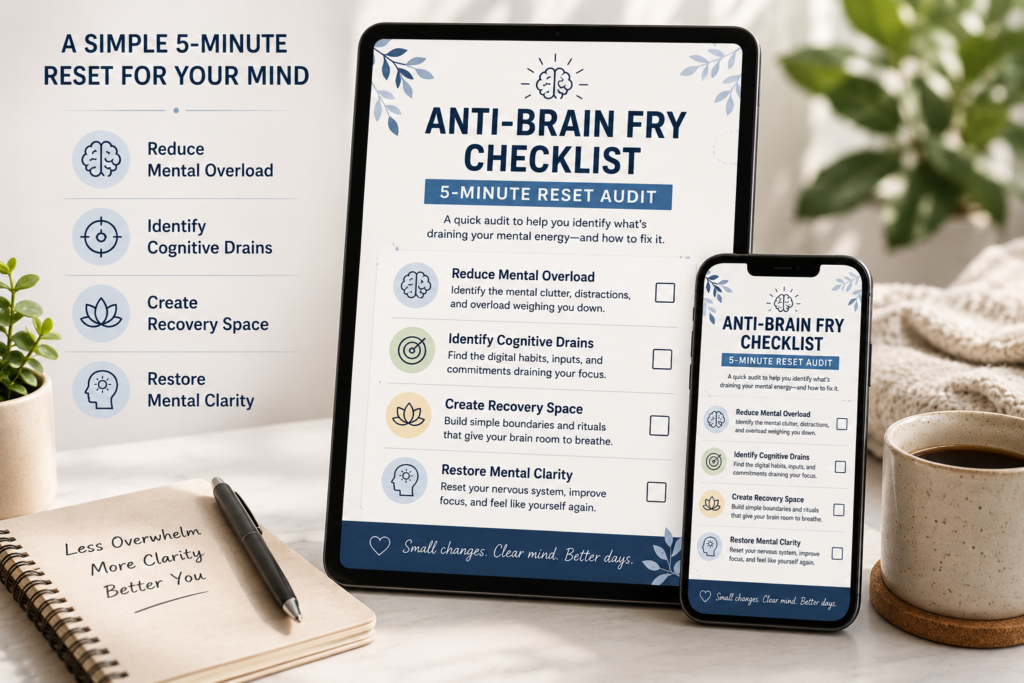
The Anti-Brain Fry Checklist is a simple 5-minute audit designed to help identify hidden sources of mental overload and support digital burnout recovery.
Emotional Exhaustion vs Physical Exhaustion in Mothers
Many mothers assume they simply need more sleep when they feel tired all the time. However, emotional exhaustion in mothers is different from physical exhaustion.
Physical exhaustion usually has a clear cause. A busy day, interrupted sleep, illness, or intense activity can leave you feeling tired. Fortunately, rest often helps the body recover. After a good night’s sleep or a few days of recovery, physical energy typically improves.
Emotional exhaustion works differently.
How Emotional Exhaustion in Mothers Feels Different
When emotional exhaustion develops, the problem goes beyond physical tiredness. You may feel mentally drained, emotionally overwhelmed, and unable to cope with everyday demands.
Simple tasks can feel difficult. Small problems may seem much larger than they really are. In addition, you may experience irritability, brain fog, emotional numbness, or a sense of disconnection from yourself.
Even when your body is resting, your mind may continue carrying stress, worry, and responsibility.
Why Sleep Alone Does Not Fix Emotional Exhaustion
Sleep is important, but it cannot always restore emotional energy.
Many mothers wake up feeling just as exhausted as they did the night before. This happens because emotional exhaustion often stems from chronic stress, invisible labor, mental load, and ongoing emotional demands.
While sleep helps the body recover, it does not automatically reduce emotional overload. Therefore, recovery often requires more than rest alone. It may involve reducing stress, setting boundaries, seeking support, and creating opportunities for emotional recovery.
If you constantly wake up tired despite getting enough rest, these exhausted mom symptoms may point to deeper emotional exhaustion rather than a lack of sleep.
The Hidden Cost of Emotional Burnout
The hidden cost of emotional burnout extends far beyond feeling tired.
Over time, emotional exhaustion can affect relationships, confidence, focus, motivation, and overall well-being. It can also make everyday motherhood feel harder than it needs to be.
Recognizing the difference between physical and emotional exhaustion is important. When you understand what is truly draining your energy, you can begin choosing recovery strategies that address the root cause rather than just the symptoms.
How to Recover From Emotional Exhaustion in Mothers
Recovering from emotional exhaustion in mothers does not happen overnight. If you have spent months or years carrying invisible labor, managing the mental load, and caring for everyone around you, your mind and body need time to heal.
The good news is that recovery is possible. Small, consistent changes often create more lasting results than dramatic lifestyle overhauls. Instead of trying to fix everything at once, focus on reducing the sources of stress that continue draining your emotional energy.
Reduce Emotional Overload to Support Emotional Recovery
The first step toward emotional recovery is identifying what feels emotionally overwhelming.
Many mothers carry responsibilities that extend far beyond physical tasks. They manage emotions, solve problems, anticipate needs, and support everyone around them.
Start by asking yourself a simple question: What currently feels heaviest?
You may not be able to remove every stressor immediately. However, you can often reduce unnecessary commitments, lower unrealistic expectations, and stop taking responsibility for things outside your control.
Even small reductions in emotional overload can create space for healing.
Lower the Mental Load That Fuels Emotional Exhaustion in Mothers
The mental load plays a major role in emotional exhaustion.
When your brain constantly tracks appointments, schedules, school activities, household tasks, and family responsibilities, it rarely gets a chance to rest.
Instead of keeping everything in your head, look for ways to share the load.
Use calendars, reminders, planning systems, and family task lists. In addition, involve other family members whenever possible. Delegating responsibilities does not mean you are failing. It means you are creating a more sustainable way to manage daily life.
Over time, lowering the mental load can significantly reduce stress and support emotional recovery.
Protect Emotional Energy Without Guilt
Many mothers feel guilty when they prioritize their own needs.
However, emotional energy is not unlimited. Just as your phone needs recharging, your emotional reserves require regular renewal.
Protecting your energy may involve setting boundaries, saying no to additional commitments, limiting emotionally draining situations, or asking for support when you need it.
Remember that self-care is not selfish.
When you protect your emotional well-being, you improve your ability to care for others without sacrificing yourself in the process.
Create Small Moments of Recovery Throughout the Day
Many mothers believe recovery requires long vacations or hours of free time.
In reality, small recovery moments can make a meaningful difference.
A quiet cup of coffee, a short walk, five minutes of deep breathing, a few pages of a book, or a brief break from screens can help calm the mind and reduce stress.
These moments may seem insignificant. However, small periods of restoration add up over time.
Instead of waiting for the perfect opportunity to rest, look for small opportunities throughout your day.
Support Nervous System Healing
Because emotional exhaustion often involves chronic stress, nervous system healing plays an important role in recovery.
Simple practices such as deep breathing, mindfulness, gentle movement, stretching, spending time outdoors, and improving sleep habits can help signal safety to the nervous system.
Internal Link Opportunity:
Link the phrase “overstimulated nervous system” to:
How to Calm an Overstimulated Nervous System as a Mom.
The goal is not perfection. The goal is helping your body spend less time in survival mode and more time in recovery mode.
Why Emotional Recovery Takes Time
Many mothers become frustrated when they do not feel better immediately.
However, recovery often happens gradually.
If emotional exhaustion developed over months or years, healing may also take time. Some days will feel easier than others. Progress may seem slow at times. Nevertheless, every small step toward reducing stress and supporting your well-being matters.
Burnout recovery for moms is not about becoming more productive. It is about restoring emotional balance, rebuilding energy, and creating a healthier relationship with your responsibilities.
Most importantly, be patient with yourself. Emotional recovery is not a sign of weakness. It is a sign that you are finally giving yourself the same care and attention that you so freely give to everyone else.
Frequently Asked Questions About Emotional Exhaustion in Mothers
What Is Emotional Exhaustion in Mothers?
Emotional exhaustion in mothers is a state of emotional, mental, and psychological depletion caused by prolonged stress and caregiving demands. Unlike normal tiredness, emotional exhaustion often persists even after rest. Many mothers describe feeling overwhelmed, emotionally drained, and unable to recharge despite continuing to manage daily responsibilities.
What Causes Emotional Exhaustion in Mothers?
Several factors can contribute to emotional exhaustion. Common causes include invisible labor, mental load, constant caregiving, chronic stress, lack of support, and limited opportunities for recovery. Over time, these ongoing demands can deplete emotional energy faster than it can be restored.
Can Emotional Exhaustion Affect Mental Health?
Yes. Emotional exhaustion can affect overall mental well-being if it continues for long periods. Many mothers experience increased stress, irritability, anxiety, emotional numbness, difficulty concentrating, and feelings of overwhelm. While emotional exhaustion does not automatically mean a mental health condition is present, prolonged exhaustion can make emotional challenges more difficult to manage.
How Do I Know If I Am Emotionally Exhausted?
Common signs include feeling emotionally drained every day, losing patience more easily, experiencing brain fog, struggling to enjoy activities you once loved, feeling disconnected from yourself, and constantly feeling like you are running on empty.
If these symptoms persist for several weeks and begin affecting your daily life, emotional exhaustion may be contributing to how you feel.
How Long Does Emotional Recovery Take?
There is no single timeline for recovery. Some mothers notice improvements within a few weeks after reducing stress and creating healthier boundaries. Others may need several months to fully restore their emotional energy.
Recovery often depends on factors such as stress levels, available support, nervous system regulation, sleep quality, and the length of time emotional exhaustion has been present. Consistent self-care and realistic expectations play an important role in the healing process.
When Should I Seek Professional Help?
Consider seeking professional support if emotional exhaustion continues despite self-care efforts, interferes with daily functioning, affects relationships, or causes significant emotional distress.
A qualified healthcare professional, therapist, counselor, or coach can help identify underlying causes and provide personalized strategies for recovery. Seeking help is not a sign of weakness. It is often an important step toward protecting your long-term emotional well-being and overall health.
Frequently Asked Questions About Emotional Exhaustion in Mothers
What Is Emotional Exhaustion in Mothers?
Emotional exhaustion in mothers is a state of emotional, mental, and psychological depletion caused by prolonged stress and caregiving demands. Unlike normal tiredness, emotional exhaustion often persists even after rest. Many mothers describe feeling overwhelmed, emotionally drained, and unable to recharge despite continuing to manage daily responsibilities.
What Causes Emotional Exhaustion in Mothers?
Several factors can contribute to emotional exhaustion. Common causes include invisible labor, mental load, constant caregiving, chronic stress, lack of support, and limited opportunities for recovery. Over time, these ongoing demands can deplete emotional energy faster than it can be restored.
Can Emotional Exhaustion Affect Mental Health?
Yes. Emotional exhaustion can affect overall mental well-being if it continues for long periods. Many mothers experience increased stress, irritability, anxiety, emotional numbness, difficulty concentrating, and feelings of overwhelm. While emotional exhaustion does not automatically mean a mental health condition is present, prolonged exhaustion can make emotional challenges more difficult to manage.
How Do I Know If I Am Emotionally Exhausted?
Common signs include feeling emotionally drained every day, losing patience more easily, experiencing brain fog, struggling to enjoy activities you once loved, feeling disconnected from yourself, and constantly feeling like you are running on empty.
If these symptoms persist for several weeks and begin affecting your daily life, emotional exhaustion may be contributing to how you feel.
How Long Does Emotional Recovery Take?
There is no single timeline for recovery. Some mothers notice improvements within a few weeks after reducing stress and creating healthier boundaries. Others may need several months to fully restore their emotional energy.
Recovery often depends on factors such as stress levels, available support, nervous system regulation, sleep quality, and the length of time emotional exhaustion has been present. Consistent self-care and realistic expectations play an important role in the healing process.
When Should I Seek Professional Help?
Consider seeking professional support if emotional exhaustion continues despite self-care efforts, interferes with daily functioning, affects relationships, or causes significant emotional distress.
A qualified healthcare professional, therapist, counselor, or coach can help identify underlying causes and provide personalized strategies for recovery. Seeking help is not a sign of weakness. It is often an important step toward protecting your long-term emotional well-being and overall health.
If you’re looking for an immediate reset before building a larger recovery plan, the Anti-Brain Fry Checklist can help you take the first step toward greater clarity, focus, and mental breathing room.
👉 Get the Anti-Brain Fry Checklist (5-Minute Reset Audit)
Sometimes the fastest way to feel better is to identify what’s draining your energy in the first place.
You Are Not Weak. You Are Emotionally Exhausted.
If you have recognized yourself throughout this article, take a moment to remember something important:
You are not failing.
You are not selfish.
You are not broken.
You are emotionally exhausted.
For many mothers, emotional exhaustion develops slowly. It grows through years of caregiving, invisible labor, mental load, interrupted rest, and the constant pressure to keep everything running smoothly. Because it happens gradually, many women blame themselves instead of recognizing what is really happening.
However, exhaustion is not a character flaw.
It is often a sign that you have been carrying too much for too long.
That is why self-compassion matters.
Instead of criticizing yourself for feeling overwhelmed, try speaking to yourself with the same kindness you would offer a close friend. Recovery becomes easier when you stop fighting yourself and start supporting yourself.
The good news is that emotional recovery is possible.
With healthier boundaries, reduced overload, nervous system support, and consistent self-care, many mothers regain their energy, confidence, and emotional balance. Healing may take time, but every small step matters.
Most importantly, you do not have to do it alone.
Ready to Begin Your Emotional Recovery?
If invisible labor, mental load, and emotional burnout have left you feeling overwhelmed, the Invisible Labor Recovery System™ provides practical tools to help you reduce mental overload, restore emotional energy, and create a more sustainable daily life.
For days when everything feels too much, explore Stop Feeling Overwhelmed—Fast (The 5-Minute Cognitive Reset System). This quick recovery tool helps calm mental overwhelm, interrupt stress spirals, and create a sense of control in just a few minutes.
Your recovery does not start when life becomes less busy.
Your recovery starts the moment you decide that your well-being matters too.
And it does.