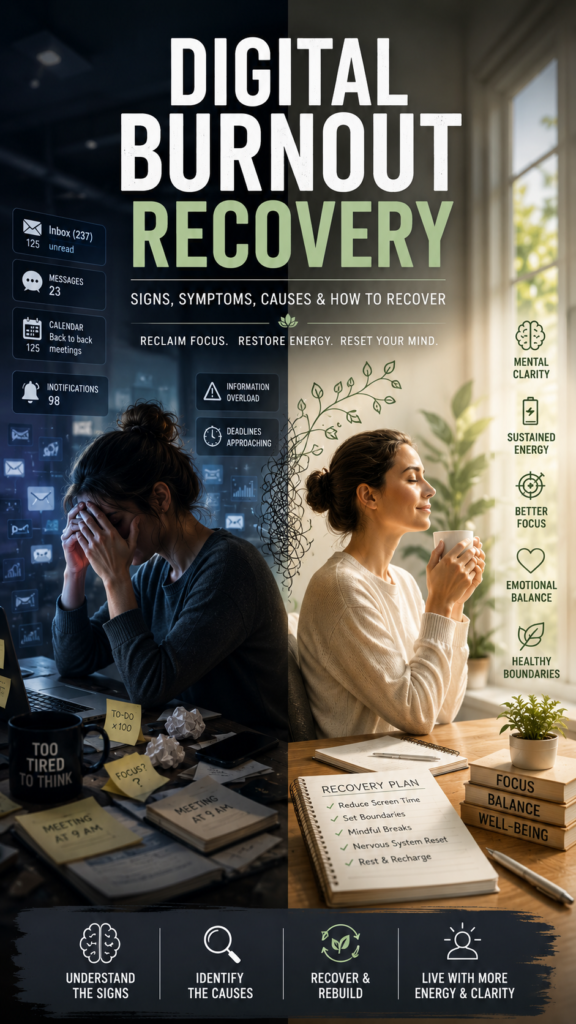
Digital burnout recovery is the process of restoring mental energy, reducing cognitive overload, and helping the nervous system recover from prolonged digital stimulation. This guide explains the signs, symptoms, causes, and recovery strategies that can help you reduce mental fatigue, improve focus, and regain clarity in a technology-driven world.
Key Takeaways
- Digital burnout recovery focuses on restoring mental energy after prolonged digital overload.
- Common symptoms include brain fog, fatigue, irritability, and difficulty concentrating.
- Information overload and constant notifications are major contributors.
- Recovery requires reducing cognitive load and creating recovery periods.
- Structured recovery systems can help prevent recurring burnout.
Introduction
Digital burnout recovery is the process of restoring mental energy after prolonged exposure to screens, notifications, information overload, and constant digital stimulation. As work, communication, and entertainment increasingly move online, digital burnout recovery has become more important than ever.
Many people feel mentally exhausted before the day is over. Others struggle to focus, remember information, or switch off at night. In some cases, even a full night’s sleep doesn’t seem to help.
Unfortunately, digital burnout is becoming more common. Remote workers, students, entrepreneurs, parents, and professionals can all experience the effects of constant digital demand. The brain was never designed to process endless streams of information without adequate recovery time.
As a result, many people find themselves stuck in a cycle of mental fatigue. They rest when they can. However, the exhaustion keeps returning. That’s because digital burnout often involves more than simple tiredness. Instead, it can reflect cognitive overload and nervous system stress that build over time.
The signs can be subtle at first. Brain fog may appear. Concentration may become harder. Small decisions can feel surprisingly difficult. Meanwhile, motivation and mental clarity often begin to decline.
The good news is that digital burnout recovery is possible. With the right strategies, you can reduce cognitive overload, support nervous system recovery, and rebuild mental energy.
In this guide, you’ll learn the most common signs of digital burnout, what causes it, why traditional rest isn’t always enough, and the practical steps that support long-term digital burnout recovery.
If persistent fatigue sounds familiar, you may also benefit from our guide on Why Your Brain Feels Tired Even After Sleeping, which explores another common cause of ongoing mental exhaustion.
What Is Digital Burnout Recovery?
Digital burnout recovery is the process of restoring mental energy, cognitive capacity, and emotional resilience after prolonged exposure to digital overload. It involves reducing the impact of constant notifications, excessive screen time, information overload, and the always-on expectations that have become common in modern life.
Unlike temporary tiredness, digital burnout develops gradually. It often begins with mental fatigue, difficulty concentrating, and a feeling that your brain never truly switches off. Over time, these symptoms can affect productivity, decision-making, sleep quality, and overall well-being.
As technology becomes more integrated into work and personal life, many people spend hours each day processing emails, messages, alerts, videos, news updates, and social media content. Consequently, the brain receives a continuous stream of stimulation with very few opportunities for recovery.
Digital burnout recovery focuses on reversing this pattern. Rather than simply taking a break from work, recovery aims to reduce cognitive overload, support nervous system regulation, and rebuild mental clarity over time.
To understand digital burnout recovery fully, it’s important to distinguish it from ordinary stress or fatigue.
Stress vs. Fatigue vs. Burnout
Although these terms are often used interchangeably, they describe different experiences.
Stress is typically a short-term response to pressure or demands. While stress can feel uncomfortable, people experiencing stress often believe they can regain control once the situation improves.
Fatigue is a state of physical or mental tiredness. In many cases, fatigue improves after adequate sleep, rest, or time away from demanding activities.
Burnout, however, is more persistent. It involves ongoing exhaustion, reduced motivation, difficulty concentrating, emotional detachment, and a feeling that recovery never fully happens. Digital burnout is a specific form of burnout linked to prolonged digital stimulation and information overload.
Therefore, digital burnout recovery is not simply about resting more. Instead, it involves helping the brain recover from a sustained period of cognitive demand.
What Makes Digital Burnout Different?
Digital burnout differs from traditional burnout because the source of the overload is often invisible. There may be no major crisis, extreme workload, or obvious stressor. Instead, the brain is gradually worn down by hundreds of small digital demands throughout the day.
For example, notifications interrupt focus. Emails create decision fatigue. Social media encourages constant attention switching. Meanwhile, information overload forces the brain to process far more data than it was designed to handle.
As a result, many people experience symptoms even when they are not working long hours.
If this sounds familiar, you may also want to explore our guide on Information Overload Symptoms, which explains how excessive information consumption can contribute to mental exhaustion.
Why Traditional Rest Often Doesn’t Help
Many people assume that a weekend off or an extra hour of sleep will solve the problem. While rest is valuable, digital burnout often affects deeper systems involved in attention, stress regulation, and cognitive recovery.
For instance, someone may sleep for eight hours and still wake up feeling mentally drained. Similarly, a vacation may provide temporary relief, yet the symptoms quickly return once normal routines resume.
This happens because digital burnout recovery requires more than passive rest. The brain often needs reduced stimulation, better recovery boundaries, and intentional periods of mental downtime.
Furthermore, prolonged screen exposure can make it difficult for the nervous system to fully disengage. Consequently, the mind remains in a heightened state of alertness even during periods of rest.
If screen exposure is contributing to your symptoms, our upcoming article Is Screen Time Making You Mentally Exhausted? explores the connection in greater detail.
Signs and Symptoms of Digital Burnout
Recognizing the signs of digital burnout is one of the most important steps in digital burnout recovery. Unfortunately, many people assume their symptoms are caused by a lack of motivation, poor time management, or insufficient sleep. However, digital burnout often develops gradually, making it difficult to identify in its early stages.
At first, you may simply feel more tired than usual. Over time, that tiredness can evolve into cognitive fatigue, emotional exhaustion, and a constant sense of mental overload. Consequently, even routine tasks can begin to feel overwhelming.
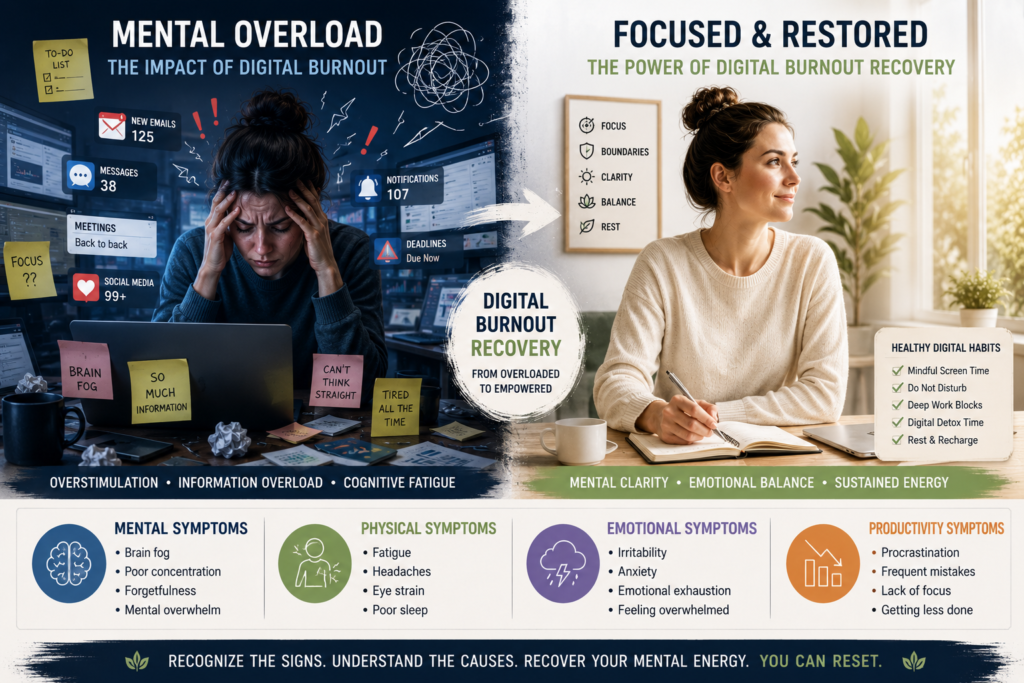
Digital burnout symptoms typically fall into four categories: mental, physical, emotional, and productivity-related.
Mental Symptoms
Mental symptoms are often the first warning signs. Because the brain is processing constant streams of information, attention and cognitive performance can begin to decline.
Common mental symptoms include:
Brain fog
Difficulty concentrating
Forgetfulness
Trouble retaining information
Feeling mentally “full”
Difficulty making decisions
Reduced creativity
Constant mental chatter
Difficulty switching between tasks
Feeling overwhelmed by simple responsibilities
Furthermore, many people report that their thinking feels slower than normal. Tasks that once took minutes may suddenly require significantly more effort.
As a result, mental fatigue often becomes one of the earliest indicators that digital burnout recovery may be needed.
For a deeper look at these warning signs, see our guide on Cognitive Fatigue Symptoms Most People Miss.
Physical Symptoms
Although digital burnout is often viewed as a mental issue, it can also produce noticeable physical symptoms.
The nervous system and brain are closely connected. Therefore, prolonged mental overload frequently affects the body as well.
Physical symptoms may include:
Persistent fatigue
Low energy levels
Headaches
Eye strain
Neck and shoulder tension
Sleep disturbances
Increased sensitivity to noise
Muscle tightness
Restlessness
Feeling exhausted despite adequate sleep
Additionally, many individuals find themselves relying more heavily on caffeine or other stimulants just to maintain normal productivity.
However, temporary energy boosts rarely address the underlying cause.
Emotional Symptoms
Digital burnout can significantly affect emotional well-being. As cognitive overload increases, emotional resilience often decreases.
Common emotional symptoms include:
Irritability
Frustration
Feeling emotionally drained
Reduced patience
Increased anxiety
Feeling detached from work
Loss of motivation
Persistent overwhelm
Difficulty relaxing
Feeling disconnected from activities once enjoyed
Meanwhile, even minor inconveniences may start triggering stronger emotional reactions than usual.
Consequently, relationships, work performance, and overall quality of life can begin to suffer.
Productivity Symptoms
Many people first notice digital burnout through changes in productivity.
While they may spend the same amount of time working, the quality of their output often declines.
Productivity-related symptoms include:
Difficulty starting tasks
Frequent procrastination
Constant task switching
Reduced focus
More mistakes than usual
Difficulty prioritizing work
Feeling busy but accomplishing little
Losing track of important details
Inability to sustain deep work
Needing longer to complete routine tasks
Furthermore, some people experience what feels like a daily energy crash.
They begin the day relatively focused. However, by mid-afternoon, concentration drops sharply and mental exhaustion takes over.
If this pattern sounds familiar, you may relate to our upcoming article Brain Fried By 3 PM Every Day? Signs of Digital Burnout You Shouldn’t Ignore.
The important thing to remember is that digital burnout rarely appears as a single symptom. Instead, it often involves a combination of mental, physical, emotional, and productivity-related challenges that gradually build over time. Recognizing these patterns early can make digital burnout recovery significantly easier and help prevent more serious exhaustion from developing.
Feeling Mentally Overloaded Right Now?
If the symptoms in this article sound familiar, you don’t need to overhaul your entire life today. In many cases, the first step in digital burnout recovery is simply becoming aware of what’s draining your mental energy.
That’s why I created the Anti-Brain Fry Checklist (5-Minute Reset Audit).
This simple audit is designed to help you quickly identify common sources of cognitive overload, information fatigue, and digital stress. In just a few minutes, you’ll gain a clearer picture of the habits, inputs, and patterns that may be contributing to mental exhaustion.
It’s especially helpful if you:
Feel mentally “on” all day
Struggle to switch off after work
Experience brain fog or poor concentration
Feel overwhelmed by constant information
Want a fast and practical starting point
Furthermore, the checklist focuses on awareness rather than perfection. Small adjustments often create meaningful improvements over time.
If you’re looking for an immediate reset before building a larger recovery plan, the Anti-Brain Fry Checklist can help you take the first step toward greater clarity, focus, and mental breathing room.
👉 Get the Anti-Brain Fry Checklist (5-Minute Reset Audit)
Sometimes the fastest way to feel better is to identify what’s draining your energy in the first place.
What Causes Digital Burnout?
Understanding the causes of digital burnout is essential for successful digital burnout recovery. While many people blame a heavy workload, burnout is often the result of multiple small stressors that accumulate over time.
Unlike traditional burnout, digital burnout is frequently driven by constant stimulation rather than a single major challenge. Emails, notifications, messages, meetings, social media updates, and endless streams of information all compete for attention throughout the day.
As a result, the brain receives very few opportunities to rest and recover.
Over time, this can contribute to cognitive fatigue, mental exhaustion, and nervous system overload.
Constant Notifications
Modern technology is designed to capture attention.
Every notification creates a small interruption. While a single alert may seem harmless, dozens or even hundreds of interruptions each day can significantly impact mental energy.
Common examples include:
Email alerts
Messaging apps
Social media notifications
Calendar reminders
News updates
App notifications
Furthermore, each interruption forces the brain to switch focus. Consequently, it takes additional mental effort to return to the original task.
Over time, this constant attention shifting can contribute to feelings of overwhelm, reduced concentration, and mental fatigue.
Information Overload
The human brain is exposed to more information today than at any other point in history.
Articles, videos, podcasts, social media feeds, news updates, emails, and online discussions all compete for limited cognitive resources.
While access to information can be beneficial, excessive consumption often creates cognitive overload.
Common signs include:
Difficulty processing information
Feeling mentally cluttered
Trouble making decisions
Reduced focus
Brain fog
Additionally, many people continue consuming information even when they are already mentally exhausted.
As a result, recovery becomes more difficult because the brain never receives a true break from input.
For a deeper understanding of this issue, see our guide on Information Overload Symptoms.
Always-On Work Culture
Technology has blurred the boundaries between work and personal life.
Many professionals now carry their workplace in their pocket. Emails arrive after hours. Messages appear during weekends. Notifications continue long after the workday ends.
Consequently, the brain may remain in work mode even during periods that should support recovery.
This constant accessibility creates a feeling of being permanently “on.”
Furthermore, many people feel pressure to respond immediately, even when no true urgency exists.
Over time, this pattern can increase stress levels and contribute to ongoing mental exhaustion.
Decision Fatigue
Every decision requires mental energy.
Digital environments often demand hundreds of small decisions each day.
Examples include:
Which email to answer first
Which notification deserves attention
What content to consume
Which task to prioritize
How to respond to messages
Individually, these decisions may seem insignificant. However, their cumulative effect can be substantial.
As decision fatigue increases, concentration declines and mental energy becomes depleted more quickly.
Consequently, even simple choices may begin to feel overwhelming.
Lack of Recovery Time
Perhaps the most overlooked cause of digital burnout is the absence of genuine recovery time.
Many people spend their entire day consuming information. Then, instead of resting, they continue scrolling social media, watching videos, or checking notifications during their free time.
As a result, the brain remains engaged from morning until night.
True recovery requires periods of reduced stimulation. The mind needs opportunities to process information, recharge attention, and return to a calmer state.
Without these recovery periods, mental fatigue can gradually accumulate.
How Nervous System Overload Develops
All of these factors can contribute to nervous system overload.
The nervous system is designed to respond to demands and challenges. However, when stimulation becomes constant, it may struggle to return to a fully relaxed state.
Consequently, many people experience symptoms such as:
Persistent mental fatigue
Difficulty relaxing
Poor concentration
Increased irritability
Sleep disturbances
Feeling mentally “on” all the time
Meanwhile, the brain continues consuming energy even during periods that should support recovery.
This is one reason why people often feel exhausted despite getting enough sleep.
If you frequently feel unable to disconnect or relax, our upcoming guide Why You Can’t Switch Off Anymore explores this pattern in greater detail.
The good news is that understanding these causes is the first step toward digital burnout recovery. Once you identify the sources of overload, it becomes much easier to create boundaries, reduce stimulation, and support long-term mental recovery.
Why Digital Burnout Affects the Nervous System
Digital burnout is often viewed as a productivity problem. However, its effects go much deeper. One of the most important aspects of digital burnout recovery is understanding how prolonged digital overload affects the nervous system.
The nervous system is responsible for regulating energy, attention, stress responses, and recovery. Under normal circumstances, it moves between periods of activity and periods of rest. However, constant digital stimulation can disrupt this natural cycle.
As a result, many people begin experiencing mental exhaustion, difficulty relaxing, poor concentration, and a persistent feeling of being “switched on.”
The Fight-or-Flight Response and Digital Burnout
The human nervous system evolved to help us respond to threats.
When the brain perceives a challenge, it activates the fight-or-flight response. This response increases alertness, sharpens attention, and prepares the body to take action.
While this response is useful during genuine emergencies, modern digital environments can trigger similar reactions repeatedly throughout the day.
For example:
Constant notifications demand immediate attention.
Urgent emails create pressure to respond.
Endless information streams keep the brain alert.
Work messages blur personal boundaries.
Consequently, the nervous system may spend extended periods in a heightened state of activation.
The Role of Stress Hormones
When the nervous system remains activated, stress hormones such as cortisol and adrenaline can remain elevated for longer periods.
In the short term, these hormones help maintain focus and performance. However, chronic activation can become mentally draining.
Over time, elevated stress responses may contribute to:
Mental fatigue
Irritability
Difficulty concentrating
Sleep disruptions
Increased anxiety
Emotional exhaustion
Furthermore, the brain must continuously allocate resources to managing these stress responses.
As a result, less energy remains available for creativity, problem-solving, and emotional regulation.
The Role of Chronic Stimulation
One of the biggest challenges of modern life is that stimulation rarely stops.
Many people wake up and immediately check their phones. Throughout the day, they move between emails, meetings, messages, videos, and social media. Then, during the evening, additional screen time often replaces genuine recovery.
Meanwhile, the brain receives very few opportunities to process information in a calm environment.
This constant stimulation can gradually overwhelm the nervous system.
Consequently, mental fatigue accumulates faster than recovery can occur.
Over weeks or months, this imbalance may contribute to digital burnout symptoms becoming more severe and persistent.
Why Your Brain Stays “On”
A common complaint among people experiencing burnout is that they cannot fully relax.
Even during periods of rest, the mind may continue racing through unfinished tasks, incoming messages, or future responsibilities.
This phenomenon occurs because the nervous system has become accustomed to continuous stimulation.
Instead of transitioning smoothly into recovery mode, the brain remains alert and engaged.
As a result, people often experience:
Difficulty unwinding
Restless sleep
Racing thoughts
Constant mental chatter
Feeling exhausted but unable to relax
This state is sometimes referred to as recovery resistance. The body is technically resting, yet the nervous system struggles to fully disengage.
If this sounds familiar, you may benefit from reading our guide on Nervous System Overload, which explores the signs and recovery strategies associated with chronic overstimulation.
Understanding how digital burnout affects the nervous system is a critical part of digital burnout recovery. Once you recognize the connection between constant stimulation and mental exhaustion, it becomes easier to create boundaries that support genuine recovery, improved focus, and long-term well-being.
How to Start Digital Burnout Recovery
The good news is that digital burnout recovery does not require a complete lifestyle overhaul. In fact, trying to change everything at once often creates additional stress.
Instead, recovery works best when you make small, sustainable adjustments that reduce cognitive overload and give your nervous system more opportunities to rest.
The goal is not to eliminate technology. Rather, the goal is to create healthier relationships with digital inputs so your brain can recover, recharge, and function more effectively.
Reduce Cognitive Load
One of the fastest ways to support digital burnout recovery is to reduce the amount of mental processing your brain performs each day.
Many people unknowingly carry hundreds of open mental loops. Unfinished tasks, unread messages, and constant reminders all consume cognitive resources.
To reduce cognitive load:
Write tasks down instead of remembering them.
Use a simple daily priority list.
Limit active projects when possible.
Break large tasks into smaller steps.
Complete quick tasks immediately if they take less than two minutes.
Furthermore, avoid multitasking whenever possible.
Although multitasking feels productive, it forces the brain to repeatedly switch attention. Consequently, mental fatigue increases more quickly.
A simpler workload often creates greater mental clarity.
Create Screen Boundaries
Most people spend hours each day looking at screens without realizing how much stimulation they are absorbing.
Therefore, creating intentional screen boundaries can significantly support recovery.
Consider implementing:
A no-phone period during the first 30 minutes of the day.
Device-free meals.
Notification-free focus blocks.
Screen-free breaks between tasks.
A technology cutoff time before bed.
Additionally, review your notifications regularly.
Many alerts do not require immediate attention.
By reducing interruptions, you allow the brain to maintain focus and conserve mental energy.
Even a small reduction in digital noise can make a noticeable difference over time.
Build Recovery Rituals
Recovery rarely happens automatically.
Instead, the nervous system often benefits from intentional rituals that signal safety, calm, and relaxation.
Simple recovery rituals may include:
Taking a short walk outdoors.
Drinking tea without checking your phone.
Stretching for five minutes.
Deep breathing exercises.
Journaling.
Listening to calming music.
Spending time in nature.
The activity itself matters less than the consistency.
When repeated regularly, recovery rituals help the brain transition away from constant stimulation and into a more restorative state.
Furthermore, these small practices can become powerful anchors during stressful periods.
Lower Information Consumption
Many people focus on managing tasks while ignoring the amount of information they consume.
However, information overload is one of the most common contributors to digital burnout.
Ask yourself:
Do I need this notification?
Do I need this newsletter?
Do I need to read this article right now?
Do I need to consume more content today?
In many cases, the answer is no.
Consider:
Unsubscribing from unnecessary emails.
Limiting news consumption.
Reducing social media scrolling.
Choosing quality information over quantity.
Scheduling specific times for content consumption.
As a result, your brain receives fewer inputs to process.
This creates more mental space for focus, creativity, and recovery.
Schedule Mental White Space
One of the most overlooked aspects of digital burnout recovery is creating periods of intentional mental white space.
Mental white space is time when the brain is not consuming information, solving problems, or responding to demands.
Examples include:
Sitting quietly with a cup of coffee.
Taking a short walk without headphones.
Looking out a window.
Practicing mindfulness.
Spending time outdoors without devices.
At first, these moments may feel unproductive.
However, they provide something many modern brains desperately need: recovery from constant input.
Consequently, mental white space often improves focus, emotional regulation, creativity, and decision-making.
Start Small and Build Consistency
The most effective digital burnout recovery plans are often the simplest.
You do not need to eliminate technology or redesign your entire routine overnight.
Instead, choose one or two strategies from this section and practice them consistently.
For example:
Turn off non-essential notifications.
Take one screen-free walk each day.
Create a 30-minute evening technology boundary.
Small changes may seem insignificant at first. However, they accumulate over time.
As a result, your brain experiences less overload, your nervous system receives more opportunities to recover, and mental clarity gradually begins to return.
Digital burnout recovery is not about doing more. In many cases, it begins by giving your mind permission to do less.
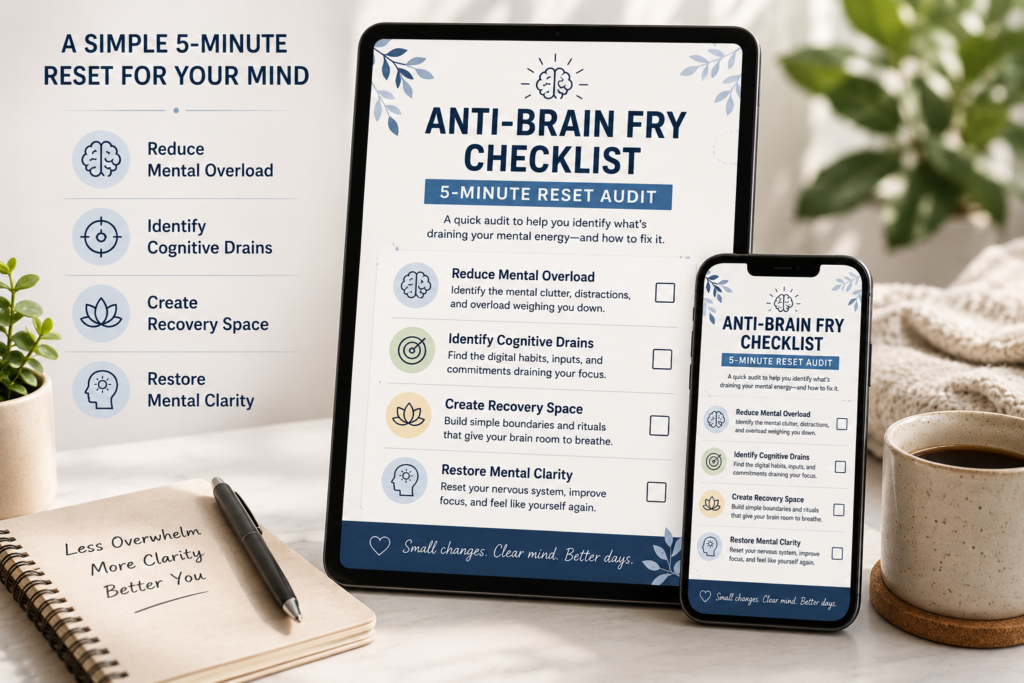
The Anti-Brain Fry Checklist is a simple 5-minute audit designed to help identify hidden sources of mental overload and support digital burnout recovery.
Common Mistakes People Make During Digital Burnout Recovery
When people recognize the signs of burnout, their first instinct is often to fix the problem as quickly as possible. However, some of the most common recovery strategies can actually slow down digital burnout recovery rather than support it.
Understanding these mistakes can help you avoid unnecessary frustration and create a more sustainable recovery process.
Trying to Push Harder
Many people respond to mental exhaustion by increasing their effort.
They work longer hours. They consume more productivity content. They try to force focus through willpower alone.
Unfortunately, burnout is rarely solved by pushing harder.
When the brain is already overloaded, additional pressure often increases fatigue rather than reducing it. As a result, concentration, creativity, and decision-making may continue to decline.
Sometimes the most productive choice is reducing demands instead of increasing them.
Relying Only on Productivity Hacks
Productivity tools can be helpful. However, they are not a substitute for recovery.
Many people believe a new app, planner, or time-management system will solve their exhaustion. While these tools may improve organization, they cannot address nervous system overload.
Furthermore, constantly searching for the perfect productivity system can create even more information overload.
Recovery requires restoring mental capacity, not simply optimizing how that capacity is used.
Taking Only Vacations
A vacation can provide temporary relief.
However, many people return from time off feeling refreshed for a few days before the same symptoms reappear.
This happens because burnout is often linked to daily habits and ongoing patterns of stimulation.
If those patterns remain unchanged, the nervous system quickly returns to the same state of overload.
Consequently, vacations should be viewed as part of recovery rather than the entire solution.
Ignoring Nervous System Signals
The body often provides warning signs long before burnout becomes severe.
Common signals include:
Brain fog
Difficulty concentrating
Irritability
Poor sleep
Constant fatigue
Feeling mentally overwhelmed
Unfortunately, many people dismiss these symptoms and continue operating at full speed.
As a result, the nervous system receives little opportunity to recover, and symptoms often become more difficult to reverse.
Waiting Too Long to Address the Problem
Perhaps the biggest mistake is assuming the problem will simply disappear on its own.
Digital burnout tends to develop gradually. Therefore, early intervention is often much easier than recovering from severe exhaustion later.
Small changes made today can prevent much larger problems in the future.
The sooner you recognize the signs and begin supporting your recovery, the easier it becomes to restore mental clarity, rebuild energy, and prevent recurring burnout cycles.
When Digital Burnout Requires a More Structured Recovery Plan
For some people, a few small adjustments are enough to improve focus and reduce mental fatigue. However, others find themselves returning to the same cycle of exhaustion again and again.
This is where a more structured approach to digital burnout recovery becomes important.
Recurring burnout often indicates that the underlying causes have not been fully addressed. While temporary solutions may provide short-term relief, the symptoms eventually return because the patterns driving the overload remain unchanged.
Common signs that you may need a more structured recovery plan include:
- Frequent mental exhaustion
- Ongoing brain fog
- Difficulty concentrating for extended periods
- Feeling overwhelmed by everyday tasks
- Persistent information overload
- Trouble switching off after work
- Repeated burnout cycles throughout the year
Furthermore, some people experience what feels like chronic overload. They take breaks, sleep more, or reduce their workload temporarily. Yet they still struggle to regain their previous energy levels.
As a result, recovery can start to feel frustrating.
This often happens because burnout affects multiple areas at the same time. Mental fatigue, nervous system overload, digital habits, recovery boundaries, and information consumption all interact with one another.
Therefore, long-term digital burnout recovery usually requires more than a collection of isolated tips.
Instead, many people benefit from following a simple framework that helps them identify sources of overload, create sustainable recovery habits, and rebuild mental capacity gradually.
The goal is not to become perfectly productive.
The goal is to create a recovery process that works even when energy levels are low.
Digital Burnout Recovery System
If you’re experiencing ongoing mental overload, cognitive fatigue, information exhaustion, or nervous system overwhelm, recovery can feel difficult to navigate on your own.
Many people know they need rest. However, they often struggle to identify which habits are contributing to their exhaustion or what steps will support long-term recovery.
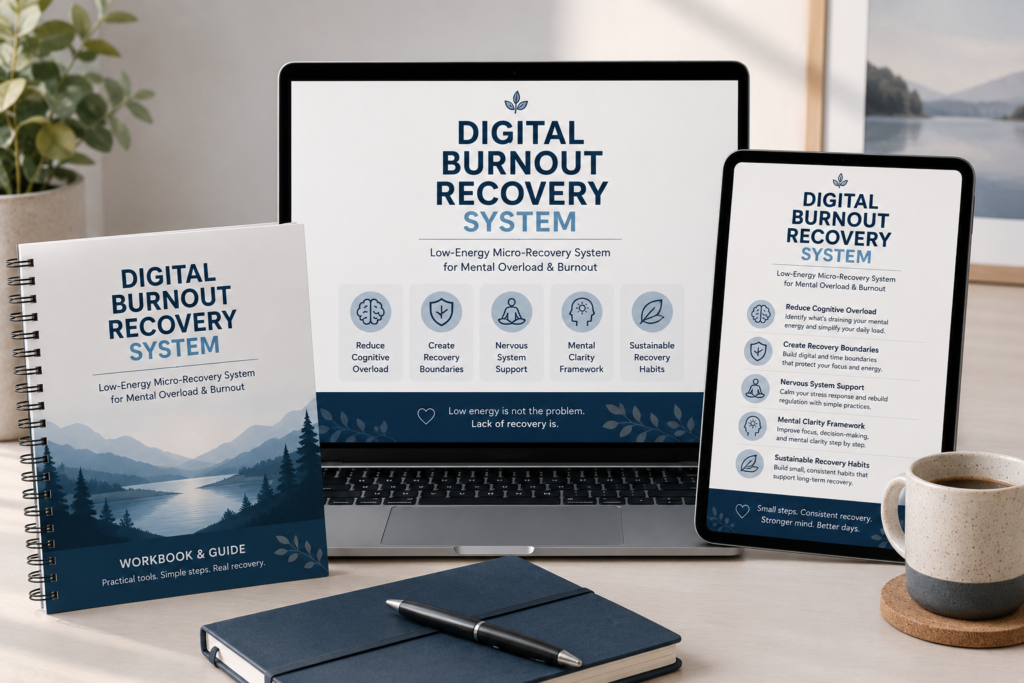
The Digital Burnout Recovery System was created to provide a simple, low-energy framework for rebuilding mental clarity and reducing cognitive overload.
Rather than relying on productivity hacks or extreme lifestyle changes, the system focuses on practical recovery strategies that can be implemented gradually and consistently.
Inside, you’ll learn how to:
- Reduce cognitive overload
- Create healthier digital boundaries
- Support nervous system recovery
- Improve mental clarity
- Build sustainable recovery habits
Most importantly, the framework is designed for people who already feel exhausted.
You don’t need high motivation, perfect routines, or unlimited energy to begin.
Recovery often starts with small changes repeated consistently over time.
Frequently Asked Questions About Digital Burnout Recovery
What Is Digital Burnout Recovery?
Digital burnout recovery is the process of restoring mental energy, reducing cognitive overload, and helping the nervous system recover from prolonged exposure to screens, notifications, information overload, and constant digital stimulation. Effective digital burnout recovery focuses on rebuilding mental clarity, improving focus, and creating healthier recovery habits over time.
How Long Does Digital Burnout Recovery Take?
The timeline for digital burnout recovery varies from person to person. Some individuals notice improvements within a few days of reducing digital overload, while others may need several weeks or months to fully recover. Factors such as stress levels, workload, sleep quality, and the severity of burnout can influence recovery time. Consistency is often more important than speed.
Can Screen Time Cause Burnout?
Excessive screen time can contribute to burnout, especially when combined with constant notifications, multitasking, and information overload. While screens themselves are not the sole cause, prolonged digital stimulation can increase mental fatigue and reduce opportunities for recovery. Consequently, unmanaged screen time often becomes a significant factor in digital burnout.
What Are the Symptoms of Digital Burnout?
Common symptoms of digital burnout include:
Brain fog
Difficulty concentrating
Mental fatigue
Information overload
Irritability
Poor sleep
Reduced motivation
Frequent procrastination
Feeling overwhelmed
Difficulty switching off
Furthermore, many people experience a combination of mental, emotional, physical, and productivity-related symptoms rather than a single warning sign.
How Is Burnout Different From Stress?
Stress is typically a temporary response to challenges or demands. In many cases, stress improves once the situation changes.
Burnout, however, is more persistent. It often involves ongoing exhaustion, reduced motivation, emotional depletion, and difficulty recovering. While stress can contribute to burnout, burnout usually reflects a longer-term pattern of overload that affects both mental performance and overall well-being.
Can Digital Burnout Affect Sleep?
Yes. Digital burnout can interfere with sleep quality in several ways. Constant stimulation, elevated stress levels, and difficulty switching off may make it harder to fall asleep or stay asleep.
Additionally, excessive screen exposure before bedtime can make it more difficult for the brain to transition into a restful state. As a result, many people wake up feeling tired even after spending enough time in bed.
Why Do I Feel Mentally Exhausted All the Time?
Persistent mental exhaustion can have many causes. However, digital overload is becoming increasingly common.
Constant notifications, information consumption, multitasking, and limited recovery time can gradually drain mental energy. Consequently, the brain may struggle to maintain focus, process information efficiently, or recover fully between periods of activity.
If mental exhaustion continues despite adequate rest, it may be a sign that your nervous system needs additional recovery support.
What Is the First Step in Digital Burnout Recovery?
The first step in digital burnout recovery is awareness.
Before recovery can begin, it’s important to identify the sources of overload contributing to mental fatigue. This may include excessive screen time, information overload, constant notifications, poor recovery boundaries, or chronic multitasking.
Once these patterns become visible, you can begin making small adjustments that reduce cognitive load and support long-term recovery. In many cases, simple changes implemented consistently create the foundation for sustainable digital burnout recovery.
Conclusion
Digital burnout often develops gradually. As a result, many people do not recognize the warning signs until mental fatigue, cognitive overload, and emotional exhaustion begin affecting daily life.
The good news is that digital burnout recovery is possible.
Recovery does not require perfection. Instead, it starts with awareness. Once you identify the sources of overload, you can begin making small adjustments that support your brain and nervous system over time.
Furthermore, meaningful recovery rarely happens overnight. Just as burnout develops through repeated patterns, recovery is built through consistent habits. Small changes such as reducing notifications, creating screen boundaries, lowering information consumption, and scheduling mental white space can gradually restore focus and mental clarity.
Most importantly, be patient with the process.
Your nervous system needs time to move out of a constant state of stimulation and return to a healthier balance. Consequently, sustainable recovery is often more effective than dramatic short-term changes.
If you’re experiencing ongoing mental fatigue, remember that you’re not alone. Many people are navigating the effects of constant digital demands. However, with the right strategies and recovery framework, it is possible to rebuild mental energy and prevent future burnout cycles.
For more insights, explore these related guides:
Brain Fried By 3 PM Every Day? Signs of Digital Burnout You Shouldn’t Ignore
Why Your Brain Feels Tired Even After Sleeping
Information Overload Symptoms: When Your Brain Has Too Much Input
These articles will help you better understand the patterns contributing to mental exhaustion and support your long-term digital burnout recovery journey.