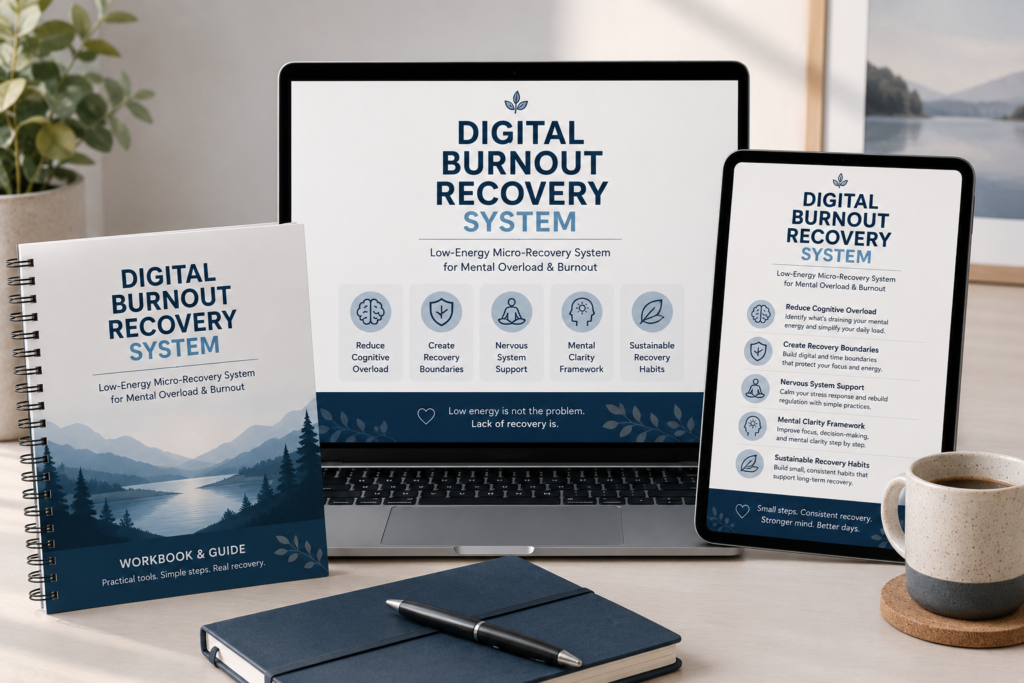
Digital Burnout Recovery: Signs, Symptoms, Causes, and How to Recover
Digital burnout recovery is the process of restoring mental energy, reducing cognitive overload, and helping the nervous system recover from prolonged digital stimulation. This guide explains the signs, symptoms, causes, and recovery strategies that can help you reduce mental fatigue, improve focus, and regain clarity in a technology-driven world. Key Takeaways Digital burnout recovery focuses on restoring mental energy after prolonged digital overload. Common symptoms include brain fog, fatigue, irritability, and difficulty concentrating. Information overload and constant notifications are major contributors. Recovery requires reducing cognitive load and creating recovery periods. Structured recovery systems can help prevent recurring burnout. Introduction Digital burnout recovery is the process of restoring mental energy after prolonged exposure to screens, notifications, information overload, and constant digital stimulation. As work, communication, and entertainment increasingly move online, digital burnout recovery has become more important than ever. Many people feel mentally exhausted before the day is over. Others struggle to focus, remember information, or switch off at night. In some cases, even a full night’s sleep doesn’t seem to help. Unfortunately, digital burnout is becoming more common. Remote workers, students, entrepreneurs, parents, and professionals can all experience the effects of constant digital demand. The brain was never designed to process endless streams of information without adequate recovery time. As a result, many people find themselves stuck in a cycle of mental fatigue. They rest when they can. However, the exhaustion keeps returning. That’s because digital burnout often involves more than simple tiredness. Instead, it can reflect cognitive overload and nervous system stress that build over time. The signs can be subtle at first. Brain fog may appear. Concentration may become harder. Small decisions can feel surprisingly difficult. Meanwhile, motivation and mental clarity often begin to decline. The good news is that digital burnout recovery is possible. With the right strategies, you can reduce cognitive overload, support nervous system recovery, and rebuild mental energy. In this guide, you’ll learn the most common signs of digital burnout, what causes it, why traditional rest isn’t always enough, and the practical steps that support long-term digital burnout recovery. If persistent fatigue sounds familiar, you may also benefit from our guide on Why Your Brain Feels Tired Even After Sleeping, which explores another common cause of ongoing mental exhaustion. What Is Digital Burnout Recovery? Digital burnout recovery is the process of restoring mental energy, cognitive capacity, and emotional resilience after prolonged exposure to digital overload. It involves reducing the impact of constant notifications, excessive screen time, information overload, and the always-on expectations that have become common in modern life. Unlike temporary tiredness, digital burnout develops gradually. It often begins with mental fatigue, difficulty concentrating, and a feeling that your brain never truly switches off. Over time, these symptoms can affect productivity, decision-making, sleep quality, and overall well-being. As technology becomes more integrated into work and personal life, many people spend hours each day processing emails, messages, alerts, videos, news updates, and social media content. Consequently, the brain receives a continuous stream of stimulation with very few opportunities for recovery. Digital burnout recovery focuses on reversing this pattern. Rather than simply taking a break from work, recovery aims to reduce cognitive overload, support nervous system regulation, and rebuild mental clarity over time. To understand digital burnout recovery fully, it’s important to distinguish it from ordinary stress or fatigue. Stress vs. Fatigue vs. Burnout Although these terms are often used interchangeably, they describe different experiences. Stress is typically a short-term response to pressure or demands. While stress can feel uncomfortable, people experiencing stress often believe they can regain control once the situation improves. Fatigue is a state of physical or mental tiredness. In many cases, fatigue improves after adequate sleep, rest, or time away from demanding activities. Burnout, however, is more persistent. It involves ongoing exhaustion, reduced motivation, difficulty concentrating, emotional detachment, and a feeling that recovery never fully happens. Digital burnout is a specific form of burnout linked to prolonged digital stimulation and information overload. Therefore, digital burnout recovery is not simply about resting more. Instead, it involves helping the brain recover from a sustained period of cognitive demand. What Makes Digital Burnout Different? Digital burnout differs from traditional burnout because the source of the overload is often invisible. There may be no major crisis, extreme workload, or obvious stressor. Instead, the brain is gradually worn down by hundreds of small digital demands throughout the day. For example, notifications interrupt focus. Emails create decision fatigue. Social media encourages constant attention switching. Meanwhile, information overload forces the brain to process far more data than it was designed to handle. As a result, many people experience symptoms even when they are not working long hours. If this sounds familiar, you may also want to explore our guide on Information Overload Symptoms, which explains how excessive information consumption can contribute to mental exhaustion. Why Traditional Rest Often Doesn’t Help Many people assume that a weekend off or an extra hour of sleep will solve the problem. While rest is valuable, digital burnout often affects deeper systems involved in attention, stress regulation, and cognitive recovery. For instance, someone may sleep for eight hours and still wake up feeling mentally drained. Similarly, a vacation may provide temporary relief, yet the symptoms quickly return once normal routines resume. This happens because digital burnout recovery requires more than passive rest. The brain often needs reduced stimulation, better recovery boundaries, and intentional periods of mental downtime. Furthermore, prolonged screen exposure can make it difficult for the nervous system to fully disengage. Consequently, the mind remains in a heightened state of alertness even during periods of rest. If screen exposure is contributing to your symptoms, our upcoming article Is Screen Time Making You Mentally Exhausted? explores the connection in greater detail. Signs and Symptoms of Digital Burnout Recognizing the signs of digital burnout is one of the most important steps in digital burnout recovery. Unfortunately, many people assume their symptoms are caused by a lack of motivation, poor time management, or insufficient sleep.
Digital Burnout Recovery: Signs, Symptoms, Causes, and How to Recover Read Post »