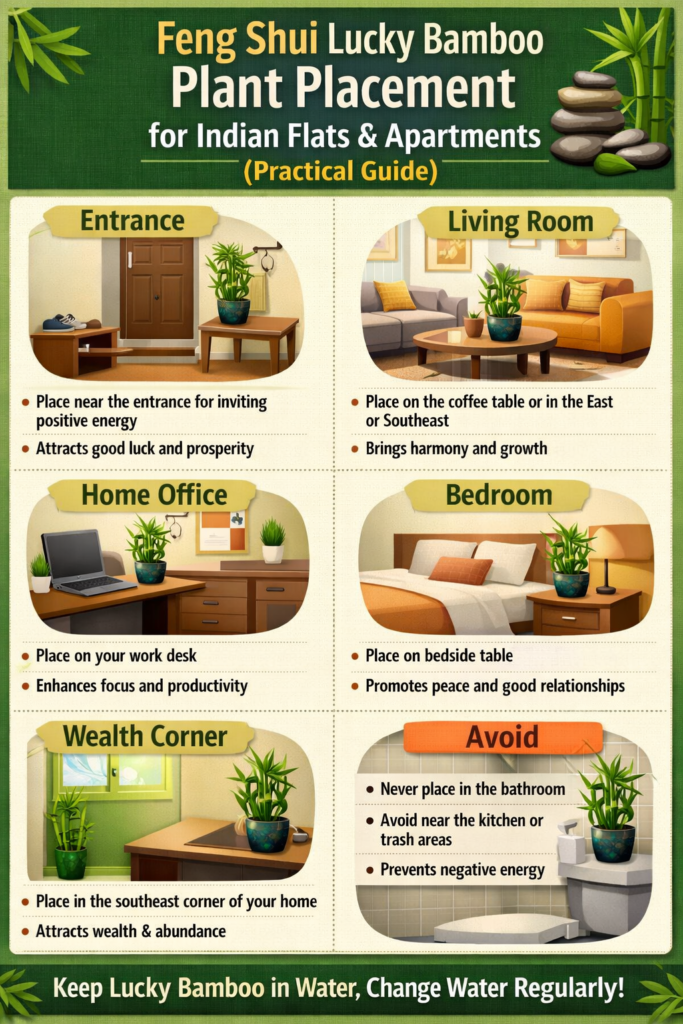
Feng Shui Money Tree Placement for Indian Flats and Apartments (Practical Guide)
Feng Shui Money Tree Placement for Indian Flats and Apartments (Practical Guide) Feng Shui money tree placement in Indian flats is less about ancient superstition and more about environmental psychology. In a compact urban apartment, your surroundings directly affect your focus, discipline, and financial behavior. In a typical Indian home, space is at a premium. Rooms are multipurpose, surfaces are often crowded, and visual “noise” is high. Because of this, placement matters more than the object itself. A money tree only works when it anchors your attention and reinforces consistent habits. Otherwise, it is just another piece of decor collecting dust. This guide provides a practical, no-nonsense blueprint for placing a money tree in modern Indian homes to maximize clarity and wealth focus. Money Plant vs. Money Tree: Which One Do You Need? In Indian households, the terms “Money Plant” and “Money Tree” are often used interchangeably, but in the world of Feng Shui and Vastu, they are distinct plants with different “vibes.” Choosing the right one depends on your apartmentâs light levels and your specific goals. 1. The Money Plant (Epipremnum aureum) The Money Plant (Epipremnum aureum) Most Indians know this as the classic Pothos or Devilâs Ivy. The Look: A heart-shaped vine that climbs or hangs. The Symbolism: In Vastu, it is believed to bring long-lasting prosperity and filter negative energy. Its “creeping” nature symbolizes the expansion of wealth. Best For: Beginners. It is nearly impossible to kill and thrives in the humid, low-light corners of a 1BHK or 2BHK. 2. The Money Tree (Pachira Aquatica or Lucky Bamboo) Feng Shui Lucky Bamboo (Money Tree) In Feng Shui, the “Money Tree” usually refers to the Pachira (with its famous braided trunk) or Lucky Bamboo. The Look: The Pachira has a sturdy, woody stem with five leaves on each branch, representing the five elements. Lucky Bamboo is vertical, clean, and structured. The Symbolism: These are “active” wealth activators. The braided trunk of the Pachira is said to “trap” fortune within its folds, while the vertical growth of bamboo represents steady, upward career climbs. Best For: Career professionals and business owners looking for a “statement” piece to anchor their wealth corner. đ Explore this Feng Shui support item The Key Difference The Money Plant is about protection and steady flow, making it ideal for the living room. The Money Tree (Pachira/Bamboo) is about intentional growth and accumulation, making it the perfect choice for your office desk or workspace. Pro-Tip: If your flat is small, start with Lucky Bamboo. It provides the “Tree” energy without taking up the floor space required by a climbing Money Plant. Choosing the Best Money Tree for Indian Homes: Lucky Bamboo vs. Pachira Why Lucky Bamboo wins for Indian apartments: It handles the humidity of Indian monsoons. It thrives in the “low-light” corners common in 1BHK and 2BHK layouts. It requires minimal maintenance for a busy professional. Why Placement is Critical in Compact Apartments Indian flats create a high mental load. Between shared storage and small rooms, the brain is constantly processing clutter. When a growth symbol is placed incorrectly, the brain categorizes it as “mess,” leading to: Decision Fatigue: Too many things in your line of sight. Stagnant Energy: Dust and clutter around a plant symbolize neglected finances. Correct placement, however, reinforces order, stability, and long-term thinking. Best Lucky Bamboo Placement for Wealth India 1. The Living Room: Creating a Wealth Awareness Zone In most Indian homes, the living room is the “face” of the house. Best Spot: The Southeast corner of the living room is traditionally associated with wealth. If thatâs blocked, choose a corner with soft, natural light. The Goal: Place it on a stable surface (like a side table) where it is visible but not in the way of daily chores. Avoid: Placing it near shoe racks or under heavy overhead lofts/storage beams, which symbolize “pressure” on your growth. 2. The Home Office or Study Desk: Anchoring Growth Mindset If you are a freelancer or a remote worker in India, your desk is your primary wealth generator. Best Spot: The top-right corner of your desk. The Goal: It acts as a “visual anchor,” reminding you of your growth goals during stressful work hours. Avoid: A cluttered desk. If the plant is surrounded by old bills and trash, it symbolizes “drowning in debt.” 3. The East Window (For Growth & Family Health) If your flat has a balcony or window facing East, placing your money tree here allows it to soak up the morning “Prana” or energy, which is highly auspicious in both Vastu and Feng Shui. Where NOT to Place a Money Tree (Common Mistakes) Avoid these common errors found in many Indian households: The Kitchen: The “Fire” element of the stove clashes with the “Wood” element of the plant. It can lead to “burnt” finances. The Bathroom: Wealth is symbolized by water, and you don’t want your wealth “flushed away.” The Floor: Never place a wealth symbol directly on the floor. It shows a lack of respect for your financial goals. Always elevate it on a stand or table. On Top of Electronics: Avoid placing plants on top of the fridge, microwave, or Wi-Fi router. The heat and vibration disrupt the plantâs “Qi” (energy). Feng Shui Lucky Bamboo Plant Choosing the Best Money Tree for Indian Homes Lucky Bamboo is commonly used to reinforce steady progress, discipline, and upward momentum in work environments. It acts as a living reminder of consistency rather than urgency. From a psychological standpoint, plants in workspaces improve attention and reduce mental fatigue, supporting better long-term productivity and follow-through. đ Explore this Feng Shui support item Common Mistakes Indian Homes Make Using too many symbols together Treating Feng Shui as decoration Ignoring clutter around the plant Copying large house layouts Feng Shui must adapt to Indian living reality, not Instagram homes. Vastu vs. Feng Shui: Can They Coexist? Many Indian homeowners worry about the conflict between Vastu and Feng Shui. The Practical Harmony: Both systems agree
Feng Shui Money Tree Placement for Indian Flats and Apartments (Practical Guide) Read Post »
