Introduction
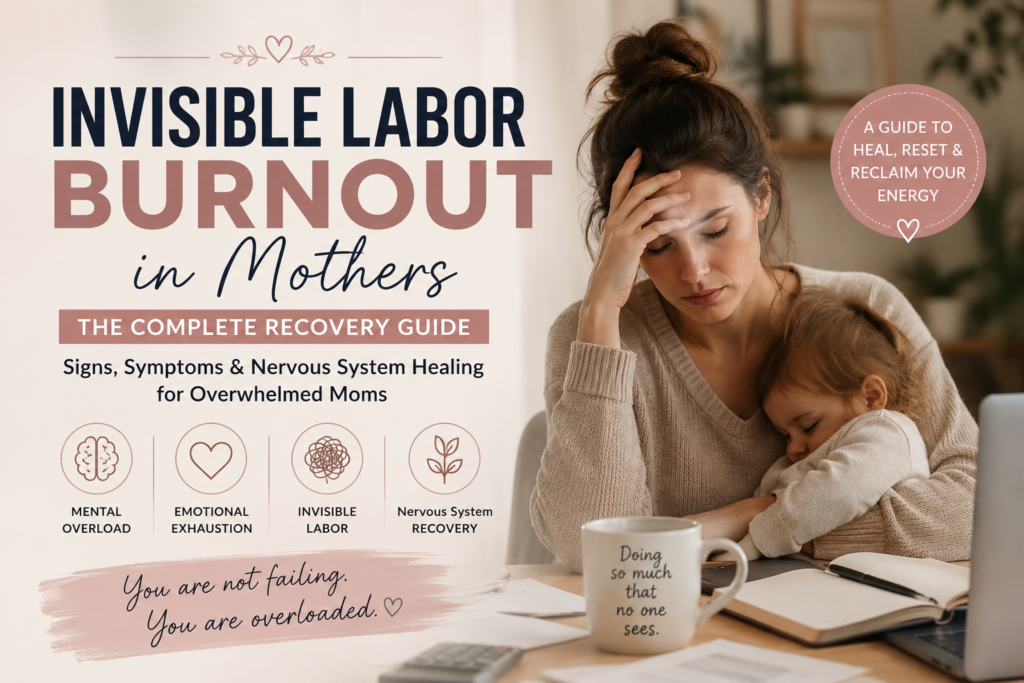
Mental load in motherhood is one of the biggest reasons many mothers feel exhausted, even when they never stop moving.
Most moms assume they need more sleep. Others blame a busy schedule. While those things matter, they do not explain the whole picture.
Many mothers carry an invisible workload every day. They remember appointments, plan meals, manage schedules, solve problems, and anticipate everyone’s needs.
This hidden effort is often called invisible labor. Although others may not see it, it requires constant attention. As a result, it consumes a huge amount of mental energy.
Over time, this mental burden can become overwhelming. Many women feel mentally drained before the day even begins. They struggle to relax, switch off, or enjoy quiet moments.
That is why so many overwhelmed moms feel exhausted, even after a full night’s sleep. Their bodies may be resting, but their minds continue working.
In this guide, you will learn what mental load in motherhood really means. You will discover the signs that your mental load may be too heavy. You will also learn how mental overload affects emotional health and daily life.
Most importantly, you will find practical ways to reduce the mental burden you carry. Small changes can help you reclaim energy, lower stress, and create a more sustainable version of motherhood.
Affiliate Disclosure: Some of the links on this website (or in this content) are affiliate links. This means that, at no additional cost to you, I may earn a small commission if you make a purchase through these links. I only recommend products and services that I believe provide value to my audience.
What Is Mental Load in Motherhood?
Mental load in motherhood refers to the constant thinking, planning, organizing, and remembering that keeps family life running smoothly. Unlike household chores or visible parenting tasks, mental load happens behind the scenes. It often requires mothers to track countless responsibilities at the same time.
Many people notice the physical work involved in raising a family. They see the school runs, meal preparation, laundry, and cleaning. However, they rarely see the mental effort that happens before those tasks begin.
Why Mental Load in Motherhood Often Goes Unnoticed
One reason mental load in motherhood goes unnoticed is that it exists largely inside a mother’s mind.
Mothers often remember doctor’s appointments, school events, grocery needs, birthdays, permission slips, and family schedules without writing them down. They also anticipate problems before they happen and make plans to prevent them.
This hidden responsibility forms a large part of invisible labor. Because nobody sees the thinking behind the task, many people underestimate the amount of effort involved.
Over time, this lack of recognition can leave mothers feeling unseen, overwhelmed, and emotionally drained.
The Difference Between Physical Tasks and Mental Tasks
Physical tasks usually have a clear beginning and end. You cook dinner, fold laundry, or drive your child to an activity.
Mental tasks work differently.
A mother may spend hours thinking about upcoming appointments, meal plans, school deadlines, family needs, and household responsibilities. Even during moments of rest, her mind may continue organizing and planning.
This ongoing mental effort creates a type of workload that never fully disappears. As a result, many mothers feel exhausted even when they have not spent the day doing physically demanding work.
Why Mothers Carry So Much Mental Responsibility
Many mothers take on the role of family manager without realizing it.
They coordinate schedules, track important information, manage routines, and make sure daily life runs smoothly. In many households, mothers also carry much of the family’s emotional labor. They comfort children, manage conflicts, remember important milestones, and support the emotional needs of others.
Over time, these responsibilities can create significant mental overload.
When mothers carry too many responsibilities for too long, the mental burden often affects their energy, emotional well-being, and overall quality of life. Understanding mental load in motherhood is the first step toward reducing it and creating a more balanced family life.
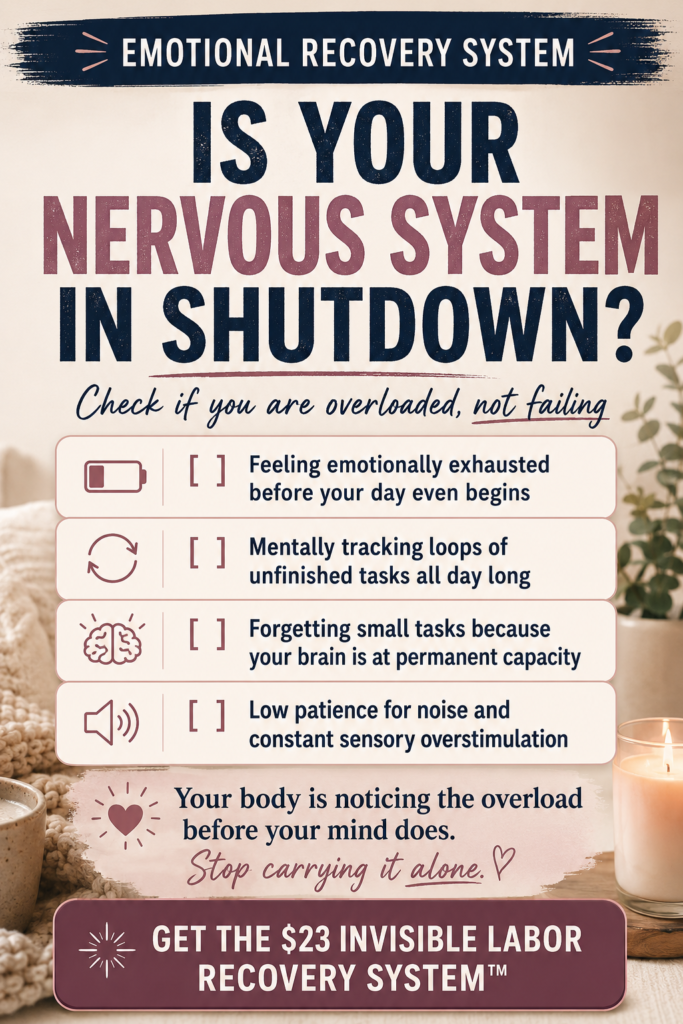
Looking for a gentle recovery framework?
The Invisible Labor Recovery System™ was created specifically for overwhelmed moms carrying invisible mental and emotional labor.
The Hidden Mental Tasks Mothers Manage Every Day
Mental load in motherhood extends far beyond household chores and daily routines. Most people see what mothers do. Far fewer people see what mothers think about, track, and manage behind the scenes.
From the moment they wake up, many mothers juggle dozens of responsibilities in their minds. They remember important dates, solve problems before they happen, and make countless decisions that keep family life running smoothly.
These hidden tasks require time, attention, and mental energy. Over time, they can become a major source of stress and exhaustion.
Remembering Everything for Everyone
Many mothers become the family’s unofficial memory bank.
They remember doctor’s appointments, school projects, sports schedules, birthdays, grocery needs, medication refills, and upcoming events. They also keep track of details that others often forget.
This constant remembering may seem small on its own. However, the responsibilities quickly add up.
Instead of focusing on one task at a time, many mothers carry a running mental checklist throughout the day. As a result, their minds rarely get a chance to fully rest.
Planning, Organizing, and Anticipating Needs
Mental load also involves planning ahead.
Mothers often think several steps into the future. They plan meals, organize family schedules, arrange childcare, prepare for school activities, and coordinate household responsibilities.
At the same time, they anticipate needs before problems arise. They pack extra snacks, schedule appointments in advance, and prepare for unexpected situations.
This constant planning helps families function smoothly. However, it also demands continuous mental effort.
When one responsibility ends, another quickly takes its place.
The Emotional Labor Behind Family Life
Along with practical responsibilities, many mothers carry a significant amount of emotional labor.
They comfort upset children, resolve conflicts, support family members, and help everyone feel cared for and connected. They often notice emotional needs before anyone else does.
While these efforts strengthen family relationships, they also require emotional energy.
Unlike physical tasks, emotional labor does not appear on a to-do list. Nevertheless, it can feel just as demanding. In many cases, mothers manage both practical responsibilities and emotional responsibilities at the same time.
Why Mental Load in Motherhood Never Truly Ends
One of the most challenging aspects of mental load in motherhood is that it rarely has a clear finish line.
Laundry gets folded. Meals get cooked. Appointments get scheduled. Yet new tasks continue to appear every day.
Because motherhood responsibilities constantly change, many mothers remain mentally engaged even during their downtime. They may relax physically while their minds continue planning, organizing, and problem-solving.
Over time, this ongoing mental effort can contribute to stress, emotional exhaustion, and motherhood burnout. Recognizing these hidden responsibilities is an important step toward understanding why so many mothers feel overwhelmed despite working hard every single day.
10 Signs Mental Load in Motherhood Is Becoming Too Heavy
The mental load in motherhood does not usually become overwhelming overnight. Instead, it builds slowly through daily responsibilities, constant planning, and the pressure of managing family life.
Many mothers adapt to this workload without realizing how much it affects them. Over time, however, the signs become harder to ignore. If several of the following symptoms sound familiar, your mental load may have become too heavy.
Sign #1: You Feel Mentally Exhausted Before the Day Begins
One of the earliest signs of mental overload is waking up tired.
You may have slept through the night, yet your mind already feels full before the day starts. Instead of feeling refreshed, you immediately think about schedules, appointments, tasks, and responsibilities.
This type of mental exhaustion often goes beyond physical tiredness.
Sign #2: Relaxing Feels Almost Impossible
Many mothers struggle to switch off.
Even when they sit down to rest, their minds continue working. They think about tomorrow’s schedule, unfinished tasks, family needs, and everything that still requires attention.
As a result, relaxation feels uncomfortable rather than restorative.
Sign #3: Small Decisions Feel Overwhelming
Decision fatigue often develops when the brain processes too much information for too long.
Simple choices such as planning dinner, scheduling appointments, or deciding what to buy at the grocery store may suddenly feel difficult.
When mental resources become depleted, even routine decisions can feel stressful.
Sign #4: Mental Load in Motherhood Can Cause Brain Fog
Brain fog is a common symptom of mental load in motherhood.
You may forget appointments, lose track of conversations, misplace items, or struggle to focus on simple tasks.
This does not mean you are careless or disorganized. Instead, your brain may be working overtime to manage too many responsibilities at once.
Sign #5: You Feel Responsible for Everything
Many mothers feel personally responsible for the well-being of everyone around them.
They monitor schedules, solve problems, manage routines, and make sure important tasks get completed. Over time, this sense of responsibility can become overwhelming.
When something goes wrong, they often blame themselves even when circumstances lie beyond their control.
Sign #6: You Forget Things More Often
Ironically, carrying too much information can make it harder to remember things.
As the mental load grows, the brain struggles to prioritize information effectively. Consequently, small details begin slipping through the cracks.
You may forget appointments, lose your train of thought, or overlook tasks that would normally feel easy to manage.
Sign #7: Mental Load in Motherhood Can Increase Irritability
When mental energy runs low, patience often follows.
Small interruptions may feel larger than they actually are. Minor frustrations can trigger stronger emotional reactions than usual.
This irritability does not mean you are a bad parent. Instead, it often signals that your mental and emotional resources need replenishment.
Sign #8: You Rarely Make Time for Yourself
Many mothers place their own needs at the bottom of the priority list.
They focus on children, partners, work, and household responsibilities while postponing activities that support their own well-being.
Over time, this pattern increases stress and reduces opportunities for recovery.
Sign #9: Rest Makes You Feel Guilty
Healthy rest should feel restorative.
However, many mothers experience guilt whenever they take time for themselves. They worry they should be doing something more productive or helping someone else.
This mindset often prevents meaningful recovery and contributes to ongoing mental overload.
Sign #10: You Constantly Feel Overwhelmed
Perhaps the clearest sign is the feeling that there is simply too much to manage.
Many overwhelmed moms describe carrying dozens of open mental tabs at once. No matter how much they accomplish, new responsibilities continue appearing.
Over time, this constant pressure can affect emotional health, relationships, and overall well-being.
Recognizing these signs is important. The sooner you acknowledge that the mental load has become too heavy, the sooner you can take steps to reduce stress, protect your energy, and create a more sustainable approach to motherhood.
How Mental Load in Motherhood Affects Emotional Health
The mental load in motherhood affects more than daily stress levels. It can also have a significant impact on emotional well-being.
When mothers spend months or years managing family schedules, remembering important details, solving problems, and meeting everyone’s needs, the constant mental effort begins to take a toll. While many women push through these demands, the emotional cost often grows over time.
Without enough opportunities to rest and recover, mental overload can affect mood, energy, patience, and overall quality of life.
Why Mental Overload Leads to Emotional Exhaustion
The brain needs periods of recovery to function well. However, many mothers rarely get a true mental break.
Instead, they move from one responsibility to the next while carrying dozens of tasks in their minds. As this pattern continues, emotional energy gradually decreases.
Over time, many women begin experiencing emotional exhaustion in mothers, a state of mental and emotional depletion that goes beyond ordinary tiredness. They may feel drained, detached, overwhelmed, or unable to cope with everyday demands as easily as before.
What starts as mental overload can eventually become emotional overload.
The Connection Between Mental Load in Motherhood and Burnout
Mental overload and motherhood burnout often develop together.
When responsibilities continue growing but recovery remains limited, stress begins to accumulate. Eventually, mothers may feel as though they are constantly giving without having enough time or energy to recharge.
Unlike temporary stress, burnout affects emotional resilience, motivation, and well-being. Many mothers describe feeling stuck in survival mode, where they focus only on getting through the day.
Internal Link Opportunity:
Link the phrase “emotional exhaustion in mothers” to:
What Emotional Exhaustion Really Looks Like in Mothers.
Recognizing this connection is important because reducing mental load often plays a key role in preventing deeper burnout.
How Chronic Stress Affects the Nervous System
Chronic stress does not affect only the mind. It also affects the body.
When the brain constantly monitors responsibilities and potential problems, it can keep the body in a heightened state of alertness. Over time, this can contribute to nervous system overload.
As a result, many mothers feel tense, restless, irritable, or unable to fully relax. They may struggle to switch off, even during quiet moments.
If this pattern continues for long periods, recovery becomes more difficult. The nervous system spends more time responding to stress and less time restoring energy.
Understanding how mental load affects emotional health can help mothers recognize the warning signs earlier and take steps to protect their well-being before stress develops into long-term burnout.

Why Mothers Often Carry More Mental Load Than Others
Many families share household tasks and parenting responsibilities more equally than in the past. However, many mothers still carry a larger share of the mental load in motherhood.
This does not always happen because someone refuses to help. In many cases, long-standing expectations, habits, and family dynamics gradually place more responsibility on mothers.
As a result, many women become the planners, organizers, and coordinators of family life. Over time, this imbalance can contribute to significant motherhood stress and emotional exhaustion.
Social Expectations Still Shape Modern Motherhood
Society often sends mothers a clear message: they should remember everything, manage everything, and hold everything together.
From an early age, many women learn to take responsibility for the needs of others. As adults, they often feel pressure to become the primary caregivers, schedulers, problem-solvers, and emotional supporters within the family.
Even when partners share parenting duties, mothers may still feel responsible for overseeing the details. They keep track of appointments, school events, healthcare needs, and daily routines.
These expectations can make the mental load feel like a normal part of motherhood rather than an issue that deserves attention.
The Invisible Labor Gap in Many Families
Many families divide physical tasks fairly. However, the mental work behind those tasks often remains uneven.
For example, one parent may take a child to a doctor’s appointment. The other parent may have scheduled the appointment, completed the paperwork, remembered the date, arranged transportation, and planned the day around it.
This hidden effort is known as invisible labor.
Because people rarely see this work, they often underestimate how much energy it requires. Over time, the invisible labor gap can leave mothers carrying a disproportionate share of family responsibilities.
Internal Link Opportunity:
Link “invisible labor” to:
10 Signs of Invisible Labor Burnout in Mothers.
Recognizing invisible labor is an important step toward creating a more balanced distribution of responsibilities.
Why Asking for Help Feels So Difficult
Many mothers struggle to ask for help, even when they feel overwhelmed.
Some worry that others will not complete tasks correctly. Others feel guilty about handing responsibilities to someone else. Many simply become so accustomed to managing everything that asking for support feels uncomfortable.
As a result, they continue carrying responsibilities long after their mental and emotional resources begin to decline.
Learning to share responsibility is not a sign of weakness. Instead, it is a practical way to reduce motherhood stress and create a healthier balance for the entire family.
Understanding why mothers often carry more mental load can help families recognize these patterns and work toward a more sustainable approach to parenting and household responsibilities.
How to Reduce Mental Load in Motherhood Without Guilt
The good news is that mental load in motherhood can change. While parenting will always involve responsibility, you do not have to carry every task, reminder, and decision alone.
Many mothers assume they simply need to work harder or become more organized. In reality, reducing mental overload often starts with recognizing how much you already manage.
Small changes can create meaningful relief over time.
Identify the Tasks That Live in Your Head
The first step is becoming aware of everything you manage mentally.
Many mothers underestimate how much information they track every day. They remember appointments, plan meals, organize schedules, monitor school activities, and anticipate family needs without even thinking about it.
Take a few minutes to write down every responsibility that lives in your head.
This exercise often reveals just how much invisible work you perform each day. Once you can see the full picture, it becomes easier to identify areas where support is possible.
Share Responsibility Instead of Managing Everything
Many mothers delegate tasks but continue managing the process.
For example, they may ask someone else to handle a school event while still providing reminders, instructions, and follow-up. Although the task changes hands, the mental responsibility remains.
To truly reduce mental load, focus on sharing ownership rather than assigning individual tasks.
When another family member takes responsibility for a task, allow them to manage the planning, remembering, and execution as well.
This approach reduces mental strain and creates a more balanced distribution of responsibilities.
Create Systems That Reduce Mental Overload
Simple systems can prevent important information from living entirely in your mind.
Shared calendars, family planners, reminder apps, meal plans, and weekly checklists can reduce the number of details you need to remember.
The goal is not perfection. The goal is to move information out of your head and into reliable systems.
When fewer responsibilities depend on memory alone, daily life feels more manageable and less stressful.
Let Go of Unrealistic Expectations
Many mothers place enormous pressure on themselves.
They expect themselves to remember everything, solve every problem, and meet everyone’s needs without making mistakes. These expectations often create unnecessary stress.
Instead, focus on what truly matters.
A perfectly organized home, a flawless schedule, or a completed to-do list does not determine your worth as a parent. Giving yourself permission to do less can create more emotional space and reduce feelings of overwhelm.
Why Mental Load in Motherhood Does Not Have to Be Permanent
Many overwhelmed moms assume exhaustion is simply part of motherhood.
However, constant mental overload is not something you must accept forever.
Every step you take to share responsibility, simplify routines, and lower expectations helps lighten the burden. Progress may happen gradually, but even small changes can make a meaningful difference.
The goal is not to eliminate every responsibility. The goal is to create a sustainable way of managing family life without sacrificing your own well-being.
When you actively address mental load in motherhood, you protect your energy, improve your emotional health, and create more space for rest, connection, and joy.
Daily Habits That Prevent Mental Overload
Reducing mental load in motherhood does not always require major life changes. Small daily habits can make a meaningful difference over time.
The goal is not to eliminate every responsibility. Instead, focus on creating more mental space and protecting your emotional energy throughout the day.
Morning Habits That Create Mental Space
The way you start your morning can influence how the rest of the day feels.
Before checking messages or jumping into responsibilities, take a few minutes to review your priorities. Identify the most important tasks and let go of anything that can wait.
Many mothers also find it helpful to use a simple daily checklist. Writing tasks down reduces the need to keep everything in your head.
Even five minutes of planning can help reduce stress and improve focus.
Boundaries That Protect Emotional Energy
Healthy boundaries play an important role in preventing mental overload.
You do not need to say yes to every request, volunteer for every activity, or solve every problem immediately. Protecting your time and energy allows you to show up more fully for the responsibilities that matter most.
Simple boundaries, such as limiting unnecessary commitments or asking family members to take ownership of certain tasks, can significantly reduce daily pressure.
Over time, these small changes help create a healthier balance.
Why Small Recovery Moments Matter
Many mothers wait for a free day, a vacation, or a break before they allow themselves to recover.
However, small recovery moments often have a greater impact because they happen consistently.
A short walk, a few minutes of deep breathing, quiet time with a cup of tea, or stepping outside for fresh air can help reset the mind and body.
These moments may seem small, but they support burnout recovery for moms by giving the brain opportunities to rest throughout the day.
When practiced consistently, these habits can reduce stress, improve emotional resilience, and help prevent the mental overload that often leads to exhaustion and burnout.
If you’re sleeping but still waking up exhausted, your nervous system may be carrying more stress than you realize.
The Nervous System Reset Journal helps overwhelmed mothers reduce mental clutter, process emotional overload, and create small daily recovery moments.
Frequently Asked Questions About Mental Load in Motherhood
What Is Mental Load in Motherhood?
Mental load in motherhood refers to the ongoing mental work involved in managing family life. It includes remembering appointments, planning schedules, organizing household responsibilities, anticipating needs, and making countless daily decisions.
Much of this work happens behind the scenes. As a result, others may not notice how much mental effort it requires.
Why Do Mothers Feel Mentally Exhausted?
Many mothers feel mentally exhausted because they carry a constant stream of responsibilities throughout the day.
Their minds rarely get a chance to fully rest. Even during quiet moments, they may think about schedules, school activities, household tasks, finances, or family needs.
Over time, this continuous mental effort can drain emotional and mental energy, leading to feelings of overwhelm and fatigue.
Is Mental Load the Same as Invisible Labor?
Not exactly, although the two concepts are closely connected.
Invisible labor refers to the hidden work that keeps a household and family functioning smoothly. Mental load is one part of that invisible labor.
For example, scheduling appointments, remembering birthdays, and planning meals all contribute to the mental load. Together, these responsibilities form a significant portion of invisible labor within many families.
Can Mental Load Lead to Burnout?
Yes. When mental overload continues for long periods without enough rest or support, it can contribute to burnout.
Many mothers experience chronic stress, emotional exhaustion, irritability, and reduced resilience when they carry too many responsibilities for too long.
Recognizing the signs early can help prevent mental overload from developing into more serious burnout.
How Can Mothers Reduce Mental Overload?
Mothers can reduce mental overload by identifying hidden responsibilities, sharing ownership of tasks, creating simple organizational systems, and setting healthy boundaries.
Small daily habits can also help. Writing tasks down, using shared calendars, and making time for regular recovery moments can reduce the amount of information stored in the mind.
Progress often happens gradually, but small changes can make a meaningful difference.
When Should I Seek Support?
Consider seeking support if mental overload begins affecting your daily life, relationships, emotional well-being, or ability to function normally.
If feelings of stress, anxiety, exhaustion, or overwhelm persist despite your efforts to manage them, professional guidance may help. Speaking with a healthcare professional, therapist, counselor, or support group can provide valuable tools and support.
Seeking help is not a sign of failure. It is an important step toward protecting your health and well-being.
You Are Not Forgetful. You Are Carrying Too Much.
If you have reached this point feeling overwhelmed, exhausted, or emotionally drained, there is something important you need to hear:
You are not lazy.
You are not disorganized.
You are not failing.
You are carrying an invisible workload that many people never see.
Every day, you remember, plan, organize, anticipate, support, and solve problems for the people you love. You manage countless details behind the scenes while trying to meet the needs of your family, work, and household.
That level of responsibility requires energy.
When the mental load in motherhood becomes too heavy, it is natural to feel tired, distracted, forgetful, or overwhelmed. These feelings do not mean something is wrong with you. They often signal that you have been carrying too much for too long without enough support or recovery.
This is where self-compassion becomes essential.
Instead of criticizing yourself for what you have not done, acknowledge everything you are already carrying. Speak to yourself with the same kindness you would offer a close friend who feels exhausted and overwhelmed.
Recovery starts with awareness.
When you recognize the weight of the mental load, you can begin making changes. You can share responsibilities, set healthier boundaries, ask for support, and create space for rest without guilt.
Most importantly, remember that change is possible.
Many mothers experience meaningful emotional recovery when they stop trying to manage everything alone. Small adjustments can reduce stress, restore energy, and create a healthier balance over time.
If you are struggling right now, do not lose hope. Burnout recovery for moms does not happen overnight, but recovery can happen. One step, one boundary, and one act of self-compassion at a time.
You do not need to be perfect.
You do not need to carry everything.
And you do not have to do it alone.