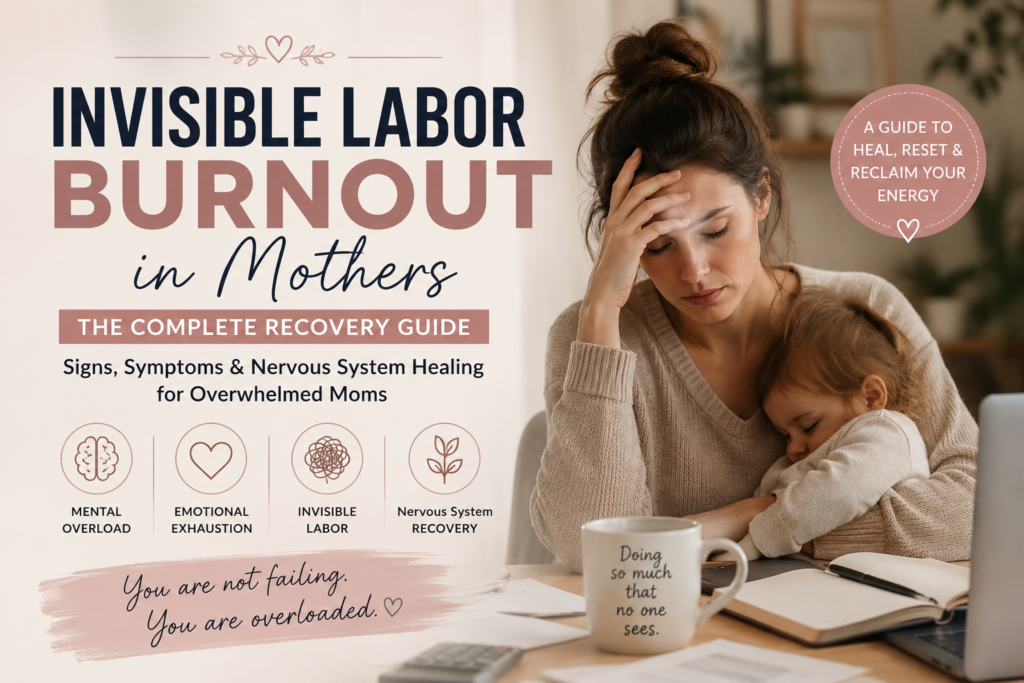
Overstimulated Mom? Why You Feel Like You Can’t Handle One More Thing
Overstimulated mom may be the phrase that finally explains why you feel exhausted, touched out, and overwhelmed even when you are doing your best.
You love your family.
You want to be patient.
Yet lately, small noises feel too loud.
Simple questions feel irritating.
Being touched one more time feels unbearable.
And sometimes, you find yourself snapping over things that normally would not bother you.
If this sounds familiar, you are not alone.
Many mothers silently live in a state of constant overstimulation. In fact, feeling mentally exhausted, emotionally drained, and overwhelmed by everyday life has become increasingly common. However, many women assume they simply need more sleep or a few hours to themselves.
Unfortunately, rest alone does not always solve the problem.
For many overwhelmed mothers, the deeper issue is nervous system overload.
Long before the day begins, your brain may already be processing schedules, remembering appointments, anticipating needs, managing emotions, and juggling countless responsibilities. As a result, your mind rarely receives an opportunity to fully switch off.
Over time, this constant pressure can leave you feeling anxious, irritable, emotionally exhausted, and disconnected from yourself.
Fortunately, there is hope.
Recovery does not require becoming a different person or escaping motherhood.
Instead, it begins with understanding what an overstimulated mom experiences, why the nervous system remains stuck in survival mode, and how small changes can gradually restore calm, energy, and emotional balance.
In this guide, you’ll learn what causes overstimulation, why rest alone often isn’t enough, and practical ways to support nervous system healing so you can begin feeling like yourself again.
What Does It Mean to Be an Overstimulated Mom?
Being an overstimulated mom means feeling mentally, emotionally, and physically overwhelmed by constant demands, noise, interruptions, and responsibilities. Although stress is a normal part of motherhood, overstimulation goes beyond simply having a busy day.
Instead, it often feels as though your mind never gets a chance to slow down.
You may crave silence.
Small noises may suddenly feel unbearable.
Simple questions may irritate you.
Meanwhile, your brain keeps processing schedules, tasks, emotions, and everyone’s needs.
As a result, even ordinary moments can start to feel overwhelming.
Over time, this constant pressure can contribute to emotional exhaustion, mental fatigue, and nervous system overload. Consequently, many mothers begin wondering why they feel so irritable, exhausted, or unlike themselves.
Fortunately, understanding what overstimulation really is can help you recognize that you are not failing.
Your nervous system may simply be carrying too much for too long.
Signs That You May Be an Overstimulated Mom
The signs of overstimulation are not always obvious.
In fact, many mothers assume they are simply tired or stressed.
However, an overstimulated mom often experiences symptoms that go much deeper.
Common signs include:
feeling touched out
becoming irritated more easily
snapping over small things
craving silence or solitude
feeling mentally exhausted
difficulty concentrating
feeling anxious or restless
becoming overwhelmed by simple tasks
emotional exhaustion
feeling disconnected from yourself
Furthermore, many mothers describe feeling as though they are constantly “on,” even when they are supposed to be resting.
Why Overstimulation Is More Than Stress
Stress usually comes and goes.
Overstimulation, however, tends to linger.
The difference is that stress often responds to rest.
An overstimulated nervous system does not.
Instead, constant mental load, emotional labor, noise, multitasking, and never-ending responsibilities can keep the brain in a state of high alert.
Because of this, your body may struggle to enter the deeper states of recovery that restore energy and emotional balance.
Consequently, you may continue feeling exhausted even after sleeping or taking time off.
This is why overstimulation should not be dismissed as simply “being stressed.”
More often, it is a sign that your nervous system needs support and recovery.
Why an Overstimulated Mom Often Feels Guilty for Needing Space
Many mothers feel guilty for wanting quiet.
They feel guilty for needing a break.
They feel guilty for wanting time alone.
However, needing space does not make you selfish.
It makes you human.
Unfortunately, an overstimulated mom often believes she should be able to handle everything without limits. As a result, she may ignore her own needs while continuing to care for everyone else.
Eventually, that constant self-sacrifice can lead to emotional exhaustion and burnout.
Therefore, asking for space should not be viewed as a weakness.
Instead, it should be viewed as an act of self-care and nervous system protection.
You are not rejecting your family.
You are responding to what your mind and body have been asking for all along.
And sometimes, a few moments of quiet are exactly what recovery requires.
Why an Overstimulated Mom’s Nervous System Stays in Survival Mode
For many women, being an overstimulated mom is not simply about having too much to do. Instead, it is often the result of a nervous system that has been exposed to chronic stress for far too long.
At first, the body adapts.
You push through. You keep showing up.
You continue caring for everyone else.
However, when stress becomes constant, the nervous system can begin treating everyday life as if it were an emergency. As a result, your body may remain in a state of heightened alert even when there is no immediate danger.
This condition, often referred to as nervous system overload, makes it difficult to truly relax. Consequently, many overwhelmed mothers feel exhausted, irritable, and emotionally drained despite trying to rest.
Over time, the brain starts prioritizing survival instead of recovery.
Because of this, small frustrations may feel bigger than they used to.
Simple tasks may seem overwhelming.
Even quiet moments may not feel peaceful.
Fortunately, understanding why this happens can help you stop blaming yourself and start supporting your nervous system in the way it truly needs.
How Chronic Stress Keeps an Overstimulated Mom Alert
Stress is supposed to be temporary.
Normally, the body responds to challenges and then returns to a state of balance.
Unfortunately, many mothers never get that opportunity.
Instead, the demands keep coming.
Appointments need to be remembered.
Meals need to be planned.
Children need attention.
Problems need to be solved.
Meanwhile, new responsibilities continue appearing before old ones disappear.
As a result, an overstimulated mom may spend weeks, months, or even years operating in a state of constant vigilance.
Eventually, the brain becomes accustomed to staying alert.
Because of this, relaxing can start to feel surprisingly difficult.
Even when nothing urgent is happening, your body may still act as though it needs to stay prepared for the next demand.
Over time, this ongoing stress contributes to nervous system overload, emotional exhaustion, and persistent fatigue.
Mental Load and Emotional Labor Overwhelm the Brain
One of the biggest reasons an overstimulated mom struggles to relax is the invisible work happening behind the scenes.
In many families, mothers carry a tremendous mental load.
Schedules are remembered.
Appointments are tracked.
School activities are planned.
Household responsibilities are managed.
At the same time, emotional labor adds another layer of pressure.
You comfort others.
You monitor everyone’s moods.
You try to prevent conflicts.
You anticipate needs before anyone asks.
Although much of this work goes unnoticed, the brain never stops processing it.
Consequently, mental load and emotional labor consume enormous amounts of energy.
Eventually, planning, remembering, and managing everything can begin to feel like a full-time job.
Therefore, it is not surprising that many overstimulated mothers feel mentally exhausted long before the day is over.
Why Your Body Stops Feeling Safe
The nervous system is designed to seek safety.
However, chronic stress can teach the body that it always needs to remain on guard.
As a result, an overstimulated mom may find it difficult to fully relax, even during moments that should feel restful.
This is why you may become irritated by noise.
This is why interruptions feel overwhelming.
This is why your patience disappears faster than it used to.
Meanwhile, your body continues preparing for the next problem, even when no immediate threat exists.
Over time, this pattern reinforces nervous system overload and makes recovery more difficult.
Fortunately, your body is not broken.
It has simply adapted to carrying too much for too long.
And once you understand what is happening, healing becomes possible.
The goal is not to force yourself to “push through.”
Instead, the goal is to help your nervous system feel safe enough to finally leave survival mode and begin recovering.
Common Triggers That Create an Overstimulated Mom
An overstimulated mom is not created overnight.
Instead, overstimulation often develops gradually through hundreds of small stressors that accumulate day after day. Although each demand may seem manageable on its own, the combination of constant noise, multitasking, invisible responsibilities, and a lack of personal space can place tremendous pressure on the brain and body.
As a result, the nervous system may begin operating in survival mode rather than recovery mode.
Consequently, simple interruptions feel overwhelming.
Patience becomes harder to maintain.
And even ordinary moments can feel emotionally exhausting.
Understanding these triggers is important because recovery begins with identifying what keeps your nervous system stuck in a state of constant alertness.
Noise and Constant Interruptions Overstimulate Moms
Motherhood is rarely quiet.
Questions are asked.
Devices make noise.
Children need attention.
Someone always seems to need something.
Although these interruptions are a normal part of family life, they can gradually overwhelm the nervous system.
For an overstimulated mom, the issue is often not one loud event. Instead, it is the accumulation of dozens of small interruptions throughout the day.
As a result, patience becomes thinner.
Minor frustrations feel bigger.
Even normal household sounds may begin to feel unbearable.
Eventually, constant stimulation leaves very little room for emotional recovery.
Why Multitasking Creates Nervous System Overload
Many mothers become experts at multitasking.
Meals are prepared while questions are answered.
Laundry is folded while appointments are remembered.
Work responsibilities are managed while household problems are solved.
At first, this may seem productive.
However, the brain was never designed to focus on everything at once.
Instead, constant task-switching consumes mental energy and increases stress.
Over time, multitasking contributes to nervous system overload, making it harder to concentrate, relax, and recover.
Consequently, many mothers feel mentally exhausted long before the day ends.
The problem is not a lack of effort.
More often, it is the cost of trying to carry too many responsibilities at the same time.
Invisible Labor Can Turn Any Mom Into an Overstimulated Mom
Not all work is visible.
In fact, one of the biggest contributors to overstimulation is invisible labor.
Appointments need to be remembered.
School schedules need to be tracked.
Meals need to be planned.
Family emotions need to be managed.
Problems need to be anticipated before they happen.
Although this work is rarely noticed, the brain is constantly processing it.
As a result, an overstimulated mom may feel exhausted even when she appears to be “doing nothing.”
Unfortunately, invisible labor rarely stops.
Therefore, the mind rarely receives an opportunity to fully switch off.
Over time, this hidden workload can contribute to emotional exhaustion, mental fatigue, and chronic nervous system overload.
Why Never Having Alone Time Increases Overstimulation
Everyone needs moments of quiet.
However, many mothers spend their entire day responding to other people’s needs.
Consequently, there is little opportunity to recharge.
Without regular periods of solitude, the brain never receives a break from constant stimulation.
Because of this, stress begins to accumulate.
Emotional energy becomes depleted.
And the smallest inconveniences can suddenly feel overwhelming.
This does not mean you love your family any less.
Nor does it mean you are selfish for wanting space.
In reality, alone time is not a luxury.
It is a biological need.
Even small moments of peace can help an overstimulated mom regulate emotions, reduce stress, and begin calming the effects of nervous system overload.
Sometimes, recovery does not require doing more.
Instead, it begins by allowing yourself the space to simply breathe.
10 Signs You Are an Overstimulated Mom
Being an overstimulated mom does not always look dramatic.
In fact, many mothers continue functioning, caring for their families, and keeping up with daily responsibilities while silently struggling with emotional and sensory overload.
Because the symptoms often develop gradually, they can be easy to dismiss.
You may tell yourself that you are simply tired.
Or perhaps you assume that motherhood is supposed to feel this exhausting.
However, persistent overstimulation and emotional exhaustion are not signs of weakness.
Instead, they are signals that your mind and body may be carrying too much for too long.
Here are ten signs that your nervous system may be asking for relief.
Sign #1: Small Noises Feel Too Loud
Suddenly, ordinary sounds feel unbearable.
The television feels too loud.
People talking at the same time become overwhelming.
Even harmless background noise can make you feel irritated.
As a result, you may find yourself craving silence more than ever before.
Sign #2: You Become Irritated Faster Than Usual
Patience becomes harder to maintain.
Little inconveniences that once felt manageable now trigger frustration.
Consequently, you may find yourself snapping over things that normally would not bother you.
This does not mean you are a bad mother.
Instead, it may mean your nervous system is overloaded.
Sign #3: You Feel Touched Out
Physical affection can suddenly feel overwhelming.
You love your children.
You love your family.
Yet sometimes, another hug, another hand pulling on you, or another request for physical attention feels like too much.
Many mothers feel guilty about this.
However, feeling touched out is a common experience for an overstimulated mom.
Sign #4: Simple Questions Feel Overwhelming
When someone asks, “What’s for dinner?” or “Where are my shoes?” you may feel unusually frustrated.
Not because the questions are unreasonable.
But because your brain is already processing dozens of other responsibilities.
As a result, even small decisions can begin to feel exhausting.
Sign #5: You Crave Silence
Quiet no longer feels like a luxury.
It feels like a necessity.
In fact, many overstimulated mothers dream about being alone in a quiet room with no demands and no interruptions.
This desire is not selfish.
It is often a sign that your mind needs space to recover.
Sign #6: You Feel Emotionally Numb
Emotional exhaustion does not always look like sadness.
Sometimes, it feels like nothing.
You may struggle to feel excited.
You may feel disconnected from yourself.
Meanwhile, daily life begins to feel like something you are simply surviving instead of enjoying.
Eventually, emotional numbness can become one of the clearest signs of chronic overstimulation.
Sign #7: You Need To Hide In Another Room
Sometimes, you just want to escape.
You may lock yourself in the bathroom.
Sit alone in your car.
Or spend a few extra minutes in another room simply because you need a break.
Although you may feel guilty afterward, these moments are often signs that your nervous system is searching for safety and quiet.
Sign #8: You Feel Guilty for Wanting Space
Many mothers believe they should always be available.
As a result, asking for time alone can trigger guilt.
However, needing space does not mean you love your family less.
It means your mind and body need recovery.
An overstimulated mom often ignores this need until emotional exhaustion becomes impossible to ignore.
Sign #9: Your Brain Never Stops
Even when your body rests, your mind keeps working.
You think about appointments.
You remember school events.
You replay conversations.
You plan tomorrow.
Meanwhile, your brain stays busy long after the day has ended.
Consequently, true relaxation becomes difficult.
This constant mental activity is one of the most common experiences among overwhelmed mothers.
Sign #10: You No Longer Feel Like Yourself
Perhaps the most painful sign is feeling disconnected from who you used to be.
You may wonder why everything feels harder.
You may miss the version of yourself who had more patience, more joy, and more energy.
Fortunately, this feeling does not mean you are broken.
And it certainly does not mean you have failed.
More often, it means you have been carrying too much for too long.
If several of these signs sound familiar, know this:
You are not lazy.
You are not weak.
You are not a bad mother.
You may simply be an overstimulated mom whose nervous system has been trying to protect you while asking for rest, support, and recovery.
Why Rest Alone Doesn’t Calm an Overstimulated Mom
When you’re an overstimulated mom, rest may feel like the answer.
After all, if you’re exhausted, getting more sleep should help.
However, many mothers discover that even after sleeping in, taking a break, or enjoying a quiet evening, they still wake up feeling drained.
As a result, they begin wondering why they never seem to feel refreshed.
The truth is that exhaustion is not always caused by a lack of sleep.
Instead, the deeper issue is often nervous system overload.
When the brain spends all day processing noise, mental load, emotional labor, and constant responsibility, the body may stop experiencing true recovery. Consequently, physical rest alone may not provide the deep restoration that an overwhelmed nervous system needs.
This is why so many mothers continue feeling tired, irritable, and emotionally exhausted despite trying to slow down.
Fortunately, understanding the difference between rest and recovery can help you begin supporting your mind and body more effectively.
Sleep Does Not Always Equal Recovery for an Overstimulated Mom
Sleep is essential.
However, sleep and recovery are not always the same thing.
For an overstimulated mom, the body may be resting while the mind remains busy.
You may spend the day caring for others.
Then, even after going to bed, your brain continues replaying conversations, planning tomorrow, and anticipating everyone’s needs.
As a result, you wake up feeling as though you never truly stopped.
This is why getting more sleep does not always solve the problem.
In many cases, the issue is not how long you sleep.
Instead, it is how little opportunity your mind and nervous system have to fully recover.
Why Mental Fatigue Keeps the Brain Working
Physical exhaustion is easy to recognize.
Mental fatigue is much harder to see.
Throughout the day, your brain makes decisions, solves problems, remembers schedules, and manages responsibilities.
Meanwhile, emotional labor adds another layer of stress.
Over time, this constant activity creates mental fatigue.
Consequently, the brain struggles to switch off.
Even during quiet moments, thoughts continue racing.
You think about appointments.
You remember unfinished tasks.
You worry about tomorrow.
Because of this, your mind remains active long after your body has stopped moving.
As a result, true recovery becomes increasingly difficult.
Why Nervous System Overload Prevents Deep Rest
One of the most overlooked effects of nervous system overload is that the body can forget how to relax.
After months or years of chronic stress, the brain becomes accustomed to staying alert.
Eventually, being busy starts to feel normal.
Slowing down may even feel uncomfortable.
Consequently, an overstimulated mom may struggle to experience the calm and safety required for deep rest.
This helps explain why vacations, naps, or a few extra hours of sleep do not always create lasting relief.
The body may be lying down.
However, the nervous system is still preparing for the next demand.
Fortunately, this does not mean you are broken.
It simply means your nervous system has adapted to carrying too much for too long.
And while rest is important, lasting recovery often requires something deeper.
It requires helping your mind and body feel safe enough to finally leave survival mode.
How to Calm an Overstimulated Mom’s Nervous System
If you’re an overstimulated mom, you may feel as though your mind never stops and your body never truly relaxes. You may have tried sleeping more, taking a break, or pushing through the exhaustion. Yet somehow, the overwhelm keeps returning.
That can feel discouraging.
However, healing does not require perfection.
Nor does it require escaping motherhood.
Instead, nervous system healing begins with small changes that help your mind and body feel safe again. Over time, these gentle practices can support emotional recovery and provide lasting burnout recovery for moms who have spent too long carrying everything alone.
Reduce Sensory Input When You Feel Like an Overstimulated Mom
Life as a mother is full of stimulation.
Noise.
Questions.
Screens.
Constant interruptions.
Although these demands are normal, too much stimulation without recovery can overwhelm the brain.
Therefore, reducing sensory input can make a significant difference.
For example, you might:
Turn off background television.
Lower phone notifications.
Spend a few quiet minutes alone.
Use calming music instead of constant noise.
Take short breaks from social media.
These small changes may seem simple. However, they help signal to your nervous system that it does not need to stay on high alert all day.
Lower Mental Load to Help an Overstimulated Mom Recover
One of the biggest causes of overwhelm is not physical work.
It is mental work.
Schedules need to be remembered.
Appointments need to be tracked.
Meals need to be planned.
Problems need to be solved.
As a result, the brain rarely receives a break.
Fortunately, reducing mental load does not mean doing less for your family.
Instead, it means carrying less inside your head.
Try:
Writing tasks down instead of remembering everything.
Using a shared family calendar.
Creating simple routines.
Delegating responsibilities when possible.
Accepting that not everything needs to be perfect.
Over time, lowering mental load creates more mental space and helps an overstimulated mom begin recovering.
Create Small Moments of Quiet Throughout the Day
Many mothers believe recovery requires hours of free time.
Fortunately, that is not always true.
In fact, small moments of quiet can be surprisingly powerful.
Even five minutes can help.
For example:
Sit quietly before everyone wakes up.
Enjoy your coffee without distractions.
Step outside for fresh air.
Spend a few moments breathing deeply.
Take a short walk.
These moments may seem insignificant.
However, they provide opportunities for the nervous system to slow down.
And sometimes, healing happens through small pauses rather than dramatic changes.
Stop Treating Rest as Something You Must Earn
Many mothers believe they must finish everything before they deserve rest.
Unfortunately, that mindset often leads to chronic exhaustion.
Because there will always be more laundry.
More dishes.
More responsibilities.
If rest becomes something you earn, it may never happen.
Instead, try viewing rest as a necessity rather than a reward.
Rest supports patience.
Rest protects emotional health.
Rest improves resilience.
Most importantly, rest allows your body to recover.
An overstimulated mom does not need permission to rest.
She needs support and compassion.
Protect Emotional Energy
Not everything deserves your energy.
Yet many mothers spend their days solving problems, managing emotions, and worrying about everyone else.
Eventually, emotional exhaustion follows.
Therefore, protecting emotional energy becomes essential.
This may involve:
Setting healthier boundaries.
Saying no without guilt.
Reducing unnecessary commitments.
Limiting exposure to negativity.
Allowing yourself to disappoint others occasionally.
At first, boundaries may feel uncomfortable.
However, boundaries are not selfish.
They are necessary for emotional recovery.
And without emotional recovery, burnout becomes much more likely.
Learn to Ask for Help
Many women have learned to carry everything alone.
As a result, asking for help can feel uncomfortable.
You may worry about being a burden.
You may believe you should be able to handle everything yourself.
However, nobody was meant to do motherhood alone.
Support is not weakness.
Support is wisdom.
Help may come from:
Your partner.
Family members.
Friends.
A therapist.
A support group.
Trusted people in your community.
Even small forms of support can lighten the load and make recovery feel possible again.
Support Nervous System Healing With Simple Daily Rituals
Nervous system healing does not require complicated routines.
Instead, consistency matters more than perfection.
Simple daily practices can gradually teach your body that it is safe to relax.
Helpful rituals may include:
Morning sunlight exposure.
Gentle movement.
Deep breathing exercises.
Prayer or meditation.
Journaling.
Stretching before bed.
Reducing screen time in the evening.
Creating a calming bedtime routine.
These habits will not eliminate stress overnight.
However, they create conditions that allow healing to happen.
And over time, those small actions add up.
Why Recovery for an Overstimulated Mom Happens Slowly
If you have been overwhelmed for months or years, healing may not happen in a few days.
And that is okay.
Recovery is not something you rush.
It is something you practice.
Some days will feel easier.
Other days may feel frustrating.
That does not mean you are failing.
In fact, progress is rarely linear.
A few quiet moments.
Better boundaries.
Less guilt.
More compassion.
These small victories matter.
Most importantly, remember this:
You are not broken.
You are not weak.
You are not failing.
You are an overstimulated mom whose mind and body have been carrying too much for too long.
And with patience, support, and intentional care, nervous system healing, emotional recovery, and true burnout recovery for moms are absolutely possible.
Daily Habits That Prevent an Overstimulated Mom From Burning Out
Preventing burnout does not require a perfect routine or hours of free time. In fact, the most effective habits are often the simplest ones.
For an overstimulated mom, recovery is not something that happens once a year during a vacation. Instead, it happens through small choices that support the nervous system every day.
Unfortunately, many mothers wait until they are completely exhausted before slowing down. By that point, stress, emotional exhaustion, and overwhelm have already accumulated.
Fortunately, burnout recovery for moms begins long before burnout becomes severe.
Small daily habits can help protect your energy, calm your mind, and prevent chronic overstimulation from taking over your life.
Morning Routines That Calm an Overstimulated Mom
The way you begin the day can influence how your nervous system responds to stress.
Therefore, starting the morning with intention can make a significant difference.
An overstimulated mom does not need a complicated routine.
Instead, simple practices often work best.
For example, you might:
Wake up a few minutes before everyone else.
Avoid checking your phone immediately.
Drink water before reaching for caffeine.
Spend a few quiet moments in prayer or meditation.
Get outside for natural sunlight.
Stretch or take a short walk.
These habits may seem small. However, they help your brain begin the day with more calm and less urgency.
Over time, those peaceful moments create a stronger foundation for burnout recovery for moms.
Boundaries That Protect Emotional Energy
Emotional energy is limited.
Unfortunately, many mothers give so much to everyone else that there is very little left for themselves.
Therefore, boundaries become essential.
Healthy boundaries may include:
Saying no to unnecessary commitments.
Asking family members to share responsibilities.
Limiting time with negative people.
Reducing unrealistic expectations.
Allowing yourself to rest without guilt.
At first, setting boundaries may feel uncomfortable.
However, boundaries are not selfish.
They are a form of self-respect.
More importantly, they help protect emotional energy and prevent an overstimulated mom from reaching the point of burnout.
Why Small Recovery Moments Matter
Many mothers believe self-care requires hours of free time.
However, healing often happens in small moments.
Five minutes of quiet.
A short walk outside.
Deep breathing between tasks.
Enjoying a cup of coffee without distractions.
These moments may seem insignificant.
Yet they give your mind and body opportunities to recover throughout the day.
As a result, stress becomes easier to manage.
Emotional resilience improves.
And burnout recovery for moms becomes more sustainable.
Remember, recovery is not built through one perfect day.
Instead, it is built through hundreds of small moments that remind your nervous system that it is safe to slow down.
And sometimes, those small moments make all the difference.
Frequently Asked Questions About Being an Overstimulated Mom
Feeling overwhelmed, touched out, and mentally exhausted can be confusing. Therefore, many mothers wonder whether what they are experiencing is normal. Below are answers to some of the most common questions about being an overstimulated mom and supporting nervous system recovery.
What Does It Mean to Be an Overstimulated Mom?
An overstimulated mom experiences more sensory, emotional, and mental input than her nervous system can comfortably process.
As a result, everyday demands may start feeling overwhelming.
Small noises feel louder.
Interruptions become frustrating.
Patience becomes harder to maintain.
Over time, chronic stress, mental load, and emotional labor can contribute to emotional exhaustion and nervous system overload.
Therefore, overstimulation is not a sign of weakness.
Instead, it is often a sign that your mind and body have been carrying too much for too long.
Why Do Moms Become Overstimulated?
Motherhood involves constant responsibility.
Children need attention.
Schedules need to be managed.
Problems need to be solved.
Meanwhile, emotional labor and invisible responsibilities continue behind the scenes.
As a result, the brain rarely gets an opportunity to fully switch off.
Eventually, all of this mental and sensory input can overwhelm the nervous system.
Consequently, many mothers experience exhaustion, irritability, and difficulty relaxing.
Can Nervous System Overload Cause Anxiety?
Yes.
Nervous system overload can contribute to feelings of anxiety, restlessness, and constant worry.
When the body remains in survival mode for long periods, it becomes difficult to feel calm and safe.
As a result, the brain stays alert even when there is no immediate danger.
This constant state of vigilance may lead to racing thoughts, difficulty sleeping, and increased emotional sensitivity.
Why Do Noise and Interruptions Feel So Overwhelming?
For an overstimulated mom, the problem is usually not one single noise or interruption.
Instead, it is the accumulation of countless demands throughout the day.
Eventually, the nervous system reaches its limit.
As a result, normal sounds, simple questions, and minor frustrations may suddenly feel unbearable.
This response does not mean you are a bad mother.
It often means your brain needs recovery and less stimulation.
How Can an Overstimulated Mom Calm Down?
Recovery starts with small changes.
Reducing sensory input, lowering mental load, creating moments of quiet, protecting emotional energy, and asking for support can all help calm the nervous system.
In addition, simple daily habits such as walking, deep breathing, stretching, prayer, journaling, and healthy boundaries support emotional recovery.
Most importantly, remember that healing does not require perfection.
Small steps repeated consistently can create lasting change.
How Long Does Nervous System Healing Take?
There is no universal timeline.
Recovery depends on stress levels, support systems, sleep quality, and overall health.
Some mothers notice improvements within weeks.
For others, healing takes months.
Therefore, it is important to be patient with yourself.
Progress is rarely linear.
Some days will feel easier than others.
However, nervous system healing is possible.
And with consistent self-care, support, and compassion, many overwhelmed mothers gradually regain their energy, emotional balance, and sense of self.
You Are Not Weak. You Are Overstimulated.
If you have been feeling exhausted, irritable, touched out, or unlike yourself lately, please hear this:
You are not failing.
You are not broken.
You are not weak.
You are an overstimulated mom carrying more than your nervous system was designed to handle.
For too long, you may have convinced yourself that you should be able to do it all.
Push through.
Keep going.
Take care of everyone else.
And ignore your own needs.
However, even the strongest people have limits.
Your mind was never meant to process endless noise, constant responsibility, emotional labor, and never-ending mental load without rest and support.
Therefore, needing space does not make you selfish.
Feeling overwhelmed does not make you a bad mother.
And asking for help does not mean you have failed.
In reality, your exhaustion is not a character flaw.
It is information.
Your mind and body are asking for recovery.
Fortunately, healing is possible.
You do not need to become a different person.
You do not need to have everything figured out.
Instead, emotional recovery begins with something much simpler.
Self-compassion.
Rest without guilt.
Lower expectations.
Small moments of quiet.
And the understanding that you deserve care too.
Most importantly, remember that burnout recovery for moms is not about doing more.
It is about carrying less.
Some days, progress will feel slow.
Other days, you may feel like you’re starting over.
That is normal.
Healing rarely happens all at once.
But with patience, support, and consistent care, your nervous system can recover.
Your energy can return.
And you can begin feeling like yourself again.
You do not have to earn rest.
You do not have to prove your worth.
And you do not have to carry everything alone.
Because you are not weak.
You are an overstimulated mom.
And you deserve healing just as much as everyone you care for.