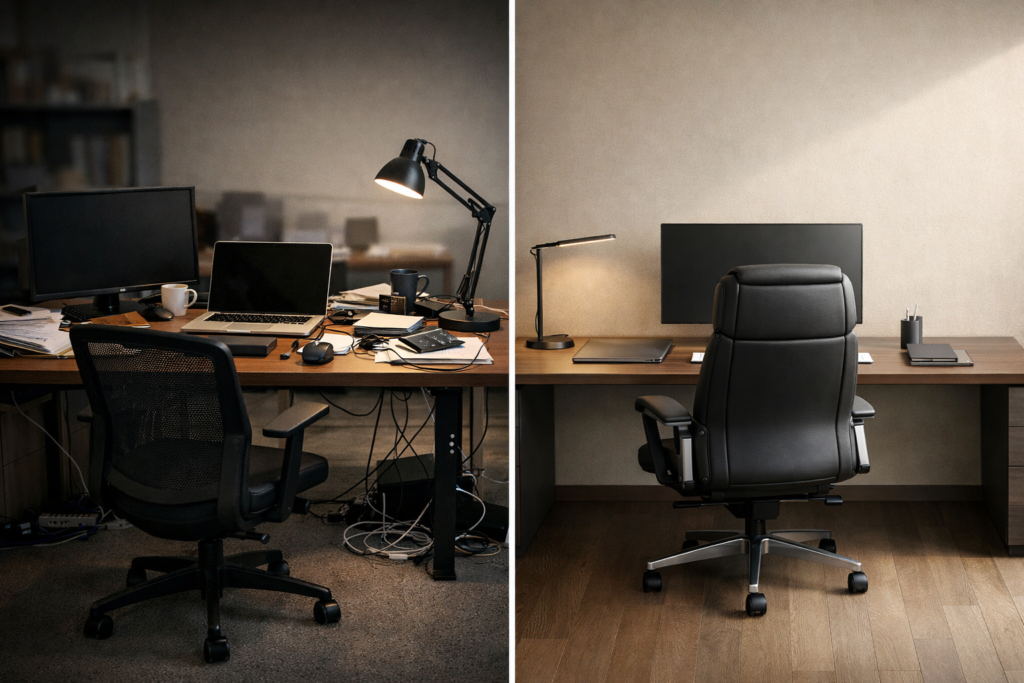
A desk setup for confidence begins with solid backing and proper wall placement. When your chair is supported and your visual field is open, your nervous system stabilizes. As a result, posture improves, authority increases, and executive presence strengthens.
Desk Setup for Confidence: The Wealth Wall Strategy for Executive Authority
Confidence is rarely discussed as an environmental variable.
However, physical backing directly influences how stable you feel during high-stakes conversations.
In leadership psychology, presence matters. Tone matters. Micro-expressions matter.
And all of those begin with posture.
Your desk setup for confidence is not about decoration.
It is about embodied authority.
The Content Gap: Why Most Feng Shui Advice Misses the Executive Layer
Most workspace advice focuses on productivity.
Few discuss status signaling.
Even fewer explain how physical stability influences how others perceive you.
Executives understand backing in business terms.
Investors provide backing.
Boards provide backing.
Yet physical backing — the wall behind you — is rarely examined.
This is where the Wealth Wall concept becomes practical.
Not symbolic.
Structural.
🎁 [AUDIT YOUR SPACE] Free Executive Desk setup for confidence & Productivity Checklist
Stop guessing and start engineering. Download our 5-minute audit to see if your office setup is helping or hurting your bottom line. [Download the Free Spatial Audit PDF]
Physical Backing and Embodied Cognition
Embodied cognition explains that posture influences psychology.
When your back is exposed to open space, your shoulders subtly tense. Even small tension affects breathing.
Breathing influences vocal stability.
Vocal stability influences authority perception.
On video calls, micro-instability becomes visible.
However, when you sit with a solid wall behind you, your body relaxes.
Your spine aligns naturally.
Your shoulders lower.
Your jaw unclenches.
These micro-adjustments create macro-impact in leadership presence.
That is the real function of a desk setup for confidence.
Desk setup for confidence
The Wealth Wall: Creating Vertical Stability
A Wealth Wall is simple.
It is the solid surface directly behind your chair.
This surface should feel:
• Stable
• Neutral
• Structured
• Uncluttered
Avoid chaotic artwork.
Avoid open doorways behind you.
Avoid windows that create backlighting instability.
Vertical elements matter.
Bookshelves, framed credentials, or structured wall panels reinforce psychological grounding.
Vertical lines signal authority.
Horizontal clutter signals instability.
This is visual dominance psychology.
The High-Back Chair: Portable Authority
If you cannot position your desk against a wall, your chair must compensate.
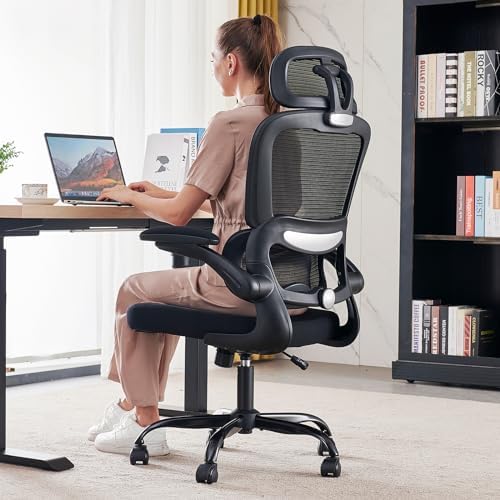
A high-back ergonomic chair provides vertical containment.
It creates a visual boundary around your upper body.
Because your back feels protected, posture strengthens.
Because posture strengthens, your energy stabilizes.
Look for:
• Backrest extending above shoulders
• Neutral professional color
• Strong frame
• Structured silhouette
Avoid soft lounge chairs for executive work.
They communicate relaxation.
Not authority.
Laughing Buddha (Hotei with Gold)
High-Back Executive Ergonomic Chair
A structured high-back chair acts as portable wall support. It reinforces posture, stabilizes presence, and strengthens a desk setup for confidence during long work sessions.
Camera Psychology: Your Wall Is Your Brand
In remote work, your background is part of your authority.
A cluttered or open background reduces visual grounding.
A solid wall with subtle structure increases perceived stability.
Research in perception psychology shows that symmetrical, structured environments increase trust ratings.
On video calls:
• Sit centered
• Ensure vertical lines behind you
• Avoid busy décor
• Maintain balanced lighting
When your visual field appears grounded, you appear grounded.
That influences negotiations.
It influences pricing conversations.
It influences promotions.
Your desk setup for confidence becomes public-facing branding.
Eliminating Friction in Wealth Flow
Wealth flows where decisions are clean.
Clutter introduces friction.
Friction increases hesitation.
Hesitation reduces momentum.
Exposed cables, uneven stacks, and disorganized surfaces fragment visual continuity. The brain interprets fragmentation as disorder.
Disorder increases subtle stress.
Subtle stress compounds into avoidance.
Expanding Forward Space: Desk setup for confidence Requires Vision
Backing stabilizes you.
Forward space expands you.
Your desk should not feel visually compressed.
If facing a wall, create depth using:
• Landscape artwork
• Subtle mirror placement
• Light color tones
Depth perception influences mental expansiveness.
Expansiveness influences strategic thinking.
Strategic thinking influences income growth.
Confidence is not loud.
It is spatially supported.
The Wealth Corner Reframed: Anchor, Not Superstition
The traditional Wealth Corner sits in the far-left desk area.
Rather than mystical activation, treat this as a psychological anchor.
Place a single intentional object.
For example:
• A small Laughing Buddha
• A symbolic ship model
• A framed achievement
This becomes a visual reset cue.
When stress rises, your eyes land on a symbol of success.
Symbols interrupt scarcity narratives.
Scarcity narratives distort executive judgment.
This is associative psychology, not superstition.
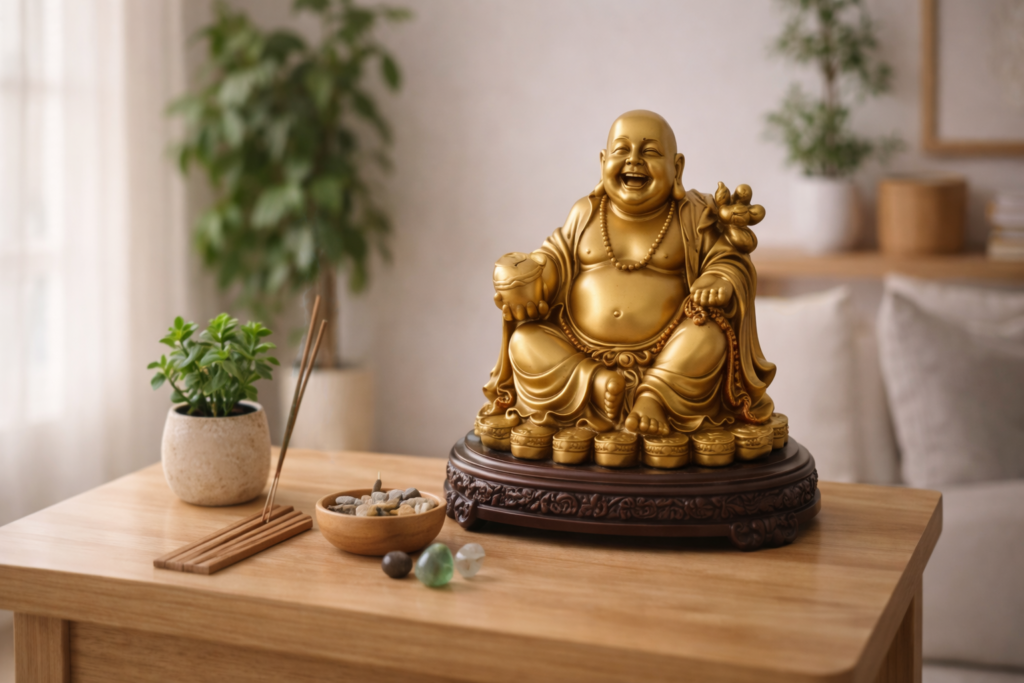
Laughing Buddha (Hotei with Gold)
The Laughing Buddha represents contentment, optimism, and emotional abundance. In Feng Shui, it is associated with easing financial anxiety and reinforcing a positive relationship with success.
From a behavioral perspective, symbols of joy reduce stress-driven decision making, helping the mind approach work and opportunity with calm confidence.
India-Specific Application: Desk setup for confidence in Small Flats, High Ambition
In 1 BHK or 2 BHK apartments, wall placement can be challenging.
If space is tight:
• Avoid sitting in center of room
• Use tall bookshelf as backing
• Add folding screen if necessary
• Keep wall visually solid
Small spaces amplify instability.
Intentional backing restores it.
Even in compact setups, a desk setup for confidence is achievable.
Build Your Wall, Build Your Authority
Your office either stabilizes you or subtly destabilizes you.
Physical backing influences posture.
Posture influences tone.
Tone influences perception.
Perception influences opportunity.
The Wealth Wall is not decorative.
It is structural psychology.
Design your desk setup for confidence.
Then let your presence carry the rest.
Protection and Stability Guides
For full wealth framework:
👉 Feng Shui for Wealth & Focus (Main Hub)
👉 Feng Shui Dragon Placement for Career Authority
👉Why This Laughing Buddha Placement Attracts Money Within 30 Days
👉 Bagua Mirror Placement Rules
👉 Metal Wind Chimes Placement Guide
👉 Feng Shui for Indian Homes: Practical Placement
FAQ: Desk Setup for Confidence
What if I do not have a wall behind my desk?
Use a high-back ergonomic chair or tall bookshelf to create visual backing. Even symbolic vertical support improves posture and perceived stability.
Does desk placement really affect confidence?
Yes. Physical backing influences posture and breathing. Stable posture improves vocal tone and authority perception, especially in meetings and video calls.
What is the Wealth Wall in simple terms?
The Wealth Wall is the solid surface behind your chair that provides psychological stability and visual authority.
Can a desk setup increase income directly?
No setup guarantees income. However, improved executive presence and confidence increase the likelihood of better negotiations and opportunities.
Affiliate Transparency Statement
Mind Boggling Studio participates in select affiliate programs. This allows us to earn a commission when readers purchase recommended products through referral links.
These commissions do not influence our editorial standards. Recommendations are based on relevance to environmental psychology, workspace optimization, and cognitive ergonomics—not commission value.
All opinions are independent and research-aligned.