Laughing Buddha Placement for Wealth in Indian Living Rooms
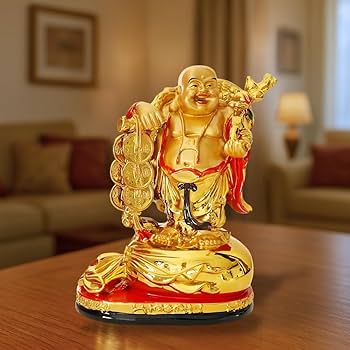
Laughing Buddha placement for wealth in Indian living rooms is often misunderstood as a ritual or belief-based practice.
In reality, it works through something far more practical.
Your living room shapes how your mind responds to money, pressure, and daily decisions.
In Indian homes, the living room is not decorative space.
It is a decision space.
Family discussions happen here.
Planning happens here.
Financial conversations happen here.
That is why placement matters more than symbolism.
This guide explains how to place a Laughing Buddha in an Indian living room without superstition, using principles of environmental psychology, attention regulation, and emotional stability.
Why the Living Room Matters for Wealth in Indian Homes
Indian living rooms carry more cognitive load than most spaces.
They are often:
Compact
Multi-purpose
Visually dense
Television.
Storage.
Decor.
Visitors.
Movement.
When too many visual signals compete, the brain stays alert.
Alert brains make reactive financial decisions.
Not bad ones.
But inconsistent ones.
Feng Shui works here by reducing mental friction, not by promising money.
What the Laughing Buddha Actually Does (Psychology, Not Myth)
The Laughing Buddha does not “attract wealth.”
It acts as a visual emotional cue.
Joyful facial expressions reduce threat perception.
Rounded forms reduce mental sharpness and stress.
Warm metallic tones signal safety and abundance.
When your eyes repeatedly land on a calm, joyful object:
Stress softens
Decision fatigue lowers
Patience increases
These are the real foundations of wealth behavior.
Best Placement for Laughing Buddha in Indian Living Rooms
Placement should support calm visibility, not attention grabbing.
Ideal Locations
On a side console or shelf, not the center table
At eye or chest height, never on the floor
In a low-traffic corner with clear space around it
The Buddha should be seen, not passed repeatedly.
High movement zones fragment attention.
Direction Matters (But Not the Way You Think)
Facing direction is about psychological orientation, not energy flow.
Best Direction
Facing into the room
Facing the main seating area
This creates a sense of:
Welcome
Stability
Emotional openness
Avoid facing walls or storage units.
Blocked views create subconscious resistance.
For the full framework on how space influences money habits and decision quality, read:
👉 Feng Shui for Wealth & Focus: How Your Space Shapes Money, Work, and Opportunity
What to Avoid (Common Indian Living Room Mistakes)
Most placements fail because of context, not the object.
Avoid placing the Laughing Buddha:
Near shoe racks
Near televisions
Above cluttered cabinets
Near bills, documents, or unpaid notices
These pair joy with stress.
The brain remembers the stress more than the symbol.
Size and Material: What Works Best in Indian Homes
Bigger is not better.
Indian homes benefit from moderate scale.
Best Choices
Brass or resin (warm, grounding)
Simple design
Minimal detailing
Overly ornate statues create visual noise.
Noise cancels effect.
How One Placement Supports Wealth Behavior Over Time
Wealth grows through:
Consistency
Emotional regulation
Long-term thinking
A correctly placed Laughing Buddha supports these by:
Reducing financial anxiety
Softening urgency
Reinforcing calm identity
It works quietly, through repetition.
A Calm Supportive Option (Optional)
For those who choose to use one, neutral designs work best in Indian living rooms.
👉 Explore a simple Laughing Buddha support item here
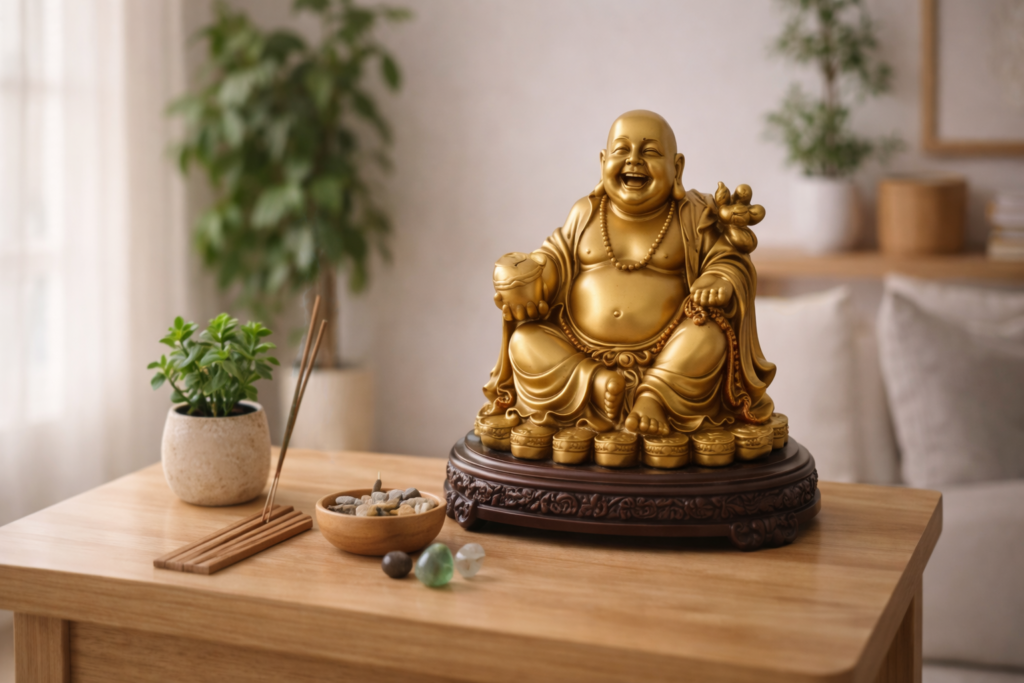
Feng Shui Laughing Buddha
The Laughing Buddha represents contentment, optimism, and emotional abundance. In Feng Shui, it is associated with easing financial anxiety and reinforcing a positive relationship with success.
From a behavioral perspective, symbols of joy reduce stress-driven decision making, helping the mind approach work and opportunity with calm confidence.
How This Fits Into a Larger Wealth-Supportive Home
The Laughing Buddha works best when paired with:
Clear surfaces
Balanced lighting
Reduced clutter
It should not be your only symbol.
It should be part of a calm environment system.
Internal Navigation (Recommended Next Reads)
Final Thought
In Indian living rooms, wealth is influenced less by belief
and more by how calm decisions are made daily.
The Laughing Buddha supports wealth not by magic,
but by reducing the internal tension that blocks consistency.
That is its real power.
Affiliate Disclosure
Some links on this page may be affiliate links.
If you choose to make a purchase through them, I may earn a small commission at no extra cost to you.
All recommendations are optional and chosen to support clarity, focus, and intentional space design.
Disclaimer
This article is for educational purposes only and reflects principles of environmental psychology and emotional regulation.
It does not replace financial, medical, or mental health advice.
Always consult qualified professionals for personal concerns.
Frequently Asked Questions: Laughing Buddha Placement in Indian Living Rooms
1. Where should I place a Laughing Buddha in an Indian living room for wealth?
The best placement is in the living room, at eye level, on a clean shelf or console where it is easily visible. This placement works as a visual anchor that supports emotional balance, calm thinking, and consistent financial decision-making. Avoid placing it on the floor or in crowded areas.
2. Can Laughing Buddha be placed facing the main door in Indian homes?
Yes. In many Indian households, placing the Laughing Buddha facing the main door is considered supportive. Psychologically, this creates a welcoming visual cue that helps the mind shift from external stress to internal calm when entering the home.
3. Is it okay to place a Laughing Buddha near a TV or electronics?
It is better to keep the Laughing Buddha slightly away from televisions or heavy electronics. Constant visual stimulation increases mental noise. A calmer corner of the living room allows the symbol to reinforce relaxation and focus more effectively.
4. Does Laughing Buddha really attract wealth, or is it superstition?
Laughing Buddha does not magically attract money. Its value lies in how it influences emotional regulation. A calm, positive visual symbol can reduce stress-driven decisions, which indirectly supports better financial habits and consistency.
5. Where should Laughing Buddha not be placed in Indian homes?
Avoid placing the Laughing Buddha in bathrooms, kitchens, bedrooms, or directly on the floor. These placements create psychological discomfort and reduce the calming effect the symbol is meant to provide.
6. How many Laughing Buddha statues should be kept in one living room?
One is enough. Multiple statues create visual clutter, which increases cognitive load. Feng Shui works best when symbols are minimal, intentional, and clearly visible.
7. Can Laughing Buddha be used along with Vastu in Indian homes?
Yes. Vastu provides the structural framework, while Feng Shui works at the behavioral and visual level. Laughing Buddha placement can be adjusted within an existing Vastu-compliant home without conflict.