Tools That Calm the Nervous System (Psychology-Based Guide)
Not every problem is solved by thinking harder.
Many struggles persist because the nervous system never fully calms.
When the body feels unsafe, the brain stays alert.
Thoughts race. Emotions intensify. Change feels difficult.
This is why psychology increasingly focuses on regulation before cognition.
This guide explains what nervous system calming tools are, why they work, and how to use them correctly—without hype, superstition, or false promises.
What “Calming the Nervous System” Actually Means
Calming the nervous system does not mean forcing relaxation.
It means helping the body receive clear signals of safety.
When safety is felt:
Breathing slows naturally
Muscles soften
Thoughts lose urgency
The mind follows the body, not the other way around.
Why Tools Can Help When Techniques Fail
Mental techniques work best after regulation.
But during stress:
The body is in survival mode
Logic is secondary
Reassurance feels empty
Physical and sensory tools bypass mental resistance and communicate safety directly to the nervous system.
This is not weakness.
It is biology.
Tools Are Not Treatments — They Are Supports
Important distinction.
Nervous system tools:
Do not cure anxiety
Do not replace therapy
Do not “fix” you
They support regulation, making other work possible.
Think of them as:
Training wheels for the nervous system.
Categories of Tools That Calm the Nervous System
Below are the main categories, explained psychologically—not commercially
1️⃣ Sensory-Reducing Tools
These tools lower stimulation and mental noise.
They help when the nervous system is overloaded.
Examples include:
Light-blocking tools
Sound-dampening environments
Reduced visual input
Lower sensory load = less threat scanning.
2️⃣ Deep Pressure & Grounding Tools
Deep, evenly distributed pressure is one of the fastest safety signals for the body.
It can:
Reduce physical anxiety
Slow racing thoughts
Increase body awareness
This category is especially helpful for nighttime anxiety and overthinking.
For a detailed comparison of which grounding tools work best for anxiety and overthinking, this guide explains it clearly:
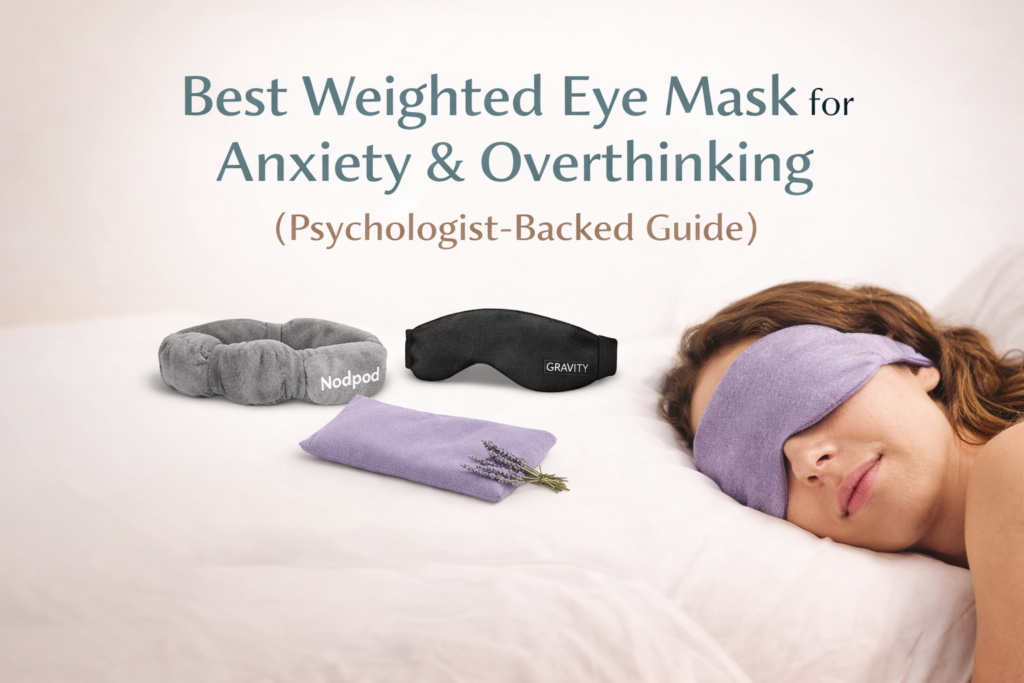
👉 Best Weighted Eye Mask for Anxiety & Overthinking (Psychologist-Backed Guide
3️⃣ Breath & Rhythm-Based Tools
The nervous system responds strongly to rhythm.
Slow, consistent patterns signal safety.
This includes:
Guided breathing
Rhythmic movement
Predictable routines
Consistency matters more than intensity.
4️⃣ Environmental Safety Cues
The nervous system is shaped by surroundings.
Lighting, clutter, and spatial cues influence regulation.
When the environment feels orderly and calm, the body relaxes faster.
This is why workspace setup, sleep environment, and visual simplicity matter more than motivation.
Why Tools Work Better Than Willpower
Willpower requires calm to function.
Stress reduces access to:
Focus
Discipline
Belief change
Tools reduce the load, so willpower is no longer required.
This is why people feel relief without “trying.”
How to Choose the Right Tool
Ask one question first:
“Is my problem mental, or is my body overstimulated?”
If the body feels tense, restless, or alert:
→ Start with physical regulation.
If the body feels calm but patterns persist:
→ Mindset and brain-based tools work better.
Wrong order = frustration.
Right order = ease.
Why This Page Exists
This site sometimes recommends tools.
Not because tools are magic.
But because regulation is required before change.
Tools are introduced only when they:
Support nervous system safety
Align with psychology principles
Reduce strain rather than add effort
No tool is mandatory.
Awareness always comes first.
Final Thought
You are not failing to calm down.
Your nervous system has simply not felt safe enough yet.
Support the body first.
The mind will follow.
Frequently Asked Questions
What are nervous system calming tools?
They are physical or sensory supports that help the body feel safe, allowing stress responses to settle.
Do these tools treat anxiety?
No. They support regulation but do not replace medical or psychological treatment.
When should tools be used?
When the body feels overstimulated, restless, or unsafe—before mindset work.
Can tools help overthinking?
Yes. By calming the body first, tools often reduce mental noise naturally.
Disclaimer
This article is intended for educational and informational purposes only and is based on general principles of psychology, nervous system regulation, and emotional well-being. It is not a substitute for professional medical advice, diagnosis, or treatment.
Anxiety and emotional distress can have many causes. If symptoms are persistent, severe, or interfere with daily functioning, consult a qualified mental health professional, physician, or licensed therapist.
The content on this site does not provide medical or therapeutic services and should not be interpreted as clinical guidance. Always seek professional support for personal health concerns.
.