
Why Affirmations Don’t Work When the Nervous System Is Stressed
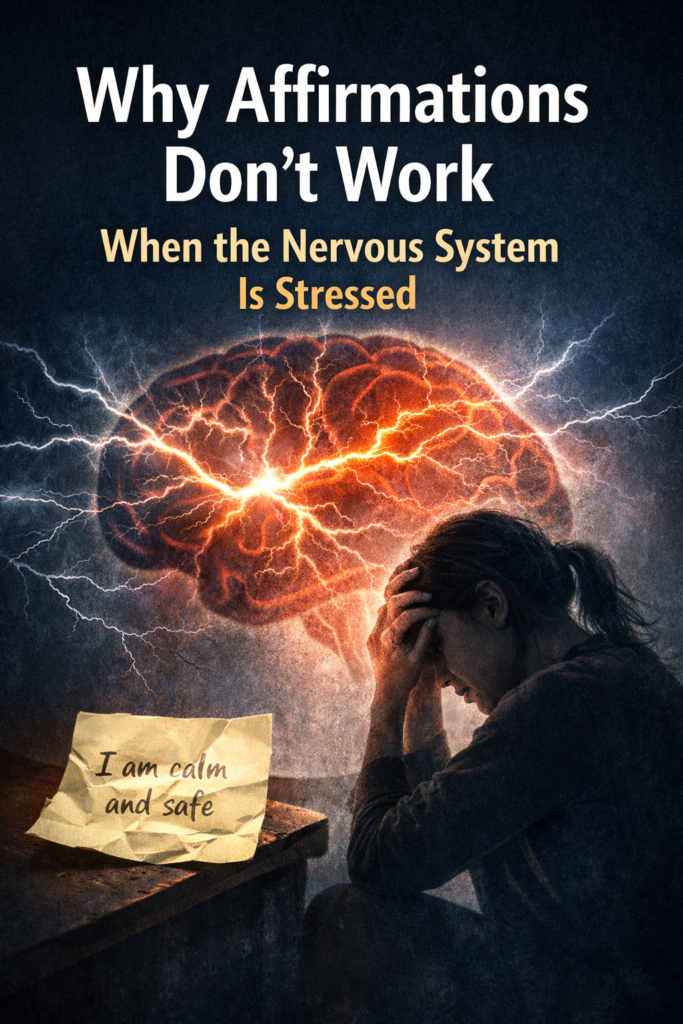
The belief that affirmations don’t work is common.
That belief is incomplete.
Affirmations are not the problem.
The way they are used is.
Most affirmations target the mind.
They ignore the nervous system.
When the body feels unsafe, the brain resists change.
This is why affirmations feel weak at night.
And why overthinking returns when you lie down.
Affirmations Fail When the Body Feels Unsafe
Affirmations are processed by the thinking brain.
Stress lives in the body.
When the nervous system is overstimulated, affirmations don’t work the way they are intended.
The brain is focused on survival, not new beliefs.
In that state:
Positive statements feel fake
Motivation disappears
Resistance increases
This is not mindset failure.
It is biology.
The Nervous System Always Leads Belief
Your nervous system decides first.
Then your thoughts follow.
If the body feels unsafe, the brain rejects information that sounds unrealistic or threatening — even if it is positive.
That is why saying “I am calm” while your body is tense creates inner conflict.
The system says:
“This is not true. Stay alert.”
Why Repeating Affirmations Can Increase Anxiety
When stress is high:
The brain scans for danger
The body holds tension
Awareness becomes hyper-focused
In this state, affirmations don’t work as expected.
Affirmations that contradict this state feel dishonest.
That mismatch creates friction.
Instead of calming you, affirmations highlight the gap between how you feel and how you want to feel.
This is why some people feel anxious, frustrated, or
Affirmations Work After Regulation, Not Before
Affirmations are not meant to calm the nervous system.
They are meant to shape identity once calm is present.
When the body settles:
Breathing slows
Muscles soften
Thoughts become flexible
Only then does the brain accept new beliefs.
Regulation comes first.
Reprogramming comes second.
Why Nighttime Is the Worst Time to Force Affirmations
At night:
The nervous system is more sensitive
Emotional memory is stronger
Logical control is weaker
This is why affirmations don’t work as well before sleep.
The body is asking for safety, not statements.
Trying to “think calm” during stress is like trying to sleep while standing.
What Actually Helps Before Affirmations
The nervous system responds fastest to physical signals.
Examples include:
Reduced sensory input
Gentle pressure
Slow breathing
Stillness
These signals tell the body:
“You are safe right now.”
Once safety is felt, affirmations stop feeling forced.
A Simple Way to Reduce Resistance First
Some people use physical grounding tools before mindset work.
Gentle, evenly distributed pressure — especially around the eyes and face — can help the nervous system downshift and reduce mental noise.
This makes the mind more receptive.
If you want a clear explanation of which tools work best for anxiety and overthinking, this guide breaks it down simply:
👉 Best Weighted Eye Mask for Anxiety & Overthinking (Psychologist-Backed Guide)
Why Skepticism About Affirmations Is Reasonable
Skepticism usually means:
“I tried this while stressed, and it didn’t work.”
That conclusion makes sense.
Affirmations are not wrong.
They were just used at the wrong nervous system state.
When regulation comes first, affirmations stop feeling like lies and start feeling natural.
Final Thought
You don’t need more discipline.
You need less stress in the body before working on the mind.
Calm first.
Belief second.
Frequently Asked Questions
Why don’t affirmations work when I’m stressed?
Because stress activates the nervous system, making the brain resistant to new beliefs.
Can affirmations increase anxiety?
Yes. When used during high stress, affirmations can create internal conflict and resistance.
Do affirmations work after calming the nervous system?
Yes. Once the body feels safe, affirmations are processed more easily and feel natural.
What should I do before affirmations?
Focus on physical regulation first, such as calming the body and reducing sensory overload.
Disclaimer
This article is for educational purposes only and is not intended as medical or mental health advice. The information shared is based on psychology and nervous system concepts and should not be used as a substitute for professional care. If you experience ongoing anxiety, distress, or mental health concerns, please consult a qualified healthcare or mental health professional.