
Feng Shui for wealth and focus works by shaping attention, emotional regulation, and decision-making through intentional space design. By aligning layout, lighting, symbolic anchors, and visual order, your environment supports productivity, financial discipline, and long-term professional stability.
How environment psychology, Feng Shui symbols, and intentional design support prosperity and productivity
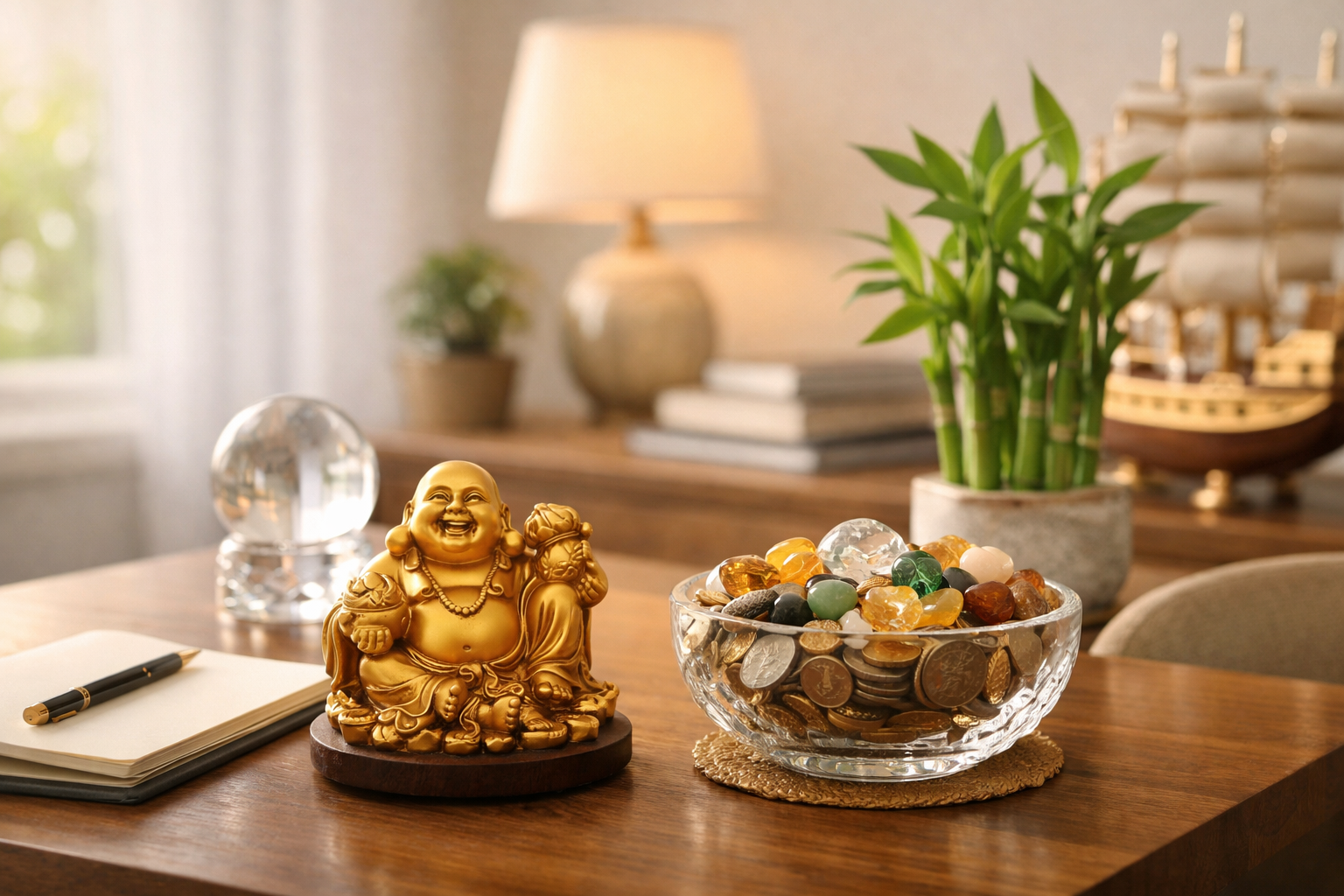
Your Space Is Quietly Training Your Brain
Most people believe success comes from motivation, discipline, or mindset alone.
But neuroscience shows something different.
Your environment constantly sends signals to your brain—often more powerfully than your thoughts. These signals shape how safe, focused, confident, and consistent you feel throughout the day.
This is where Feng Shui is often misunderstood.
Real Feng Shui is not superstition.
It is environmental psychology.
It is about how visual cues, order, light, symbols, and layout influence:
-
Attention
-
Emotional regulation
-
Decision-making
-
Habit formation
-
Identity reinforcement
This guide explains Feng Shui in a grounded, modern way—and shows how to use simple objects and layout choices to support wealth, focus, and long-term success.
No mysticism.
No promises.
Just how the brain responds to space.
What Is Feng Shui?
Feng Shui is a spatial design system that organizes your environment to improve focus, clarity, and emotional balance. In modern terms, it aligns closely with environmental psychology — how layout, light, objects, and placement influence stress levels, attention, and decision-making. Practically, Feng Shui helps structure space to support stability, productivity, and long-term consistency.
How Feng Shui Actually Works (Psychology First)
Why Environment Shapes Behavior More Than Motivation
Your brain evolved to respond to surroundings first.
Before you think, your nervous system scans for:
-
Safety
-
Order
-
Threat
-
Opportunity
When your environment feels chaotic or heavy, the brain shifts into protection mode. When it feels ordered and intentional, the brain has more capacity for focus, creativity, and growth.
This is why:
-
A cluttered desk reduces focus
-
Poor lighting increases fatigue
-
Visual disorder increases stress
-
Intentional spaces increase consistency
Motivation fades.
Environment stays.
Feng Shui Explained Without Mysticism
At its core, Feng Shui works through three psychological mechanisms:
1. Visual Attention Training
What you see repeatedly shapes what your brain prioritizes.
2. Emotional Association
Objects carry meaning. Meaning creates emotional responses.
3. Habit Reinforcement
Your space nudges behavior without effort.
When used correctly, Feng Shui does not “attract money.”
It supports the behaviors and mindset that make growth sustainable.
This guide breaks down Feng Shui using psychology, behavior, and practical placement — without superstition or exaggeration
How to Apply Feng Shui for Wealth and Focus (7 Practical Steps)
If you are starting fresh, begin here:
Clear visible clutter from primary work surfaces
Position your desk in command position
Choose one wealth anchor (not multiple)
Improve lighting quality
Define workspace boundaries
Add one growth-oriented element (plant or symbol)
Create a weekly reset ritual
Small changes compound faster than dramatic overhauls.
🎁 Free Resource: 7-Day Wealth Corner Reset
Apply the wealth corner principles step-by-step using our printable audit guide.
Wealth Corner: Attention & Expectation Training
In Feng Shui, the “wealth corner” is not about superstition. It is about directing attention.
Attention shapes expectation.
Expectation shapes behavior.
When a space consistently reminds your brain of growth, stability, and value, it reinforces identity quietly.
The Big Three Wealth Anchors (Foundation Symbols)
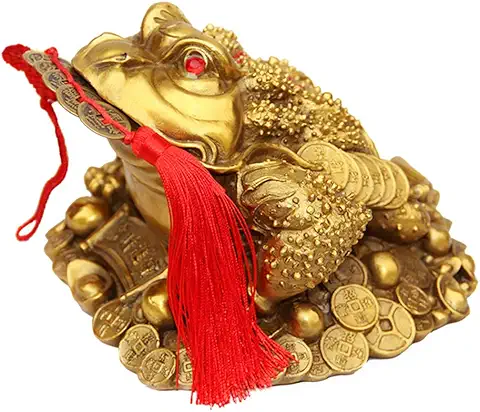
Feng Shui Three-Legged Money Frog
Feng Shui Three-Legged Money Frog (Jin Chan – Symbol of Wealth Attraction)
The Three-Legged Money Frog is traditionally used as a visual anchor for incoming opportunity. When placed intentionally, it trains attention toward receiving rather than chasing wealth.
From a psychological perspective, it works as an environmental cue—reminding the mind to notice opportunity and act with confidence.
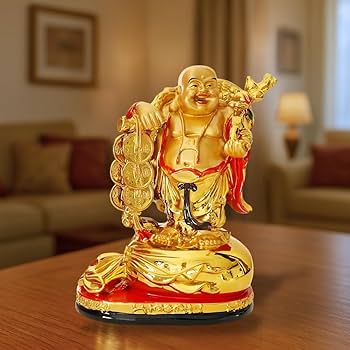
Feng Shui Laughing Buddha (Hotei – Symbol of Joy and Abundance)
The Laughing Buddha represents contentment, optimism, and emotional abundance. In Feng Shui, it is associated with easing financial anxiety and reinforcing a positive relationship with success.
From a behavioral perspective, symbols of joy reduce stress-driven decision making, helping the mind approach work and opportunity with calm confidence.
The Laughing Buddha is one of the most misused Feng Shui symbols.
Placement, facing direction, and surrounding objects determine whether it supports focus and prosperity — or quietly works against it.
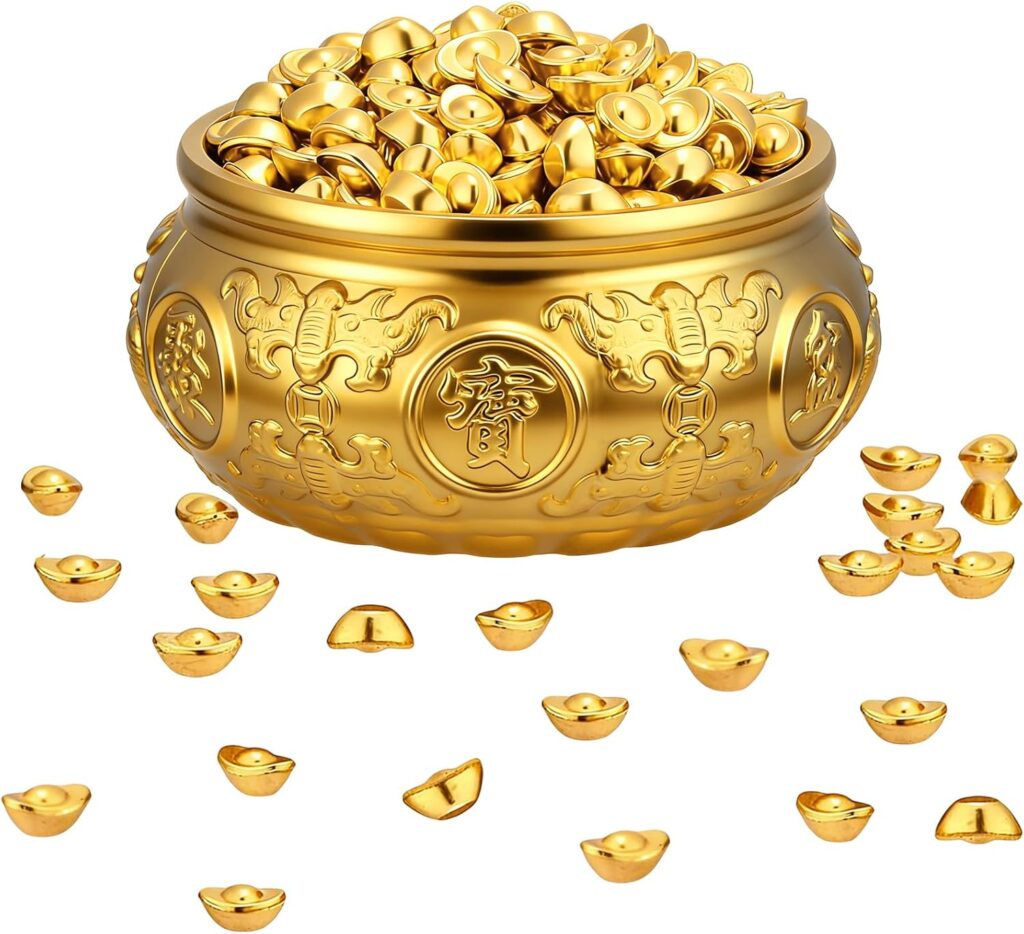
Feng Shui Wealth Bowl (Symbol of Accumulation and Stability)
The Feng Shui Wealth Bowl is a symbolic reminder of accumulation, preparedness, and long-term financial thinking. Traditionally, it represents stored value rather than quick gain.
From a psychological standpoint, visible symbols of abundance reinforce saving behavior, patience, and consistency — traits strongly associated with financial stability.
The Wealth Bowl is often used incorrectly or overfilled without intention.
What goes inside, where it is placed, and how often it is refreshed determine whether it reinforces prosperity — or becomes visual clutter.
→ Read the full Feng Shui Wealth Bowl setup and placement guide
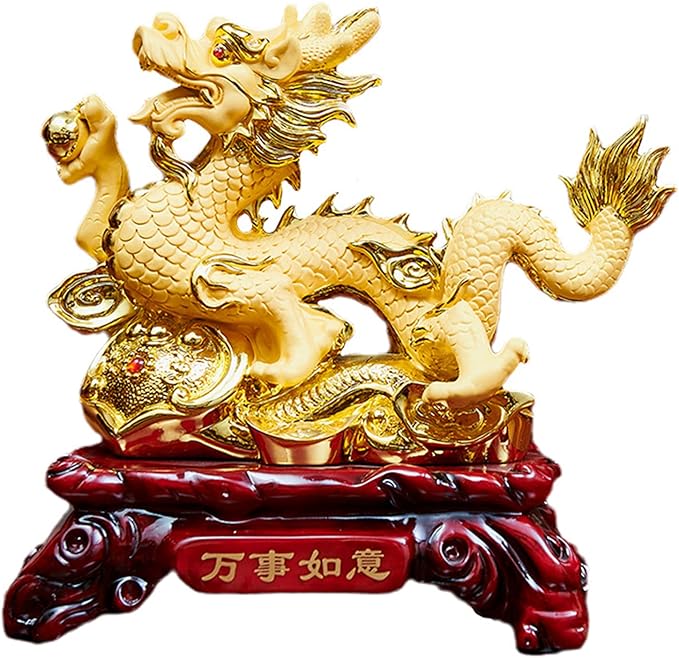
Feng Shui Dragon (Symbol of Power and Success)
In Feng Shui, the Dragon symbolizes authority, momentum, and upward movement. It is associated with leadership energy, confidence, and the ability to take decisive action.
Behaviorally, powerful symbols influence posture, focus, and assertiveness — subtle cues that shape how people approach work, negotiation, and opportunity.
The Feng Shui Dragon is one of the most mispositioned symbols.
Incorrect placement or facing direction can weaken its effect or create visual tension rather than support confidence and progress.
→ Read the complete Feng Shui Dragon placement guide for success
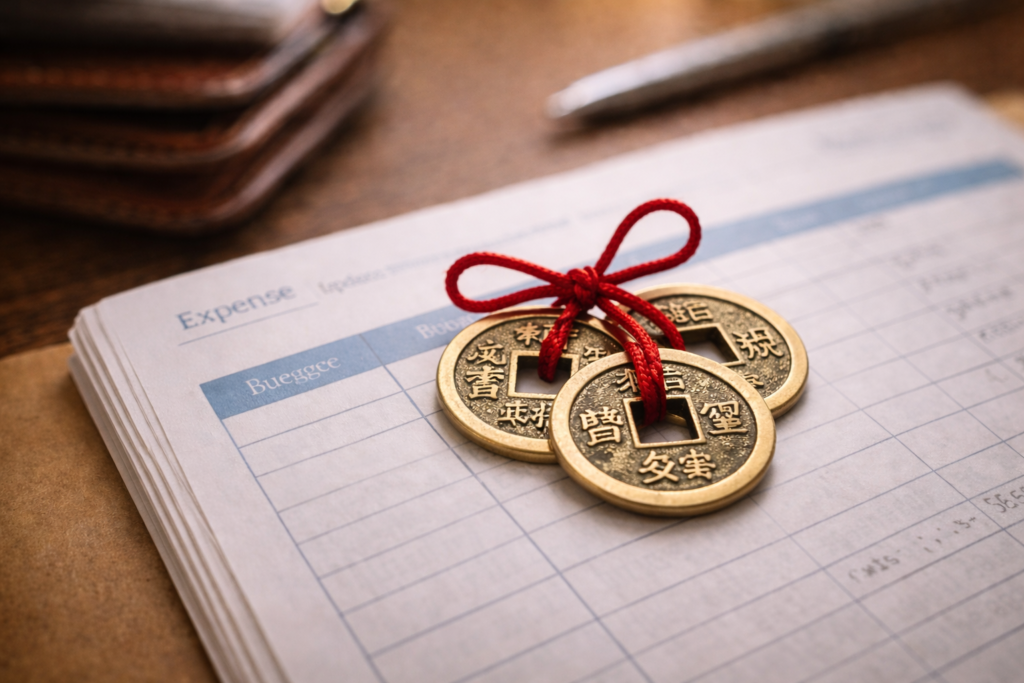
Feng Shui Chinese Coins (Money Discipline & Consistency)
Feng Shui Chinese Coins
Supports money discipline and consistency through subtle visual cues.
Best placed in wallets or work drawers where financial decisions happen.
Simple placement : Inside a wallet or purse
In a desk drawer near work or planning tools
Best kept subtle, not decorative.
👉 Read the full guide: Chinese Coins Placement for Money Discipline and Consistency
Why Workspaces Affect Income More Than Motivation
The brain associates space with behavior.
A clear, intentional workspace signals:
Safety
Control
Readiness to act
A chaotic workspace signals:
Unfinished loops
Cognitive noise
Subconscious avoidance
Over time, this affects:
Decision quality
Risk tolerance
Follow-through
Income rarely drops because of effort.
It drops because attention fractures.
Key Psychological Principles for High-Functioning Workspaces
Small adjustments matter.
Clear surfaces reduce mental clutter
Good lighting supports sustained attention
Defined zones improve task switching
Intentional symbols reinforce professional identity
These cues work quietly, below conscious thought.
That is why they last.
Supportive Feng Shui Items for Workspaces
These are not “lucky objects.”
They are environmental stabilizers.
Desk organizers to reduce visual noise
Lamps with warm, steady light to prevent fatigue
Symbolic objects representing stability or achievement
Plants or natural textures to lower stress response
Used intentionally, they help the nervous system stay regulated during work.
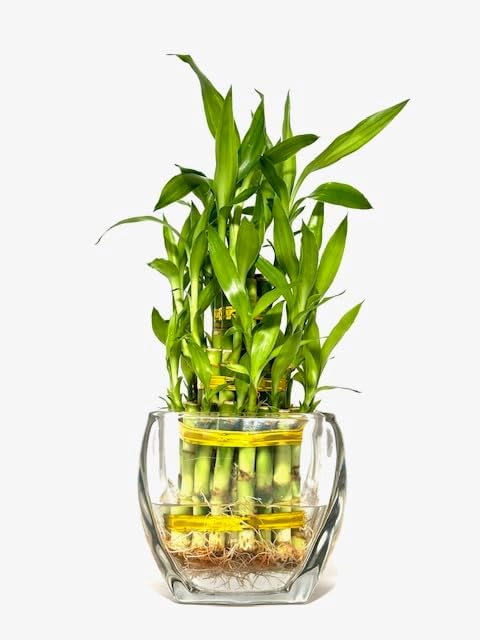
Feng Shui Lucky Bamboo (8 or 9 Stalks)
Lucky Bamboo is commonly used to reinforce steady progress, discipline, and upward momentum in work environments. It acts as a living reminder of consistency rather than urgency.
From a psychological standpoint, plants in workspaces improve attention and reduce mental fatigue, supporting better long-term productivity and follow-through.

Feng Shui Crystal Ball or Light Prism (Clear Quartz or Citrine)
Crystal balls and light prisms are used to clarify mental focus and redirect attention. When placed near natural light, they visually reinforce clarity and forward thinking.
Psychologically, light reflection improves alertness and reduces cognitive stagnation, making it easier to stay mentally engaged during work.
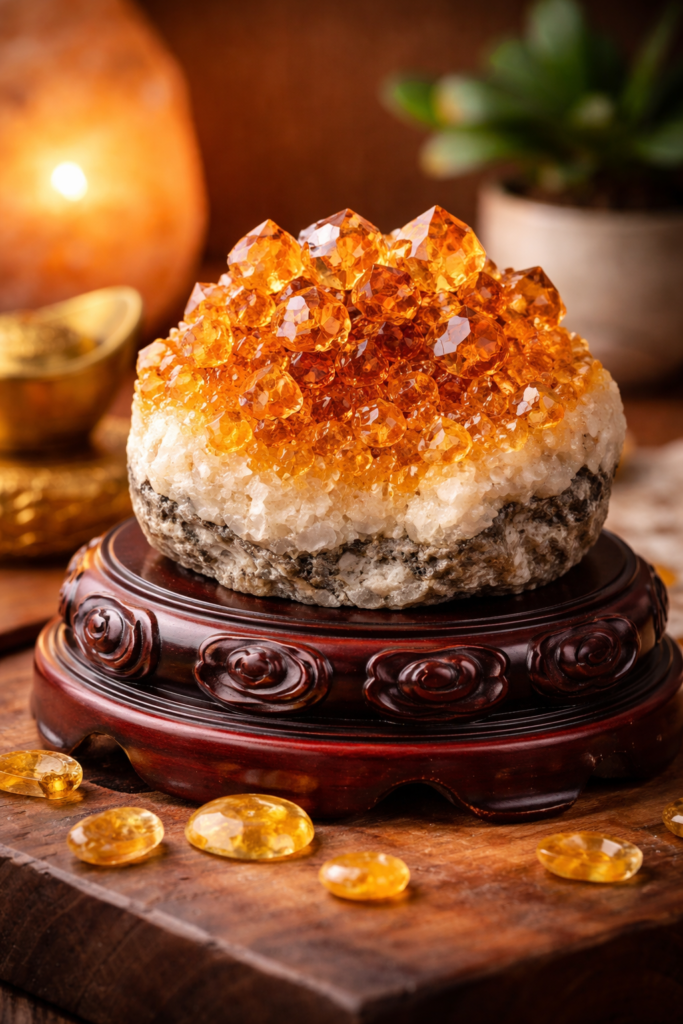
Feng Shui Citrine Merchant’s Stone (Business Success Crystal)
Citrine is traditionally associated with confidence, optimism, and commercial success. In workspaces, it reinforces a mindset of value creation rather than scarcity.
From a behavioral perspective, confidence-anchoring symbols reduce hesitation and support decisive action.
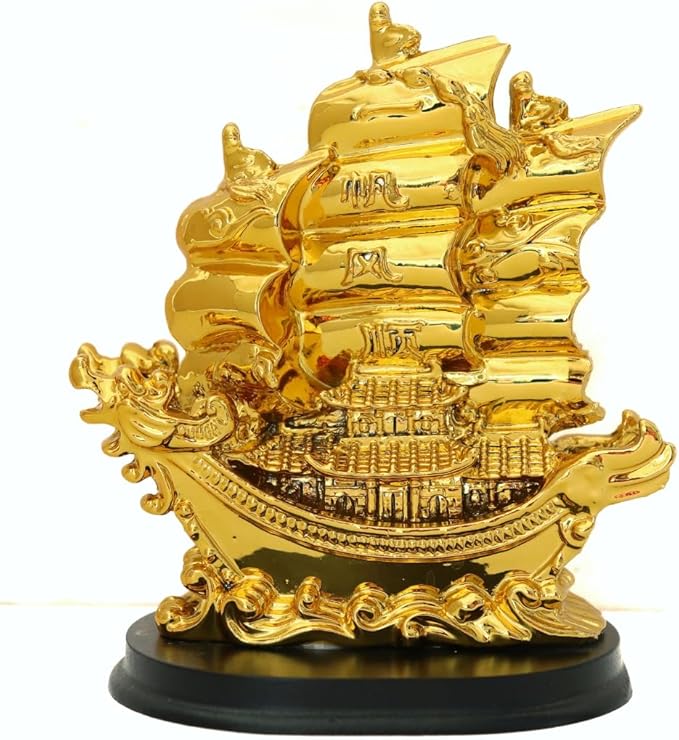
Feng Shui Wealth Ship (Prosperity Ship Facing Inward)
The Wealth Ship symbolizes incoming opportunity and accumulation. Placement facing into the room reinforces the idea of resources and rewards moving toward you.
Visually, it trains directional attention—subtly reinforcing the concept of receiving rather than chasing success.
Feng Shui Wealth Ship (Prosperity Ship Facing Inward)
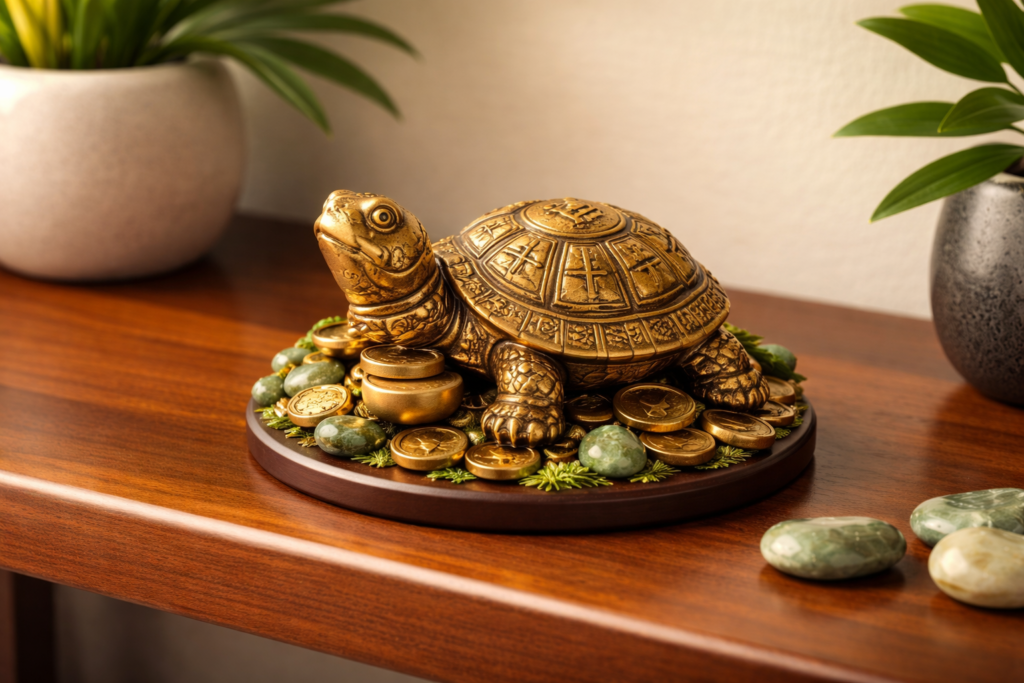
Feng Shui Turtle for Stability & Protection
The Feng Shui turtle represents stability, protection, and long-term security. Traditionally linked to career support and steady growth, it works best when placed in the North sector, near a workspace, or behind your seating position for symbolic backing. In modern terms, the turtle acts as a visual anchor for consistency, patience, and structured progress.
👉 Explore this Feng Shui support item
Attracting wealth is only half the equation. Protecting energy, health, and focus ensures that progress is not quietly drained by stress, distraction, or instability.
In Feng Shui, protection symbols are not about fear—they are about creating a sense of psychological safety that allows consistent effort and clear decision-making.
Workspace Feng Shui works best when paired with consistent routines and focused attention — not passive decoration.
Protection & Stability: Securing Wealth and Reducing Drain
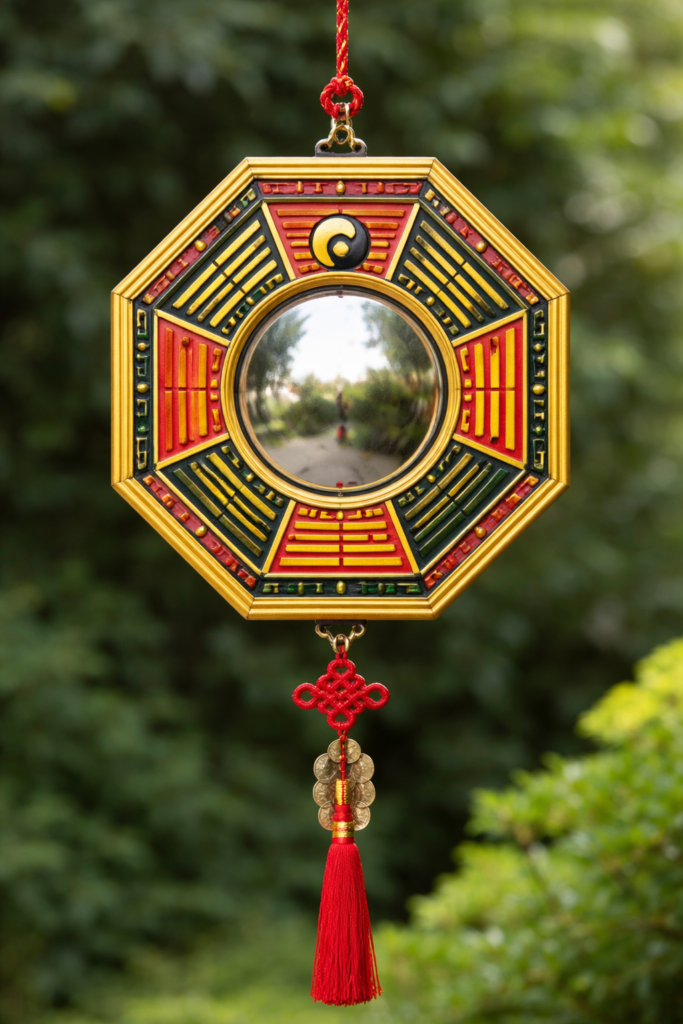
Feng Shui Bagua Mirror (External Energy Protection)
The Bagua Mirror is traditionally placed outside the entrance to reflect disruptive external energy. Its purpose is not to block opportunity, but to reduce environmental stress before it enters the living or working space.
Psychologically, clearly defined boundaries improve focus and reduce cognitive overload—allowing attention to stay on productive priorities.
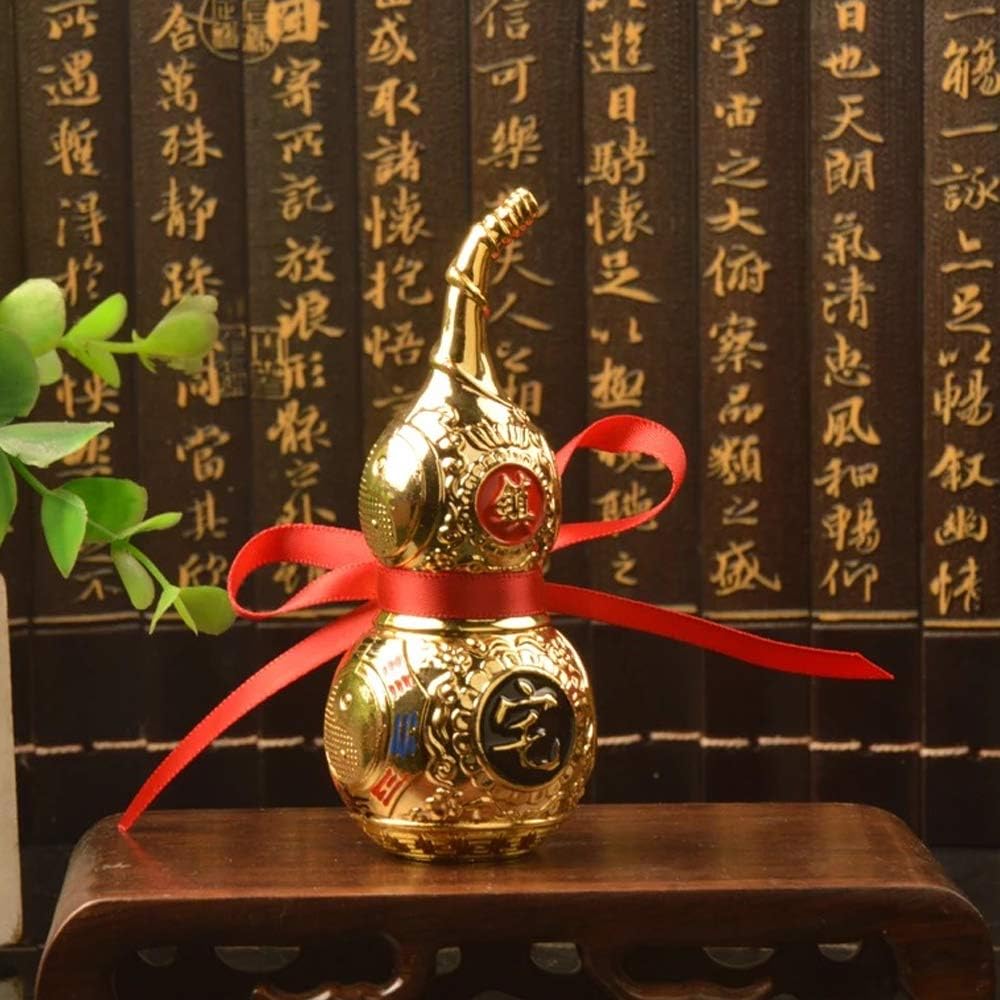
Feng Shui Wu Lou (Health & Vitality Gourd)
The Wu Lou is used to support the health and stamina of the primary income earner. In Feng Shui, health stability is considered foundational to long-term financial consistency.
From a psychological perspective, symbols associated with well-being reinforce self-care habits and reduce burnout—both critical for sustained productivity.
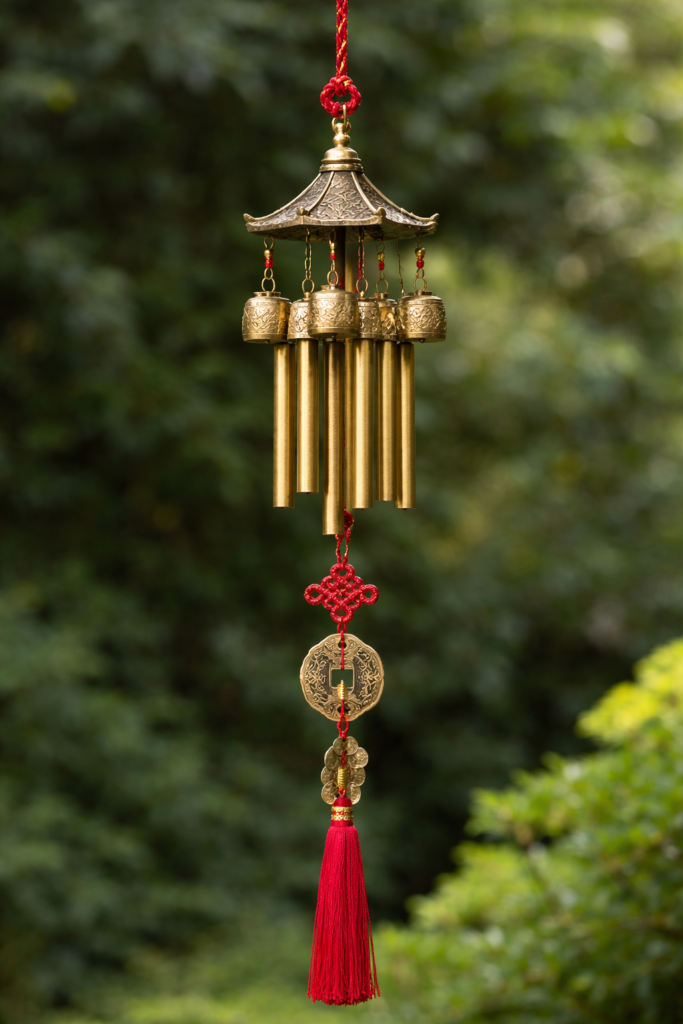
Feng Shui Metal Wind Chimes (6 or 8 Rods)
Metal wind chimes are used to break up stagnant energy and restore movement in areas that feel blocked or heavy. The gentle sound acts as a cue for reset and awareness.
Behaviorally, auditory cues interrupt mental loops and support re-engagement—helping prevent quiet productivity drain.
Entryway: Signals of Opportunity & Flow
Your entryway is the brain’s first impression of your space.
Psychologically, it answers one question:
“Is this a place of order and possibility?”
A neglected entry signals friction.
A clear, intentional entry signals openness.
Many people unknowingly weaken their environment by placing protective items inside the wrong rooms.
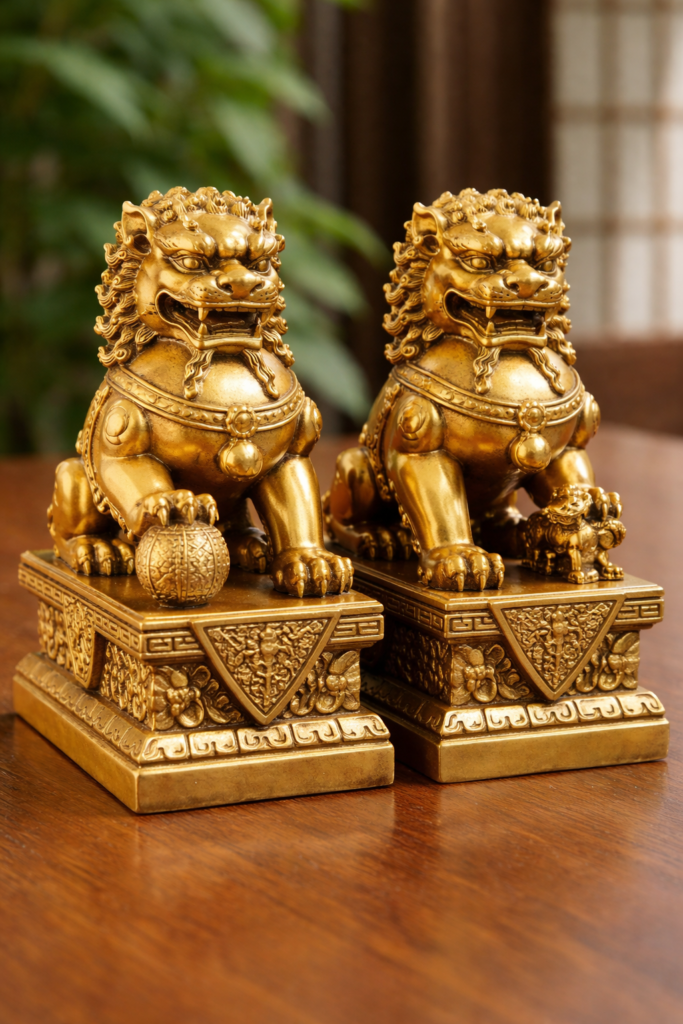
Feng Shui Fu Dogs (Guardian Lions at Entry)
Fu Dogs are placed at entrances to symbolically guard accumulated resources. They reinforce the idea of protection rather than accumulation alone.
Visually, boundary symbols improve psychological safety—supporting calm, focused decision-making.
Water Elements: Activating Cash Flow and Opportunity Movement
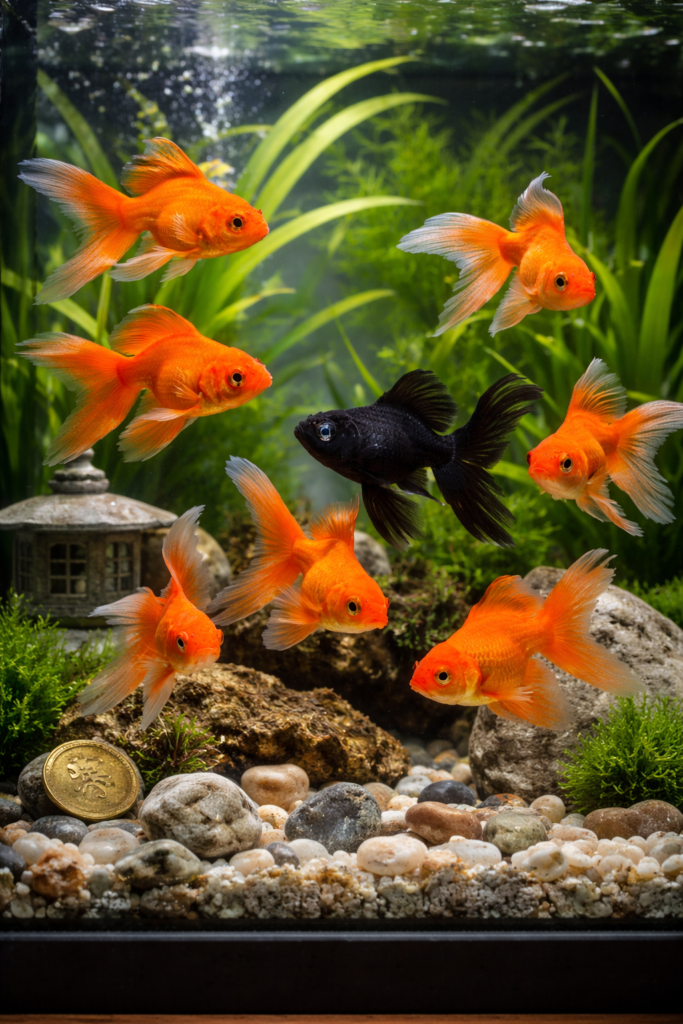
Feng Shui Fish Aquarium (8 Goldfish + 1 Black Fish)
Aquariums are used to represent active wealth circulation. The movement of fish reinforces attention toward momentum, timing, and patience rather than sudden gains.
Behaviorally, dynamic visual environments improve alertness and help the mind stay engaged with long-term opportunity cycles.
In Feng Shui, water represents movement—of money, opportunities, and timing. When energy stagnates, progress feels slow even with effort.
Water elements are used sparingly to visually reinforce flow, adaptability, and responsiveness, helping the mind stay open to incoming possibilities rather than rigid routines.
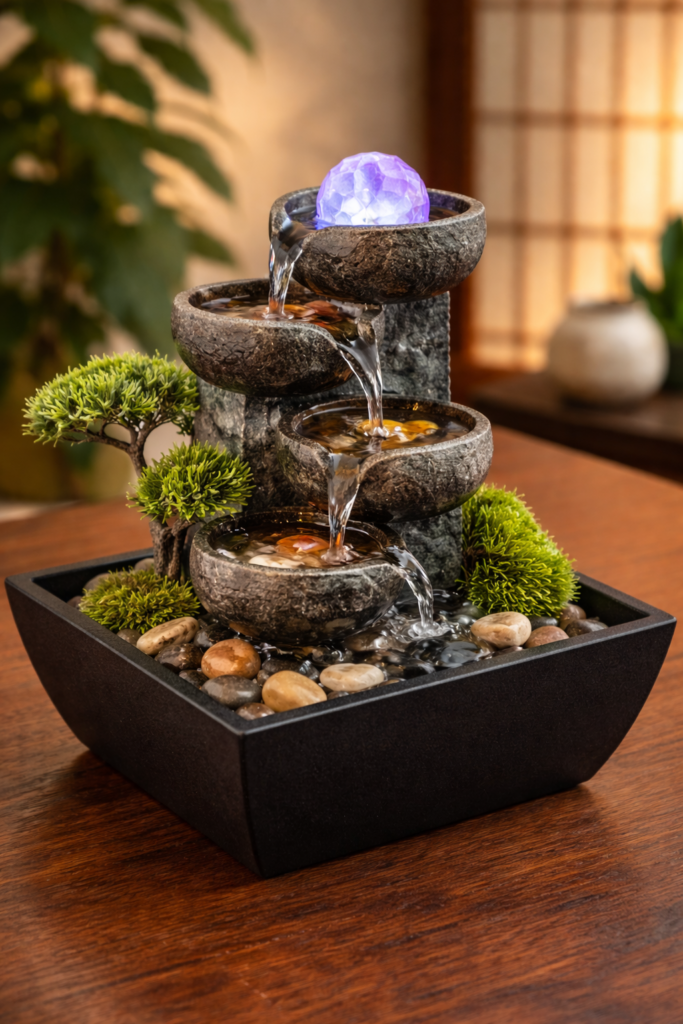
Feng Shui Indoor Water Fountain (Gentle, Continuous Flow)
Indoor water fountains symbolize continuous movement and renewal. The sound and motion of water act as a reminder that progress does not need to be forceful to be consistent.
From a psychological standpoint, gentle background movement reduces mental rigidity and supports adaptive problem-solving—key traits in income growth.
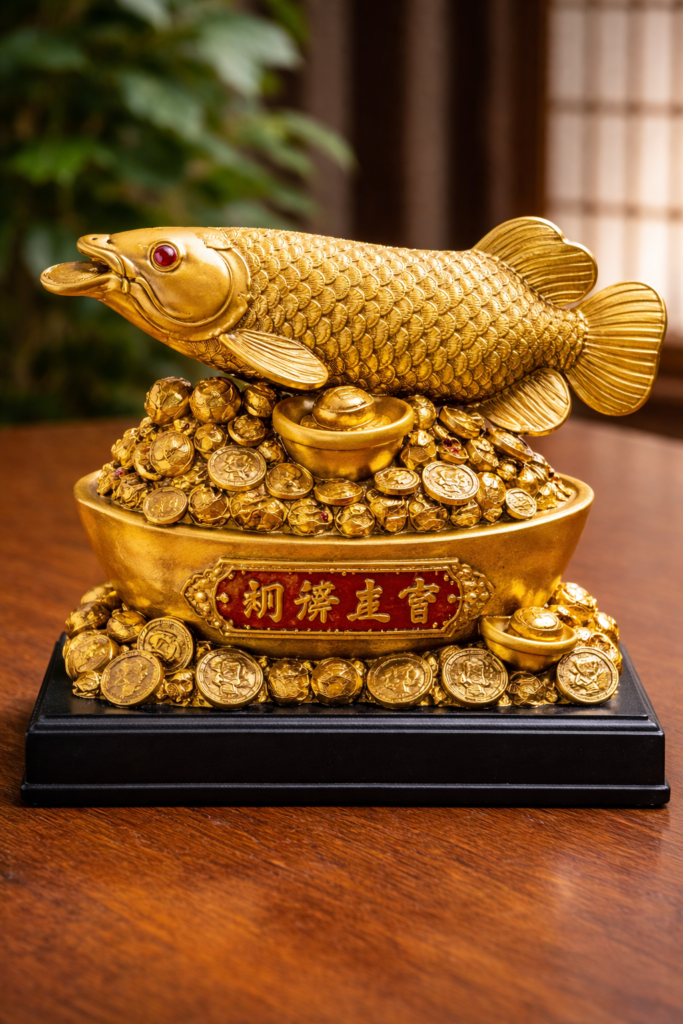
Feng Shui Arowana (Dragon Fish) Statue
The Arowana is associated with authority, high-value opportunities, and leadership-level prosperity. As a symbol, it reinforces confidence and strategic thinking rather than reactive effort.
Psychologically, symbols of strength and mastery support decisive action and long-term vision.
Water elements are about movement and rhythm — not instant financial results.
Mindset & Chi Alignment Tools (Optional Support for Wealth Focus)
While Feng Shui focuses on shaping the external environment to support clarity and opportunity, many ancient traditions also teach that internal energy flow — often called Chi — influences mindset, emotional balance, and decision-making.
In modern terms, this aligns closely with:
subconscious conditioning
emotional regulation
attention management
stress reduction
mental clarity before taking action
Some people integrate mantra-based or audio-based practices to reinforce a calm, opportunity-aware mindset throughout the day.
These tools are not shortcuts or guarantees; rather, they help support the mental and emotional conditions that make productive habits easier to sustain.
If you prefer an internal approach that complements Feng Shui principles, here is a modern interpretation inspired by ancient Chi concepts:
Chi Manifestation Mantra (Audio-Based Focus Tool)
A short, mantra-style audio practice designed to:
reduce internal resistance around money
calm the nervous system
improve focus and emotional clarity
reinforce a steady “opportunity-ready” mindset
This type of practice works best when used consistently — often as part of a morning routine, before focused work, or alongside affirmations.
Integrating Space and Mindset: A Guided Feng Shui Focus Practice
Physical space shapes attention, but repetition and focus determine how consistently that attention turns into action.
If you prefer guided practices, this short Feng Shui–inspired affirmation session is designed to support clarity, calm focus, and a steady mindset while working with your environment.
This practice works best when used alongside small environmental adjustments. Many people listen while sitting at their desk, in a calm corner of the home, or shortly before focused work.
Common Feng Shui Wealth Mistakes
• Overloading symbols in one space
• Placing wealth bowl in kitchen or bathroom
• Facing Laughing Buddha toward main door
• Using too many water elements
• Ignoring lighting quality
• Treating symbols as shortcuts
Feng Shui works through consistency — not decoration density.
Feng Shui vs Vastu: What’s the Difference?
Feng Shui and Vastu both focus on spatial alignment, but they differ in origin and emphasis.
Feng Shui emphasizes energy flow, symbolism, and environmental psychology.
Vastu focuses more heavily on directional architecture and structural design.
In modern homes — especially rented apartments — Feng Shui offers more flexible adjustments without renovation.
Many Indian households combine both systems intentionally.
Annual Element Focus (Updated Yearly)
Each year carries a dominant elemental theme that influences environmental emphasis.
In 2026, the Fire Horse energy emphasizes:
• Heat balance
• Burnout prevention
• Leadership activation
• Controlled expansion
For the complete annual adjustment guide:
👉 Read The Fire Horse Feng Shui Adjustment Guide for 2026
Final Thoughts: Your Space Is Already Shaping Your Future
Core Wealth Symbols and Placement Guides
• 👉 Where to Place a Wealth Bowl at Home or Office
• 👉 Never Place a Wealth Bowl Here
• 👉 The 7-Item Wealth Bowl Formula
• 👉 Feng Shui Money Frog Placement Guide
• 👉 Where to Keep Laughing Buddha at Home
• 👉 Laughing Buddha Placement in Indian Living Rooms
Symbols of Career Growth and Authority
• 👉 Feng Shui Dragon Placement for Career Success
• 👉 Feng Shui Desk Setup for Confidence (Wealth Wall)
• 👉 The Invisible Script (Workspace Psychology)
• 👉 Feng Shui for Career Stability in Indian Offices
Protection and Stability Guides
• 👉 Bagua Mirror Placement Rules
• 👉 Metal Wind Chimes Placement Guide
• 👉 Feng Shui for Indian Homes: Practical Placement
Water Elements and Cash Flow Activation
• 👉 Indoor Water Fountain Placement
• 👉 Fish Aquarium Feng Shui
• 👉 Arowana Statue Guide
Environmental Psychology & Behavioral Design
• 👉 The Invisible Script
• 👉 Desk Setup for Confidence
• 👉 The 1-Inch Shift
Your environment is not neutral. Every object, surface, and layout decision quietly influences how you think, feel, and act.
Feng Shui works not because objects create wealth on their own, but because intentional spaces train attention, reinforce identity, and reduce friction between effort and outcome. When your surroundings support clarity and stability, consistent action becomes easier—and opportunity feels more visible.
You do not need to implement everything at once. Begin with one area, one symbol, or one adjustment that feels aligned. Over time, these small environmental cues compound into stronger habits, clearer focus, and a more confident relationship with progress.
Your space is already teaching your mind something every day. The question is whether it’s reinforcing distraction—or direction.
If you’re exploring how environment, mindset, and daily rituals work together, you may find it helpful to revisit this guide as you refine your space. Small adjustments, applied consistently, often create the most lasting change.
AFFILIATE DISCLOSURE
Some of the links in this article may be affiliate links. This means that if you choose to make a purchase through these links, I may earn a small commission at no additional cost to you.
DISLAIMER
The information provided on this website is for educational and informational purposes only. Feng Shui, mindset practices, and symbolic tools discussed here are not guarantees of financial or personal outcomes.
Results vary based on individual circumstances, effort, and consistency. This content should not be considered financial, legal, or professional advice.
Readers are encouraged to use their own judgment and consult qualified professionals when making decisions related to finances, health, or lifestyle changes.
Feng Shui for Wealth: Common Questions and Clear Answers
What is Feng Shui, and does it really work?
Feng Shui focuses on how environments influence attention, behavior, and emotional balance. It works by shaping habits and focus rather than creating outcomes directly.
Can Feng Shui help with money and career success?
Feng Shui does not directly create wealth or career outcomes. However, intentional environments reduce stress, improve clarity, and support consistent action—factors strongly linked to productivity, opportunity awareness, and financial progress.
Do I need to buy Feng Shui products to see results?
No. You can get meaningful benefits from simple layout changes, decluttering, and intentional organization. Feng Shui products are optional visual cues that reinforce focus, habits, and long-term consistency.
Where should Feng Shui items be placed for best results?
Placement depends on purpose. Workspace items support focus and income, entryway items promote protection and boundaries, and water elements encourage flow and adaptability. Placement should feel natural, not forced.
Is Feng Shui spiritual or psychological?
Feng Shui can be symbolic, cultural, or psychological. Many modern users apply it as environmental psychology—using spatial design to influence attention, emotional regulation, and productive behavior.
Can I use Feng Shui even if I don’t believe in energy or manifestation?
Yes. Feng Shui works even when approached purely through design and behavior. Visual cues, organized spaces, and supportive layouts help the brain stay focused, calm, and goal-oriented regardless of belief.
How long does it take to see changes with Feng Shui?
Environmental changes can shift mood and focus almost immediately. Larger results depend on how consistently your space supports positive habits, clarity, and decision-making. Think in terms of weeks and daily behavior, not instant outcomes.
Can I combine Feng Shui with affirmations or mindset practices?
Yes. Feng Shui strengthens the environment, while affirmations and mindset rituals strengthen internal beliefs. When both align, consistency and clarity increase, creating smoother progress toward goals.
Attracting wealth is only half the equation. Protecting energy, health, and focus ensures that progress is not quietly drained by stress, distraction, or instability.
In Feng Shui, protection symbols are not about fear—they are about creating a sense of psychological safety that allows consistent effort and clear decision-making.